
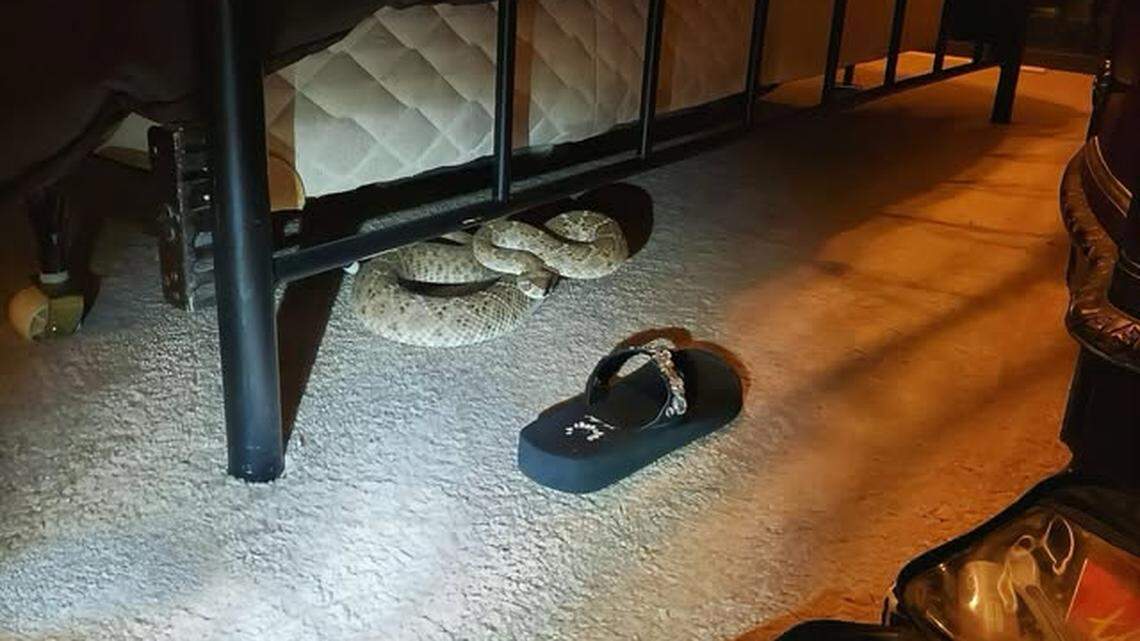
A rattlesnake was found curled beneath a bed in a Del Rio, Texas home on March 23. The snake was removed safely with no injuries, police said.
City of Del Rio Police Department
As temperatures rise across Texas, you’re more likely to come across a snake in places you might not expect, from walking trails to your own yard.
Wildlife experts say that’s not unusual, as warmer weather and longer days bring peak snake activity across the state.
Texas is home to more than 100 snake species, but only a few are considered venomous.
What you’re most likely to see often depends on your location and surroundings.
Here’s what to know.
🔥 In case you missed it…
Which snakes should I watch for in Texas this summer?
The four main venomous snakes to watch out for are rattlesnakes, copperheads, cottonmouths and coral snakes, according to the Texas Parks and Wildlife Department,
Copperheads are one of the most common snakes you’ll run into. They’re known for blending in with leaves, dirt and wooded areas, which is part of what makes them easy to miss.
Rattlesnakes, especially western diamondbacks, are also found across large parts of Texas and are usually recognized by their thick bodies and the rattling sound they make when they feel threatened.
Cottonmouths, sometimes called water moccasins, are more likely to show up near water like lakes, creeks and ponds. They’re known for opening their mouths to show a white interior as a warning sign.
Coral snakes aren’t seen as often, but they are highly venomous. They have bright red, yellow and black bands, and you might’ve heard the saying “Red on yellow, kill a fellow; red on black, friend of Jack,” used to tell them apart from harmless snakes.
Nonvenomous snakes like rat snakes and bull snakes are also common, and show up in yards, attics or fields where they feed on rodents.
Even with these species, experts say most snakes aren’t looking to interact with people and will usually move on if they’re left alone.
Where am I most likely to see snakes in Texas?
Snakes can be found across all 254 counties in Texas, according to TPWD, but certain environments tend to attract them more than others.
Areas with tall grass, brush, woodpiles or debris can create ideal hiding spots, especially during the hotter months.
If you’re near a lake, creek or pond, you’re more likely to come across cottonmouths or other water snakes because moist environments tend to support frogs and other prey, which can draw snakes closer, according to the Texas A&M AgriLife Extension Service.
You might also see snakes along walking trails, near rocks, or even on pavement early in the morning.
In neighborhoods, snakes can show up in yards, garages, sheds or even inside homes if they’re searching for food or shelter.
“Rodents are one of a snake’s favorite meals, so avoid areas where mice and rats may be, such as trash, brush and rock piles, stacked lumber and stone walls fences,” TPWD said.
Recent flooding can also increase your chances of seeing snakes.
According to Texas A&M AgriLife, heavy rain can push snakes out of their usual hiding spots and into higher ground, which may include residential areas.
What should I do if I see a snake?
If you come across a snake, the best thing you can do is leave it alone and give it space.
Experts say most bites happen when people try to interact with snakes instead of leaving them alone.
“When you know you are going to be in snake territory, wear boots, thick jeans or chaps and gloves,” TPWD said. “Never reach under rocks or into holes or other blind crevices. This is definitely asking for trouble.”
Related Stories from Fort Worth Star-Telegram

Fort Worth Star-Telegram
Tiffani is a service journalism reporter for the Fort Worth Star-Telegram. She is part of a team of local journalists who answer reader questions about life in North Texas. Tiffani mainly writes about Texas laws and health news.