
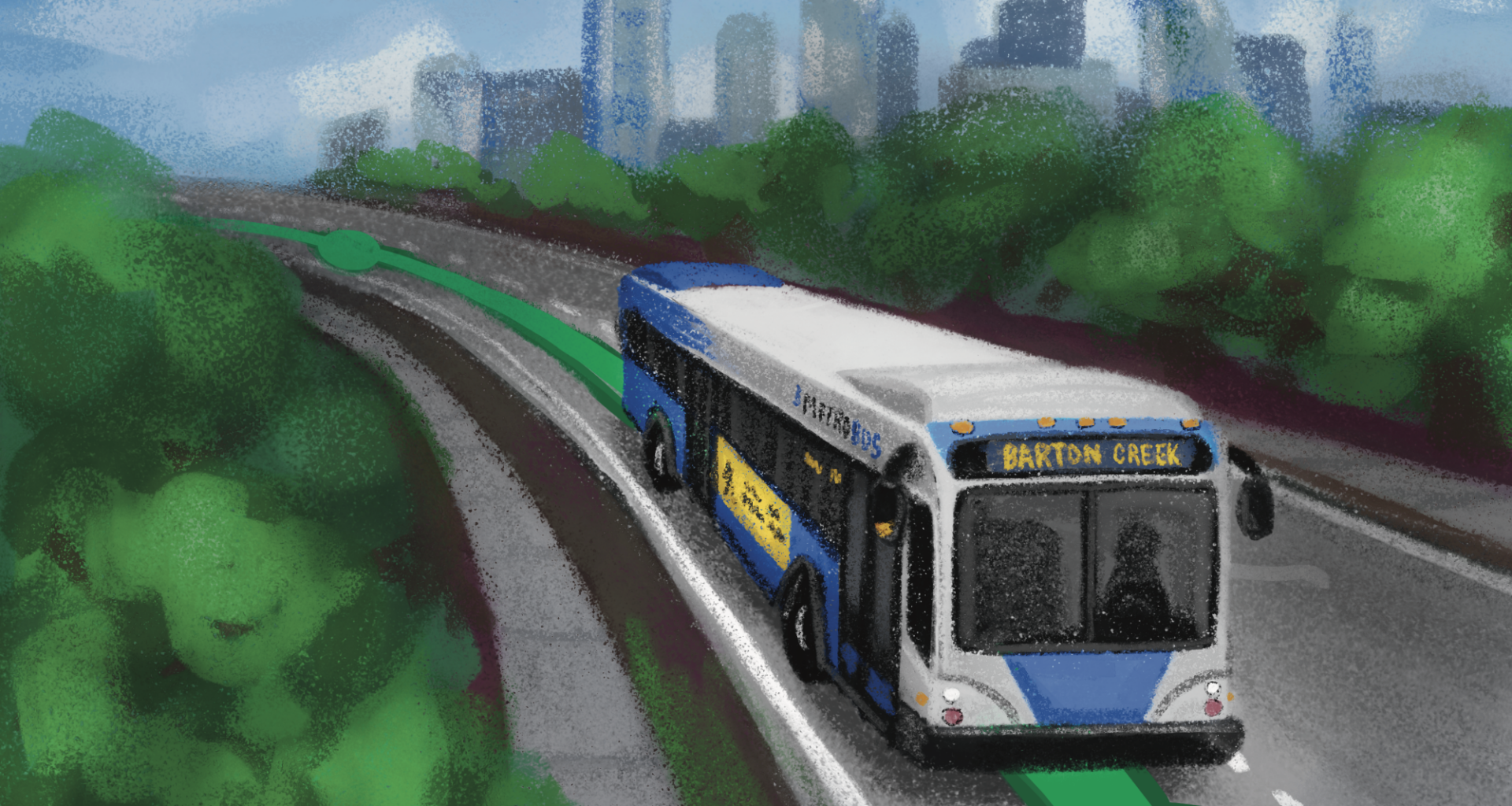
Austin City Council approved an amendment to increase funding for Capital Metro by $5 million and improve congestion by expanding routes.
The amendment, which passed on March 26, will provide funds to expand Route 2, which connects downtown and parts of East Austin with Central Austin. The route will create a loop across construction projects in the area.
The funds will also be used to increase the frequency of buses by paying staff for longer hours.
Jacob Barrett, Austin Transportation Demand Management program manager, said traffic caused by construction encourages people to consider taking public transportation. He said the city plans to get 50% of Austinites to commute by alternate modes of transportation instead of driving by 2039.
Vanessa Cangas, a health and society freshman, said she rides the CapMetro buses at least three times a week to get to her job. Although she has a car, she takes the bus to avoid parking violations and for convenience, she said.
“We know that construction is upon us and is also going to stay upon us for the next decade,” Barrett said. “Ultimately, this grant is to help mitigate a lot of that construction and also use it as an opportunity to help people shift their trips during that time period.”
The amendment money comes from a 2024 Climate Pollution Reduction grant of $47.9 million issued by the Environmental Protection Agency to various transportation organizations in Austin.
“We have various initiatives within the grant that encourage the reduction of vehicle miles traveled in the region,” Barrett said. “By reducing vehicle miles, … that takes congestion and traffic off of our roadways and really helps improve traffic flow, improve air quality and improve mobility for everybody in the region.”
Transportation engineering professor Randy Machemehl said the reduction in emissions from taking the bus is related to how many people are on the bus. He said as the frequency of bus routes increases, so will the number of people riding the buses.
“The more people we can convince to use buses, the better our congestion situation will be, and … the better the environmental situation will be,” Machemehl said.