
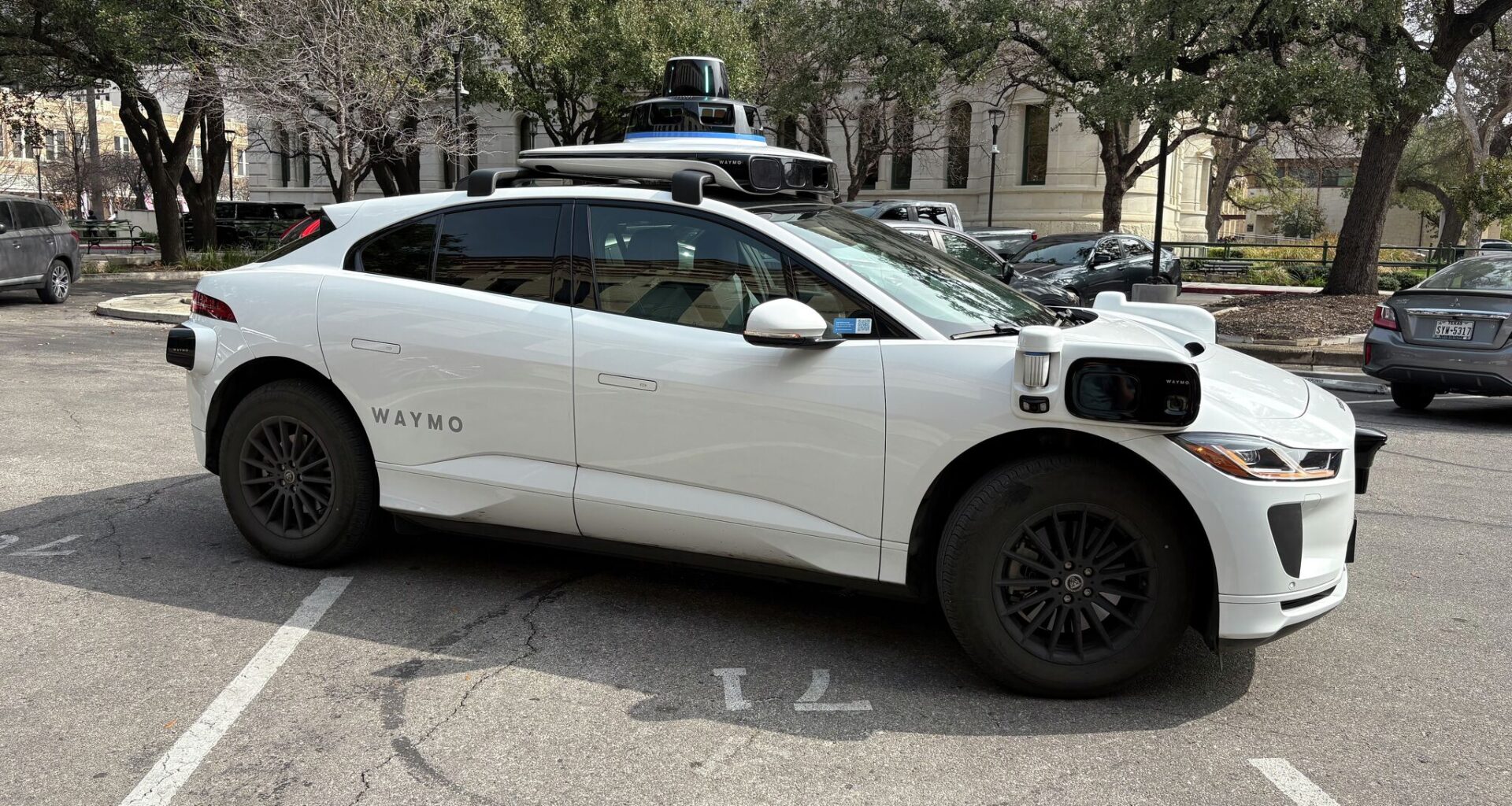
A Waymo robotaxi arrives outside San Antonio City Hall. Waymo needs to fix the problems that have surfaced in other cities, and demonstrate that the technology performs reliably under pressure before deploying it to San Antonio’s airport.
Brandon Lingle/San Antonio Express-News
Amy Witherite is a traffic safety expert and Texas attorney.
Courtesy of Amy Witherite
I’ve spent my career representing people hurt by preventable crashes. In that time, I’ve learned one thing above all else: The moment we decide that convenience matters more than caution, someone pays a price they didn’t agree to pay.

That’s why I’m troubled by Waymo’s announcement that it has expanded its fully autonomous vehicle service to San Antonio International Airport. The company says it’s proud to be the first autonomous ride service to offer airport transportation in Texas.
Article continues below this ad
I’d be prouder if Waymo had earned that distinction by first resolving the serious, documented problems that have followed their vehicles across the country.
Based on my experience dealing with thousands of auto and trucking accidents, a thoughtfully designed and carefully deployed self-driving technology holds real promise for safer roads.
Promise is not the same as proven.
The record Waymo has compiled in cities such as San Francisco, Phoenix, Austin and San Antonio is not that of a technology ready to navigate one of the most chaotic, high-pressure traffic environments that exists like a busy commercial airport.
Article continues below this ad
Reported incidents are easy to find.
Recently, video footage captured a Waymo vehicle driving the wrong way in a school zone in Alamo Heights.
In Austin, Waymo vehicles were caught on school bus cameras passing stopped buses at least 19 times in a single school year, with red lights flashing and children aboard. That triggered a federal investigation and a recall of more than 3,000 vehicles.
A Waymo vehicle was also responsible for blocking an EMS ambulance responding to a mass shooting in Austin.
Article continues below this ad
In Phoenix, a Waymo crossed into oncoming traffic near a construction zone — an officer pulled it over but couldn’t issue a citation because there was no driver. In May 2024, a Waymo struck a utility pole and triggered a separate software recall.
A citywide power outage in San Francisco last year highlighted Waymo’s inability to adapt to real-world situations when the vehicles were caught stopping in the middle of intersections.
Waymo said it was rolling out software updates, improving emergency response protocols and expanding coordination with local officials after stalled robotaxis became a focal point of the San Francisco gridlock during a massive outage there last year.
Aidin Vaziri/San Francisco Chronicle
Altogether, federal regulators have logged more than 1,400 incidents involving Waymo vehicles since 2021.
Article continues below this ad
These are documented failures and, in several cases, Waymo’s own response was to issue a software recall after the fact. That may be responsible engineering, but it is not a reassurance. It means real roads, with real people on them, were the testing ground.
Now Waymo has chosen to bring that track record to a curbside where travelers are running late, distracted and stressed. Where rideshare lanes are already congested and the margin for error is measured in seconds.
Where a vehicle that hesitates, stops unexpectedly, or stops dead in its tracks, misreads its environment doesn’t just cause frustration it causes a chain reaction. It backs up traffic. It blocks other vehicles. It may cause a traveler to miss a flight with no human driver to take responsibility and no clear path for recourse.
Unlike a stalled car with a driver who can wave others around, a Waymo vehicle that stops in a pickup lane is an obstacle with no override and no one behind the wheel and no clear mechanism for accountability when something goes wrong.
Article continues below this ad
Waymo’s spokesperson says the company “works closely with communities.” I’d ask: Did Waymo work closely with San Antonio before choosing one of its busiest and most unforgiving traffic corridors as its next expansion target?
Texas only passed its first comprehensive autonomous vehicle oversight law in 2025 in direct response to the school bus failures. The ink is barely dry. This is not the moment to rush into the next frontier.
I’m not suggesting Waymo abandon its mission. I’m asking it to earn the public’s trust before it puts people at risk. Fix the problems that have surfaced in other cities. Demonstrate that the technology performs reliably under pressure before deploying it to an airport.
Article continues below this ad
San Antonians deserve to be served by innovation, not subjected to it.
Amy Witherite is a traffic safety expert and Texas attorney.
Sign up for the ENsights opinion newsletter
Get the latest influential editorials, hard-hitting commentaries and thought-provoking opinions from the Alamo City in your inbox. Click here to sign up.