
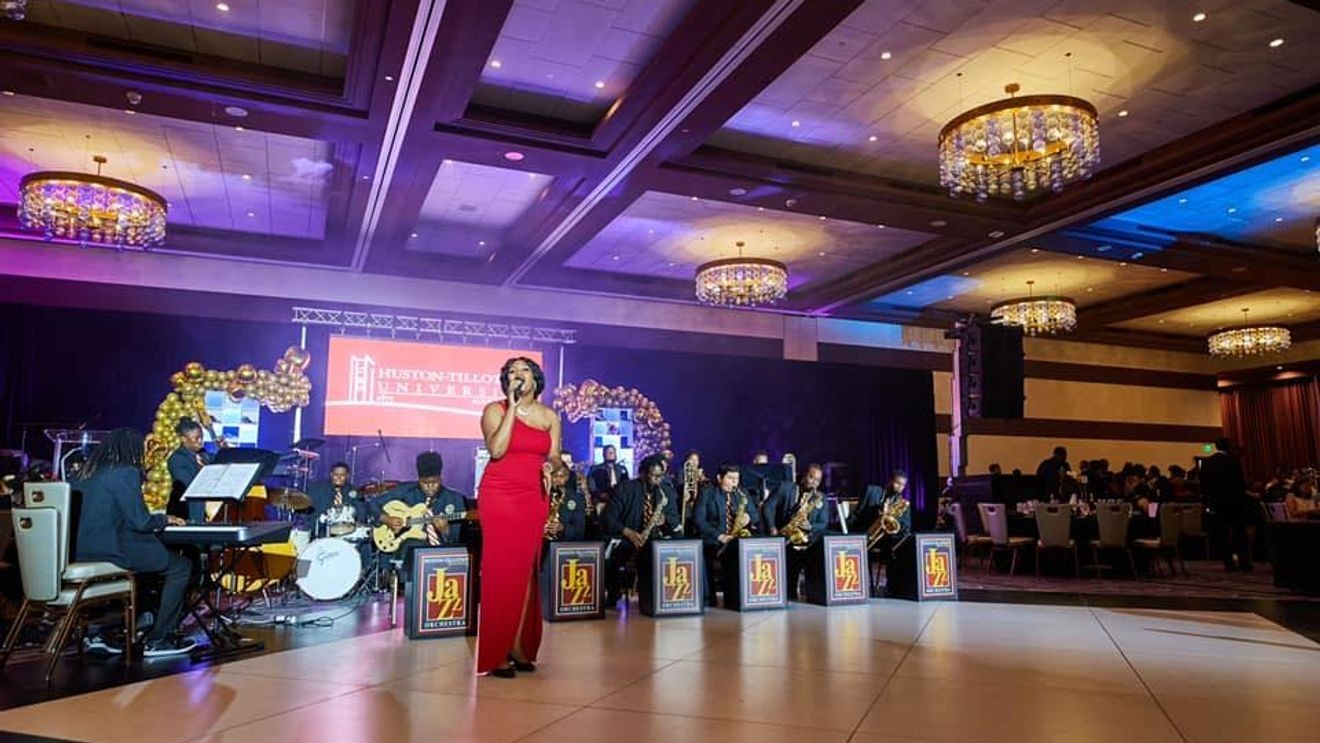
AUSTIN, Texas — In a rehearsal room on a hillside in East Austin, the sound begins with a count-off and a breath. Then the horns come in, bright and full, pushing air through brass and memory at the same time.
At Huston-Tillotson, a revived jazz program reconnects students to a rich legacy, blending past and present into a rising force in American jazz. | Credit: Huston-Tillotson Jazz Facebook Page
For a moment, it is difficult to tell what belongs to the present and what has been carried forward.
At Huston-Tillotson University, a small historically Black college, the jazz orchestra rehearses with the urgency of something new and the weight of something older.
The ensemble, a 17-piece big band rebuilt over the past five years, is often described as rising. But to the people closest to it, that word does not quite fit.
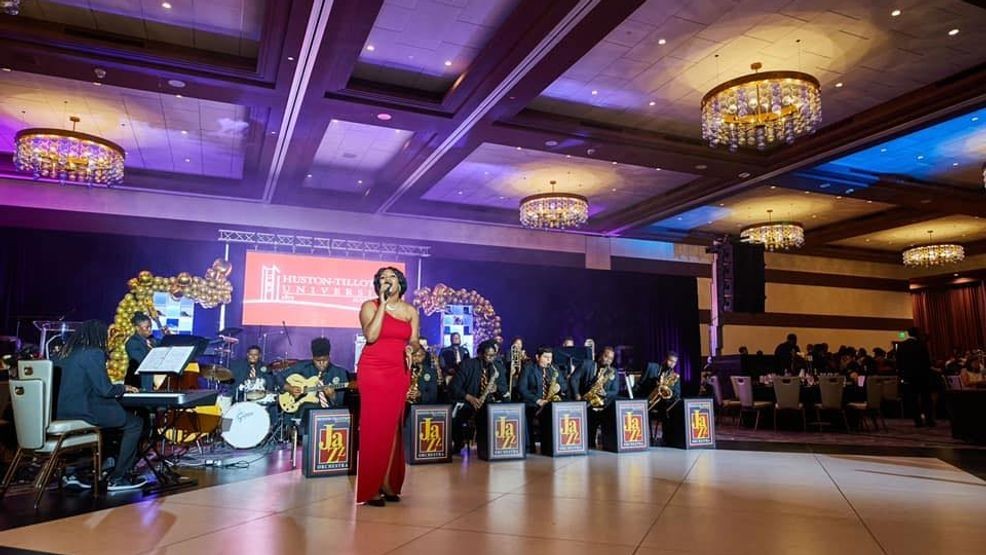
Students at Huston-Tillotson carry forward a jazz tradition once shaped by legends like Count Basie collaborators and Duke Ellington alumni. | Credit: Huston-Tillotson Jazz Facebook Page
“So much of this is a return to greatness,” said William Oliver, the university’s director of bands.
We have a lot of jazz musicians that have come through here that have played with Duke Ellington, Count Basie, B.B. King, Miles Davis.
He paused, then added, almost as a summation,
I call us the descendants of swing.
The phrase lingers in the rehearsal room, somewhere between identity and instruction.
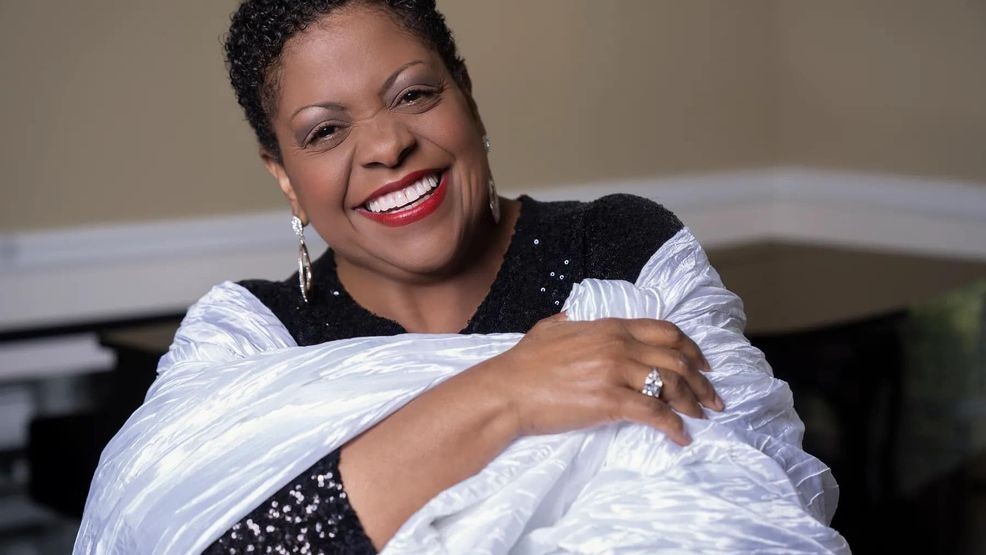
Carmen Bradford, a Huston-Tillotson alumna and longtime vocalist with the Count Basie Orchestra, represents the enduring jazz legacy students at HT are working to reclaim. | Credit: Huston-Tillotson Jazz Facebook Page
The story of jazz at Huston-Tillotson is not linear. It bends, disappears, and resurfaces.
MORE | #TBT: Austin Rainbow Theatre stages Hedwig and the Angry Inch as queer resistance in Texas
The university itself was formed through the merger of two institutions, its history split between places and eras, some of it preserved in archives, some of it passed down through memory.
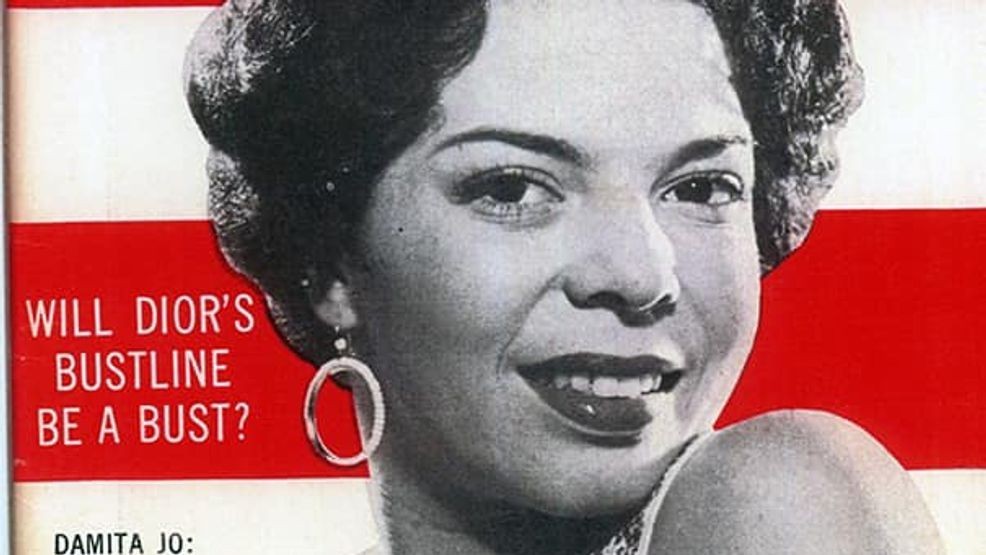
Demita Jo, once known as “Austin’s Ella Fitzgerald” and a Huston-Tillotson alumna, remains a powerful symbol of the university’s deep and enduring jazz heritage.
Along the way, pieces of its musical lineage became less visible, even as its influence continued outward through the careers of its alumni.
There was Carmen Bradford, who would go on to sing with the Count Basie Orchestra.
Leroy “Hog” Cooper, a defining tenor saxophonist in Basie’s band.
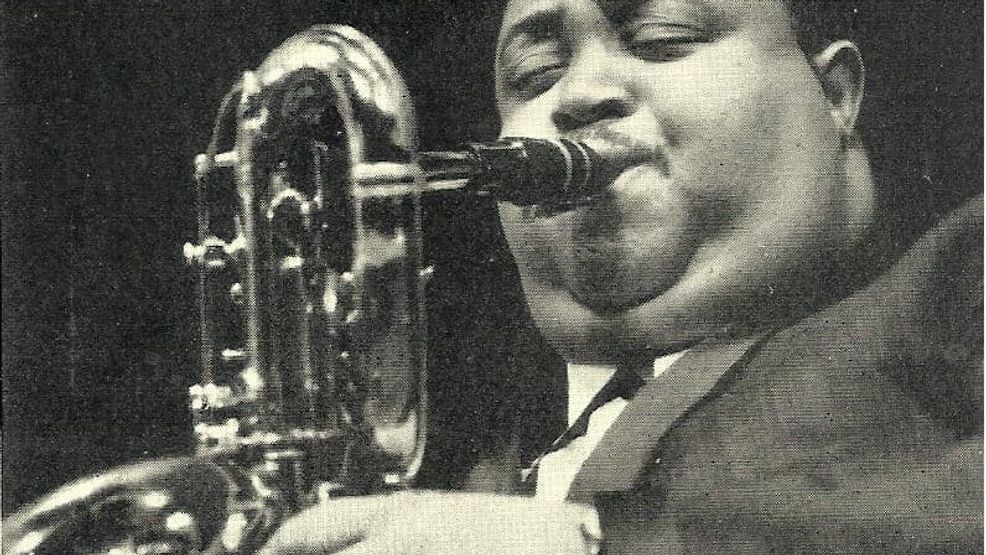
Leroy “Hog” Cooper, a Huston-Tillotson alumnus and longtime tenor saxophonist with the Count Basie Orchestra, helped define the sound of swing that still shapes the program today. | Credit: Huston-Tillotson Jazz Facebook Page
Demita Jo, remembered in Austin as a vocalist of uncommon presence, was once called the city’s Ella Fitzgerald. Others moved through the orbit of Miles Davis and B.B. King.
Their stories formed a constellation. But on campus, for a time, the connections between them dimmed.
When Oliver arrived in 2020, the silence was literal.

At Huston-Tillotson, a revived jazz program reconnects students to a rich legacy, blending past and present into a rising force in American jazz. | Credit: Huston-Tillotson Jazz Facebook Page
“It was right on the heels of the pandemic,” he said.
The campus was dormant, no one was physically here.
What remained of the jazz program was modest, a small combo, a trio that performed in the community. Rebuilding it would require more than adding players. It would mean reconstructing a sound and reintroducing a history.
The process began simply. A collective formed. Then it expanded.
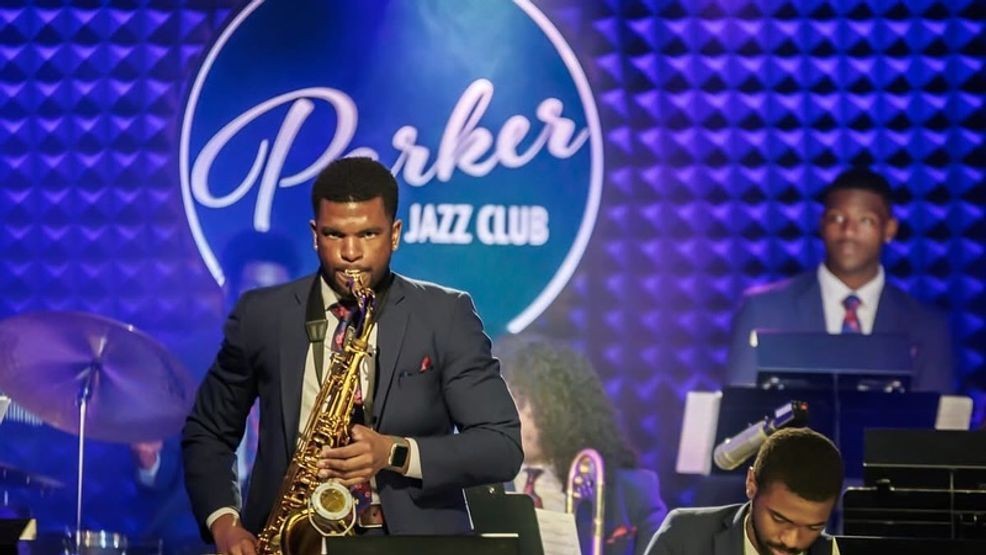
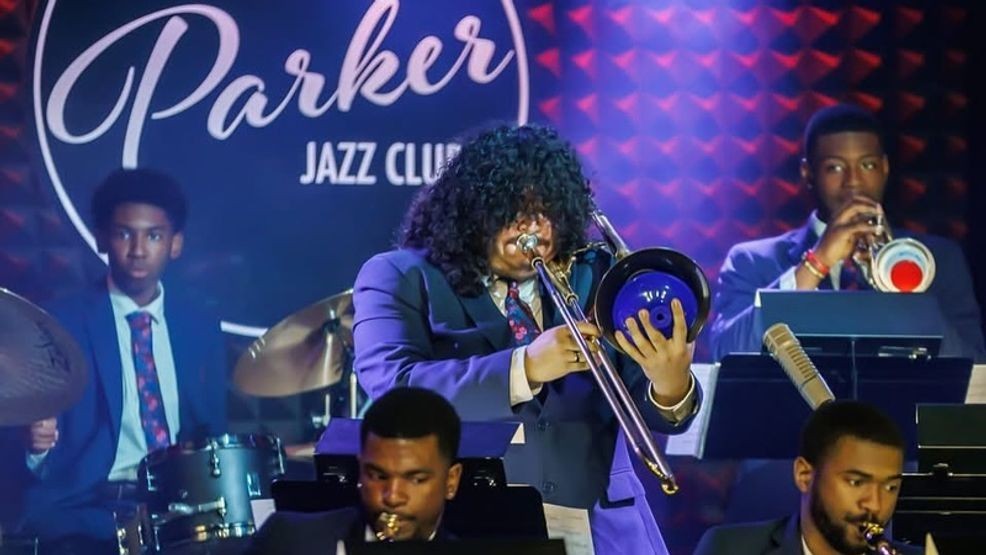
The Huston-Tillotson Jazz Orchestra rehearses in East Austin, reviving a legacy rooted in generations of Black American music. | Credit: Huston-Tillotson Jazz Facebook Page
ALSO | #TBT: Huston-Tillotson University’s monumental year helps refocus school’s mission
Eventually, the school assembled a full jazz orchestra, modeled after the big bands that defined an earlier era.
“What we did is we took that model and we expanded it out,” Oliver said.
The music that followed was not nostalgic. It was deliberate.
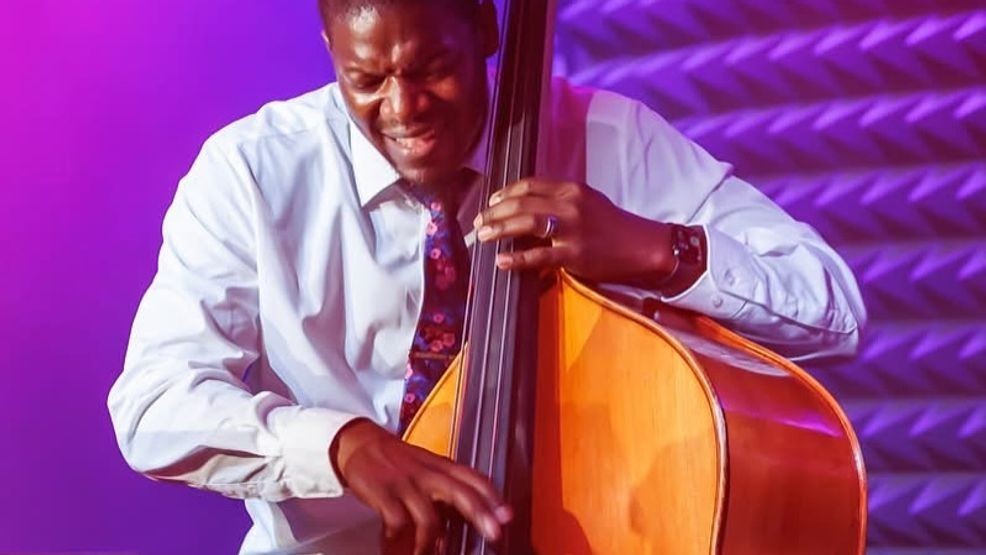
A new generation of players at Huston-Tillotson is rediscovering a past that was nearly lost and turning it into momentum. | Credit: Huston-Tillotson Jazz Facebook Page
For Dr. Jeremy George, who leads jazz studies at the university, the growth has unfolded in layers.
He arrived four years ago to students who already showed promise, but needed direction and depth.
“Tremendous,” he said, describing the program’s evolution.
Musical growth has been through the roof. The students have really caught the vision.
That vision extended beyond Austin.
The road to New York City began with a competition in Nashville, then continued through a residency in Virginia.
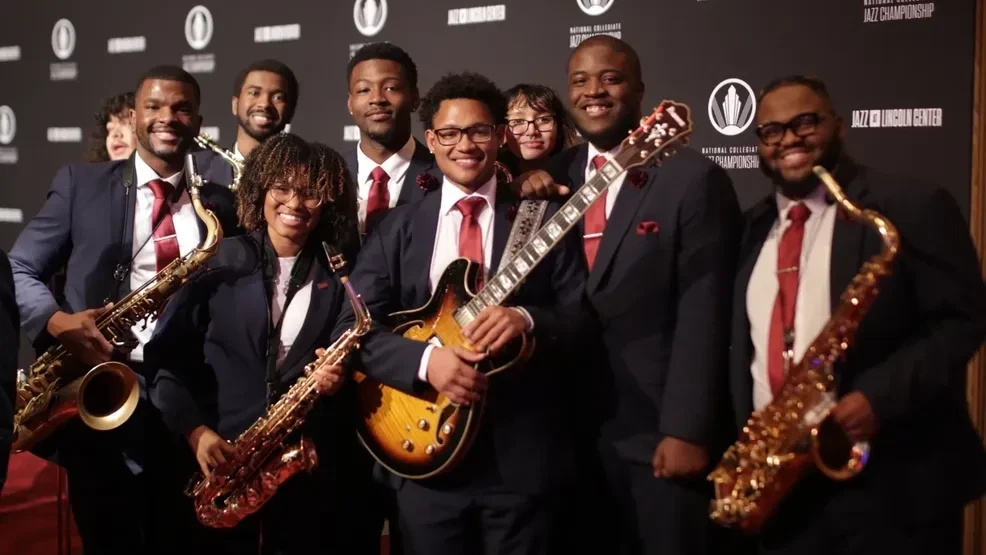
| Credit: Huston-Tillotson Jazz{ }Huston-Tillotson’s Jazz Orchestra earns third place at the National Collegiate Jazz Competition, marking a major milestone for the rising program.
Each step brought the ensemble closer to a stage that exists, in the jazz world, as both destination and symbol.
Jazz at Lincoln Center. The House of Swing.
“We were able to place in the top two,” George said of the Virginia residency. “And that’s what essentially sprung forward our invite to New York City.”
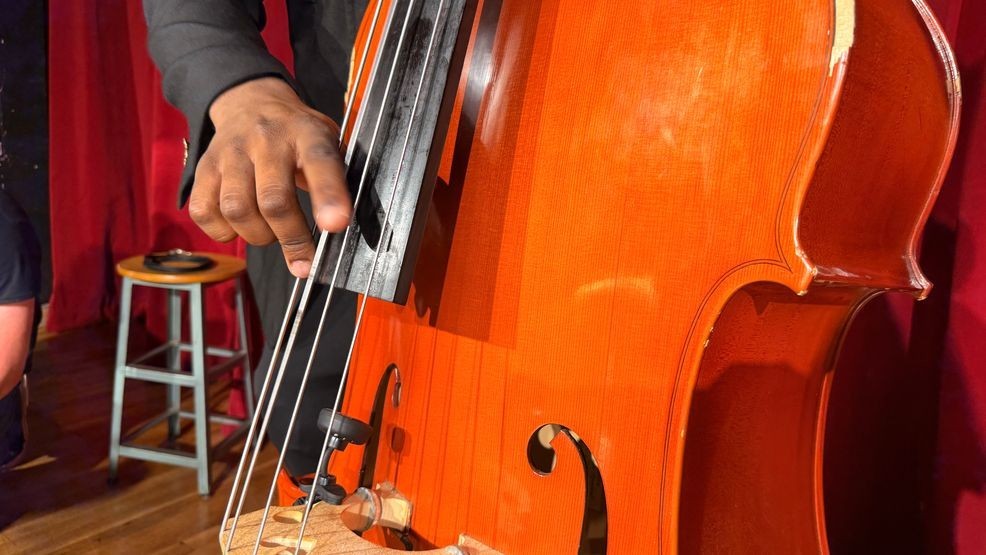
Students at Huston-Tillotson carry forward a jazz tradition once shaped by legends like Count Basie collaborators and Duke Ellington alumni. | Credit: Huston-Tillotson Jazz Facebook Page
For George, a bassist who had long admired the musicians associated with that stage, the invitation carried a personal weight.
MORE | #TBT: Selena tribute takes shape as UT student hand-beads, dyes and fits signature looks
Many of the artists there had once been his heroes, his reference points. Now they were peers in proximity, if not yet in experience.
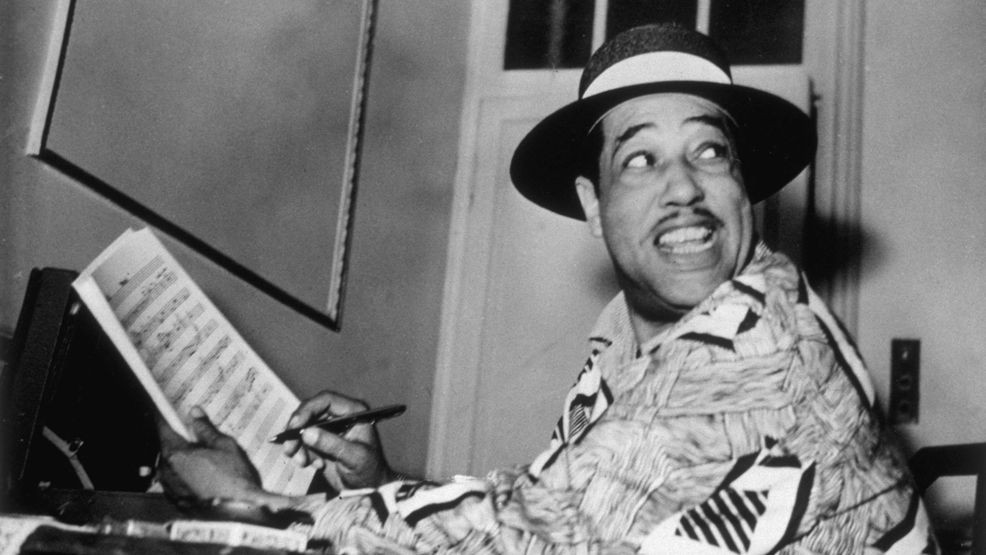
circa 1948: American big band leader and legendary jazz pianist Duke Ellington (1899 – 1974). (Photo by Keystone/Getty Images)
“I still look back at it and I’m like, man, did that really happen?” he said of what came next.
The band placed third in a national collegiate competition.
For the students, the experience was less abstract.
Sannai Haymon-Jallow remembers the cold first. A native Texan, she had never been to New York.
The city felt immediate, kinetic, filled with artists moving through it with purpose.
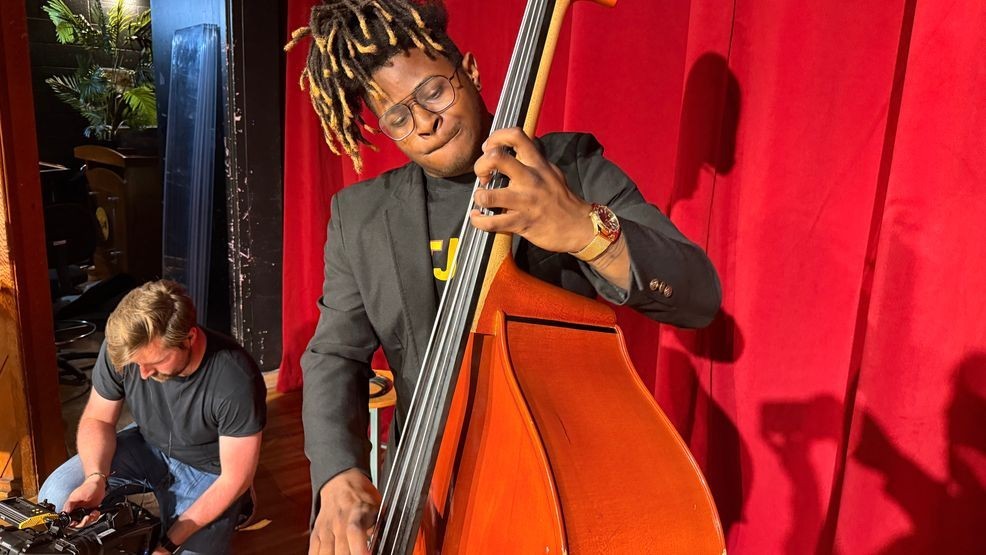
The Huston-Tillotson Jazz Orchestra rehearses in East Austin, reviving a legacy rooted in generations of Black American music. | Credit: Huston-Tillotson Jazz Facebook Page
“You walk around, and you see everybody has a horn on their back,” she said.
It’s a place for the arts.
She had not originally chosen Huston-Tillotson for its jazz program.
A computer science major, she arrived with practicality in mind, thinking she might step away from music altogether.
ALSO | #TBT: Inside H-E-B’s Charles Butt’s Private American Modernism Collection at the Blanton
“HT was actually not on my radar,” she said. That changed.
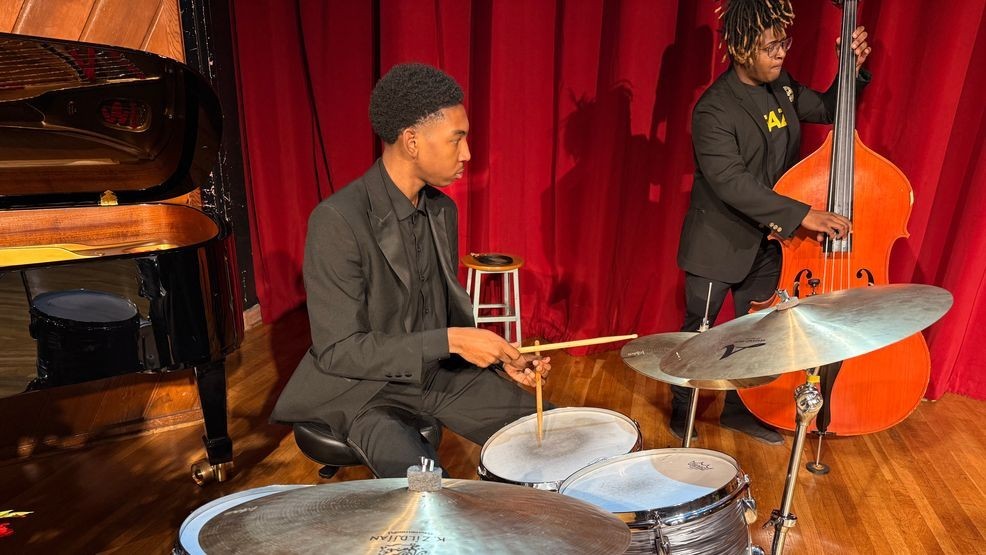
The Huston-Tillotson Jazz Orchestra rehearses in East Austin, reviving a legacy rooted in generations of Black American music. | Credit: Huston-Tillotson Jazz Facebook Page
In New York, standing in a hall built around the legacy of Duke Ellington, she and her bandmates played the composer’s music, “Cottontail,” “Don’t Get Around Much Anymore,” pieces that have long defined the vocabulary of big band jazz.
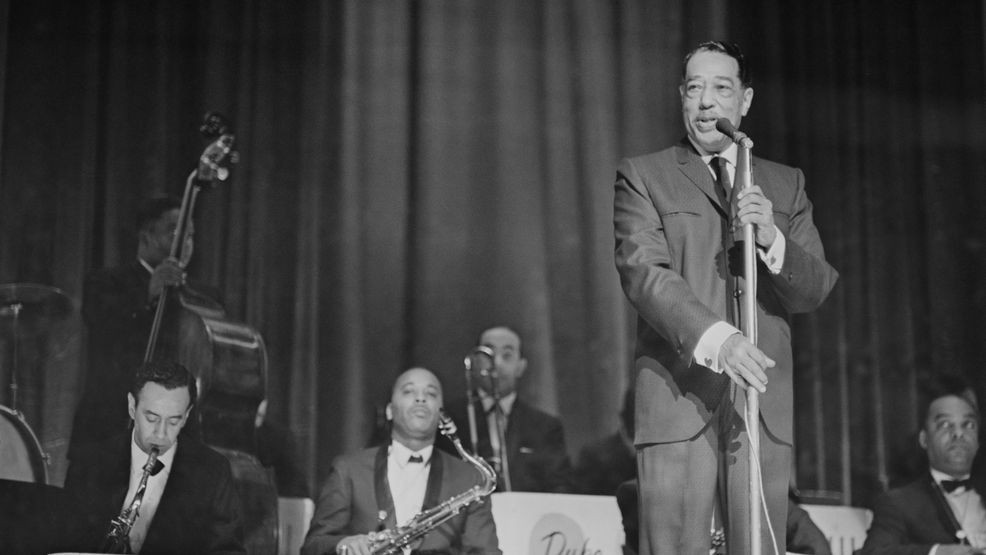
American composer, pianist and jazz musician Duke Ellington (1899-1974) pictured on stage with the Duke Ellington Orchestra at the Hammersmith Odeon in London on 14th January 1963. (Photo by McCabe/Daily Express/Hulton Archive/Getty Images)
“It was a wonderful experience getting to perform in the House of Swing,” she said.
It’s a legendary place to perform.
The connection, once theoretical, became tangible.
Back in Austin, the effects of that moment continue to ripple.
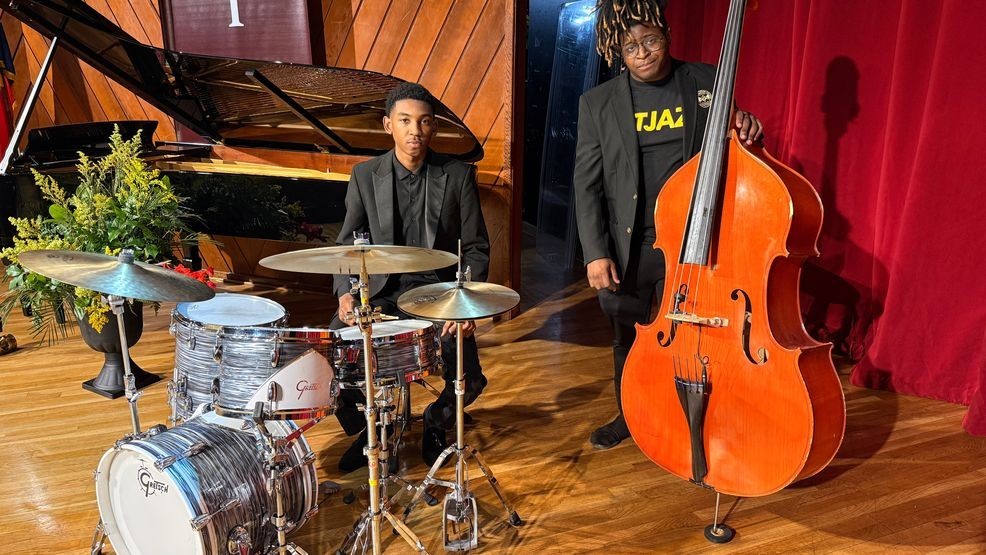
From a quiet campus during the pandemic to national stages, the HT jazz program is finding its voice again. | Credit: Huston-Tillotson Jazz Facebook Page
Joshua Garcia, a trombonist who has spent three years in the program, describes the change less in accolades than in atmosphere.
“We’re constantly evolving,” he said.
More people are coming through, and just the love for the music is constantly growing.
Garcia was part of the group that traveled to New York. He left with more than a placement.
He received two individual honors, including one given to only a handful of musicians in the competition.
Still, when asked what mattered most, he returned to something simpler.
“We just wanted to have fun,” he said. “We wanted to do us.”
MORE | #TBT: Austin’s LBJ Presidential Library debuts renovated gallery ahead of America’s 250th
It is a sentiment that echoes through the program, even as its profile rises. Recruitment has expanded beyond Texas.
Performances now stretch across the city, from campus concerts to large public stages.
Students move between ensembles, from tightly arranged big band charts to smaller, more improvisational settings.
And yet, the core idea remains steady.
Oliver often describes jazz in terms that reach beyond technique.
“Jazz music is like gospel music,” he said.
It’s like church.
At Huston-Tillotson, that comparison feels less metaphorical than structural.
The music is taught, but it is also shared, passed between generations, reinforced through repetition and belief.
Students arrive without knowing the full history. Then, gradually, they learn the names, the stories, the weight of the tradition they are stepping into.
“They kind of see their shoulders go back a little bit,” Oliver said. “Like, this is really cool to be at this campus.”
On a recent afternoon, the band runs through another chart.
A trumpet line cuts through. The rhythm section locks in. A saxophone solo lifts, then resolves.
The room fills, not just with sound, but with continuity.
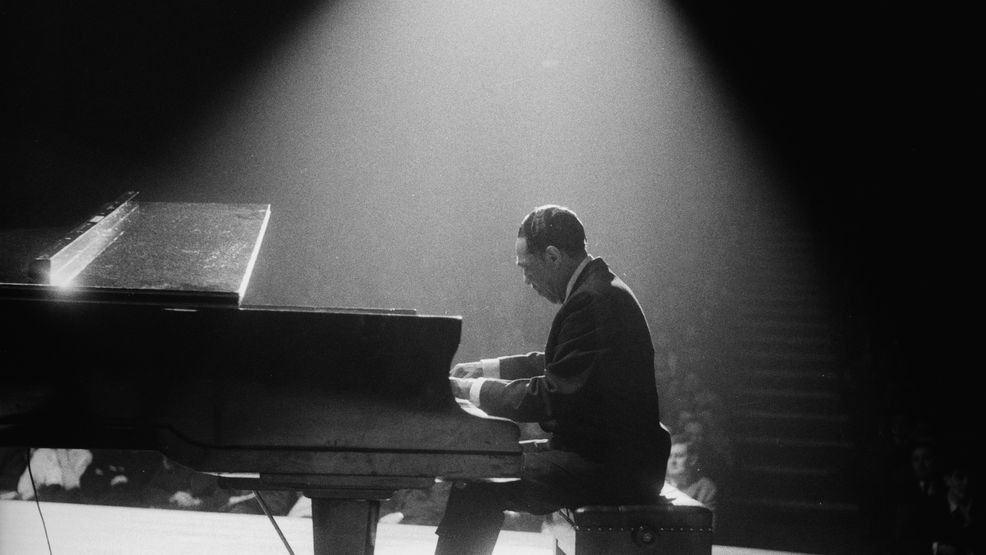
10th February 1963: American jazz band leader and composer, Duke Ellington (1899 – 1974) at the piano at the Fairfield Hall, Croydon during a British tour. (Photo by John Pratt/Keystone Features/Getty Images)
The orchestra at Huston-Tillotson is still young, still building, still defining itself in real time. But beneath that forward motion is something steadier, something recovered.
Not a pursuit of greatness, exactly. Something closer to recognition.
For more information about the Huston-Tillotson University jazz program, visit: https://www.instagram.com/htujazz/
EDITOR NOTE: #TBT or Turning Back Time is an award-winning series of stories by CBS Austin This Morning Anchor John-Carlos Estrada. The series focuses on the history of Central Texas and its impact on the community. If you want to share a story idea with him, email him (jcestrada@cbsaustin.com) or message him on social media via Facebook, Twitter, TikTok, BlueSky, or Instagram.