
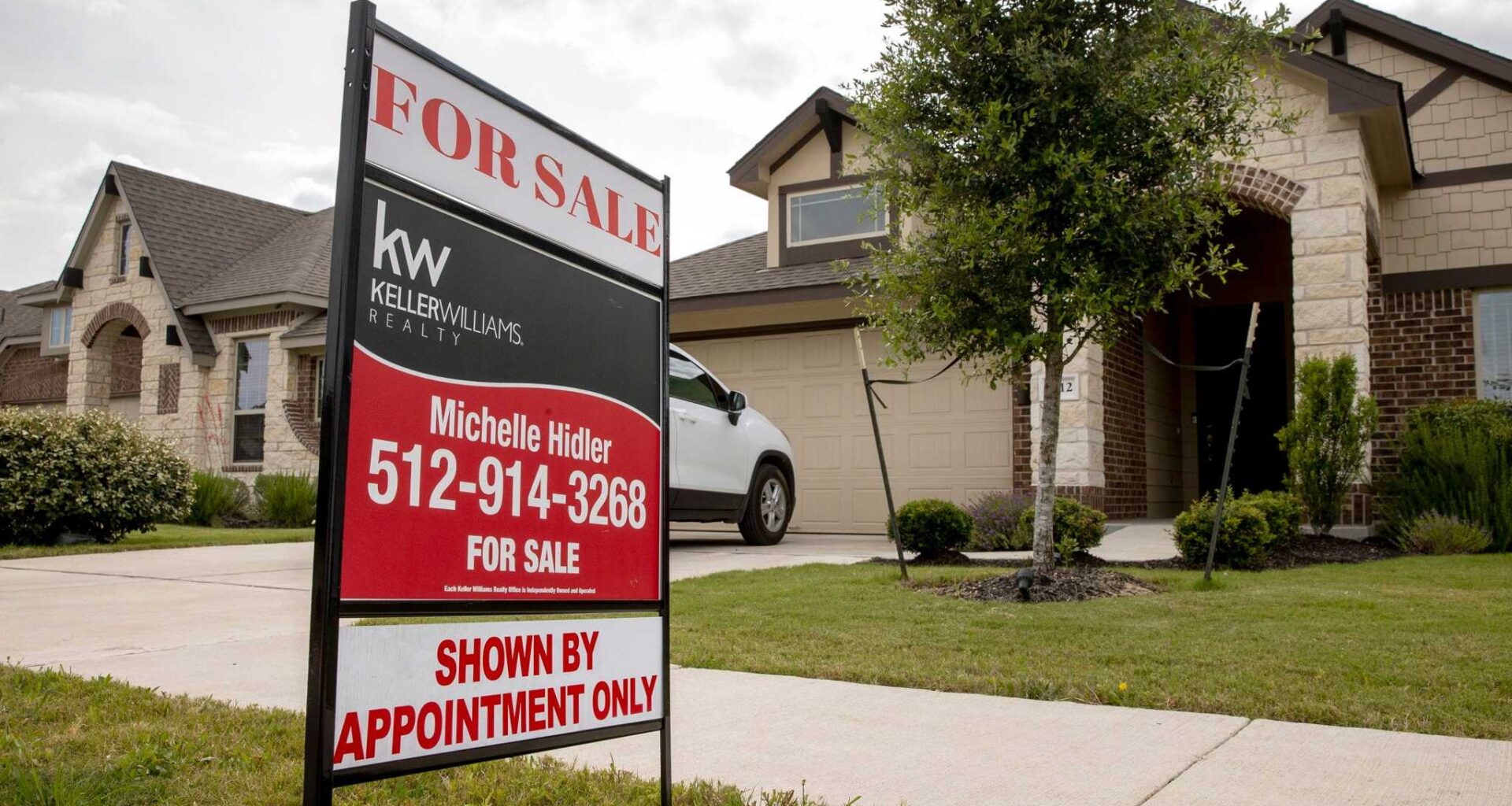
A home for sale in Austin. Rising inventory and easing competition have made the metro one of the more favorable large U.S. markets for buyers, according to ConsumerAffairs.
Austin American-Statesman file photo
After years of intense demand, Austin now one of the most favorable big-city housing markets for buyers.

A new ConsumerAffairs study ranks Austin No. 9 among the best U.S. metros for buyers, pointing to easing competition as inventory improves and prices cool from pandemic-era highs.
Article continues below this ad
The shift has been slowly building for months. An October report from online brokerage Redfin ranked Austin as the nation’s top buyer’s market and more recent data suggests supply is continuing to outpace demand, giving buyers more time to shop and room to haggle. A February analysis from housing research firm Zonda found the Austin metro is now “significantly oversupplied” with build-ready home lots — a sharp reversal from pandemic-era shortages.
For its ranking, ConsumerAffairs analyzed 272 U.S. cities with populations of at least 100,000, scoring each on a 100-point scale across four categories: housing market competitiveness, affordability, home size and livability. Competition, including inventory levels and the share of homes selling above list price, carried the most weight, followed by affordability measures such as price-to-income ratios and cost per square foot.
It shows Austin remains more favorable for buyers than many large metros, though the rankings were dominated by smaller cities in the Sun Belt. Florida cities led the most buyer-friendly markets, while California metros were the least favorable.
A separate analysis from Realtor.com reinforces Austin’s status. Just over 60% of the nation’s largest housing markets have tilted into balanced or buyer-friendly territory, the website’s latest report said, while just 26% remain seller’s markets.
Article continues below this ad
Realtor.com’s newly released “Market Clock” places Austin as one of eight major U.S. metros that have already tipped into buyer-friendly territory. Of those eight markets, five are in either Florida or Texas – including Austin, Tampa, Jacksonville, Orlando and Miami. All eight were clustered in either the South or the West Coast, while the analysis found most seller’s markets concentrated in the Northeast and Midwest.
Dayna Edens, media relations manager at ConsumerAffairs, said Austin is “less chaotic” than other markets because potential buyers have more options.
MORE: Texas ranks among worst states for renters, new report finds
In January, it found 3,257 Austin homes were listed for sale, or 328 per 100,000 residents. That means buyers have more homes to choose from, easing the pressure to rush into a decision — and providing more leverage with sellers.
Article continues below this ad
Only 8.7% of homes are selling above asking price, which Edens said is the lowest rate among big cities in the report. Buyers in Austin have more wiggle room to negotiate and avoid overpaying.
“You’re also getting a bit more space for your money in Austin,” she said. “The typical home is just under 2,000 square feet, which is one of the larger averages compared to other major cities. For a lot of buyers, that extra space can make a big difference day-to-day.”
Austin stills falls behind other markets in terms of affordability, but Edens said the relatively high incomes of Austin residents makes that number more manageable.
“One interesting thing about Austin is that fewer homes are owner-occupied compared to some other big cities — just about 41%,” Edens said. “A lot of that likely comes down to how much of a destination the city is.”
Article continues below this ad
Recent data from Unlock MLS shows inventory across the Austin-Round Rock-San Marcos metro reached 6.5 months in February — slightly above the level generally considered a balanced market. Pending sales — homes under contract but not yet closed — jumped nearly 14%, suggesting increased buyer activity.
Prices are also beginning to adjust after holding firm for much of the past year. The metro’s median home price was $435,000 in 2025, down 2.4% from the year before, and fell 3.6% year over year to about $412,000 in February.
John Crowe, 2026 president of Unlock MLS and the Austin Board of Realtors, said in February the local MLS data suggests market conditions are becoming more favorable for shoppers who have been waiting on the sidelines.
“A lot of buyers have spent the past year watching and waiting, wondering if prices would keep falling or if they should hold out longer,” he said. “What we’re seeing now is that market conditions are increasingly favorable for more buyers to act.”
Article continues below this ad
Elsewhere in the Lone Star State, Sugar Land was among the most buyer-friendly markets overall, while Houston ranked No. 7 among large cities and El Paso followed at No. 10.
See the 2026 rankings of best large markets for buyers
Jacksonville
Oklahoma City
Indianapolis
Nashville
Phoenix
Las Vegas
Houston
Louisville
Austin
El Paso
Denver
Baltimore
Tucson
Memphis
Detroit
Columbus
Washington
Philadelphia
Portland
Milwaukee
Fresno
Chicago
Sacramento
Seattle
Boston
San Diego
New York
Los Angeles
San Jose
San Francisco
Article continues below this ad