
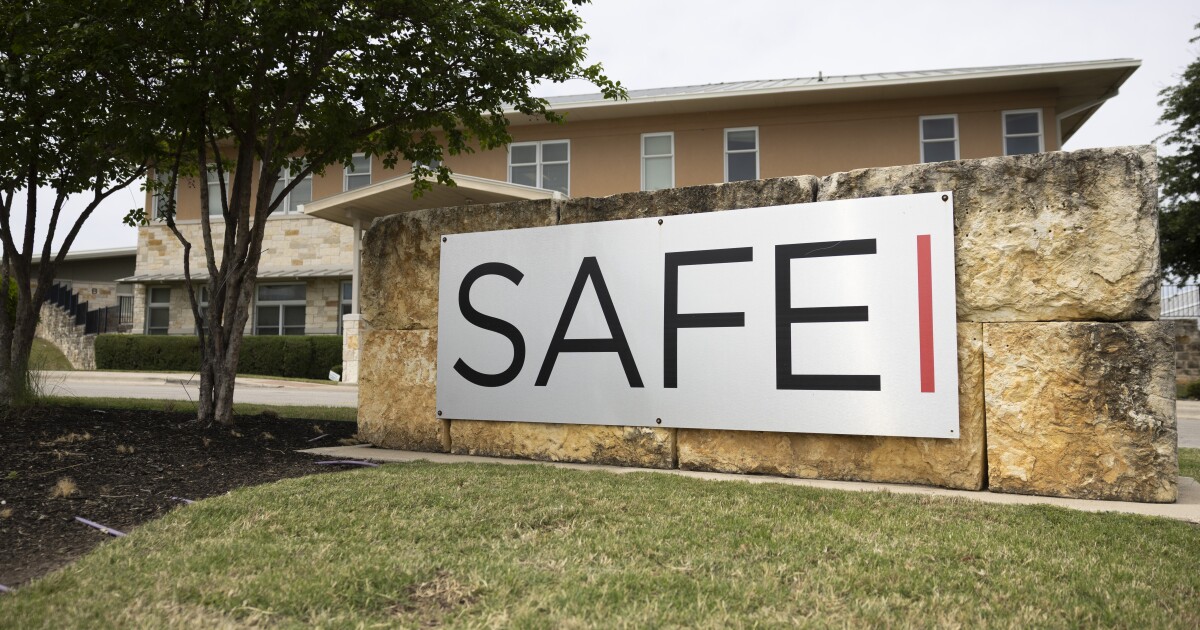
The SAFE Alliance is preparing to make around $4 million in cuts starting this summer. That includes the elimination of four programs, including closing a downtown shelter and services that provide additional housing assistance for people leaving an abusive situation.
Pierre Berastaín, CEO of the SAFE Alliance, said about $2 million of the cuts come from reduced support from local, state and federal partners.
“If an organization were operating just a domestic violence shelter they wouldn’t have access to that whole ecosystem,” Berastaín said. “From Planet SAFE to Eloise House to Bridge to Safety to healthcare navigation, court accompaniment, children’s services, therapeutic and counseling services, and I can just go on and on and on because survivors have complex lives.”
He said it’s what makes the SAFE program model so effective. And without these programs, he said, people and children could suffer.
As governments, including Austin, have pulled back social services funding, private donations have also dropped because of inflation and a rise in the cost of living.
“For quite a long time now the SAFE Alliance has provided some core services that benefit Austinites and benefit systems that are now under threat if we don’t have an appropriate multi-party investment in our services,” Berastaín said.
The SAFE Alliance provides support through about 20 programs that help thousands of survivors leaving domestic violence and sexual assault situations.
Without those additional funds, Berastaín said more families could remain in a bad situation or end up on the street. The two overnight shelters serve about 1,000 people on any given night. That includes the one downtown that could close in October as part of the cuts. It specializes in helping families and their children.
“Right now, we have 55 children in that shelter. Fifty-five children whose parents experienced domestic abuse, physical abuse,” Berastaín said. “And what happens if that shelter closes is that you have 55 children, and their mothers — for the most part — who have nowhere else to go.”
Also scheduled to end are the SAFE Futures and Planet SAFE programs and the Eloise House, which offers forensic exams and medical care to sexual assault victims.
Lorianne Willett
/
KUT News
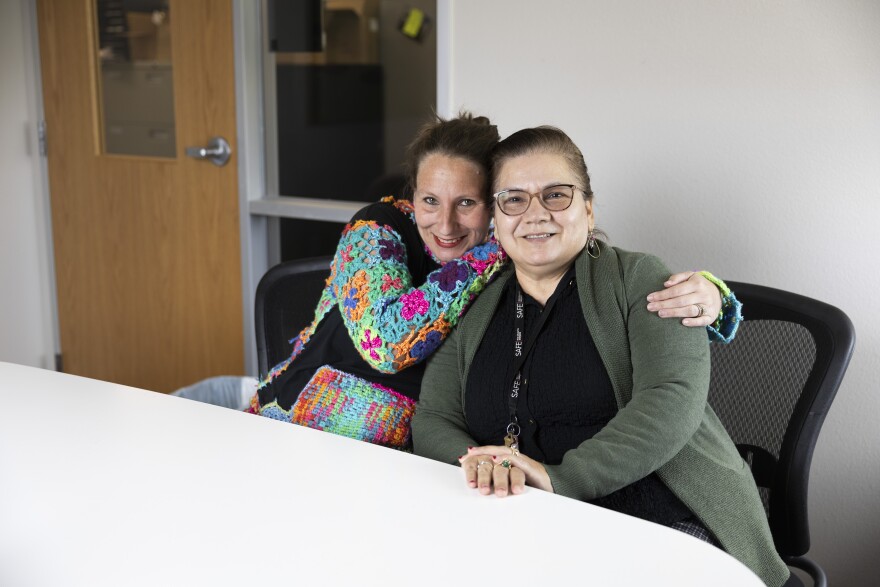
Makani Couk, left, and Elia Mondragon survived domestic violence and now work as peer support specialists with the SAFE Alliance.
Healing through SAFE
Makani Couk knows firsthand what it takes to escape a dangerous situation.
Through the SAFE Alliance she was able to find a secure place to live, receive counseling services to work through the trauma and get longer-term help to become sustainable.
Couk, who now works as a peer support specialist, said SAFE provides essential services for people going through some of the most painful times of their lives.
“We’ve been braced for impact for so long, taking hit after hit in a warzone that had no end…. and by the time we get safe and behind a locked door, sometimes we can’t get back out of bed for a minute,” Couk said. “It takes a long time to gain traction and to heal and we have to have that long-term sustained support.”
For years, Couk endured abuse from her partner before becoming pregnant. She wasn’t able to ask her family for help and ended up living in a tent with her then 2-year-old daughter.
Then, her former partner threatened her life. SAFE was able to step in and offer them a spot in the shelter, where they lived for several months.
“We ended up using lots of different services,” Couk said. “We used supportive housing, which was great because it came with the added security and the added case management.
Today, she still uses the program for her now 13-year-old daughter. The program Planet SAFE ensures her daughter is safe when she visits her dad on some weekends.
It’s a structured child exchange program that is also at risk of closing this summer without funding.
“A lot of us, as survivors, are co-parenting with our rapists and our abusers, and Planet SAFE is so crucial to that [process],” Couk said. “Because it’s scary. It’s really scary.”
Keeping families together
The SAFE Alliance doesn’t just focus on getting people away from their abusers and providing shelter. Another program that could close this summer works to keep families together.
Jo Meier and her daughter were able to be reunited with help from SAFE Futures. As a young mom Meier started doing drugs, which resulted in her daughter being removed from her custody.
She had to work to get her back. But she did it. She got sober. She got a steady job. And with the support of her SAFE Futures advocate she was able to navigate the court system and her Child Protective Services case.
Meier said the advocate was one of the only people she trusted.
“She was somebody who did not work for the court system or CPS, that was like an outside entity that I could tell everything to about what had happened and what’s going on,” Meier said. “She was able to help me in ways that nobody else could.”
Lorianne Willett
/
KUT News
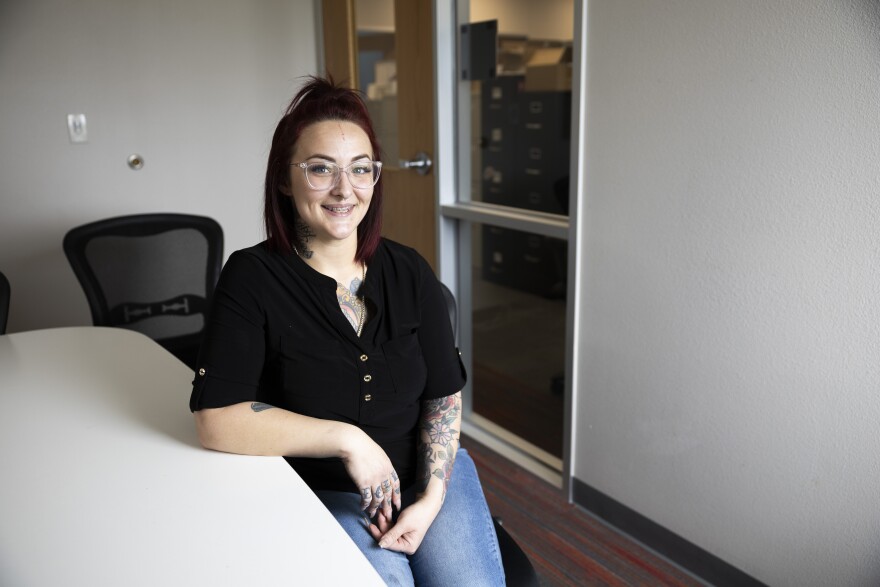
Jo Meier was reunited with her daughter through the SAFE Futures program.
It’s the kind of help Elia Mondragon said she received after leaving her abusive marriage of 22 years. Her divorce attorney recommended counseling services through SAFE to help her heal and regain a sense of independence.
“Sometimes our family doesn’t believe us, or they say next page, pass the page,” Mondragon said. “But it is not easy to pass the page when we suffer a sexual assault or domestic violence. It is step by step… [to be able] to say I am no longer in this situation. ”
Finding a solution
Berastaín said he’s working to find a way to recoup the $4 million loss. He’s met with city and state leaders and local hospitals.
“It’s not on the city alone to figure out,” Berastaín said. “It’s not on the county alone to figure out. This is why we are in active conversations with hospitals to ensure that these services stabilize because we prevent folks from coming inappropriately to the emergency room.”
Mayor Kirk Watson said in a written statement he is optimistic about finding a solution to keep all four programs running.
“This challenge calls for a community solution,” Watson said. “We will continue working to achieve a result that the victims of sexual assault and domestic violence deserve.”