
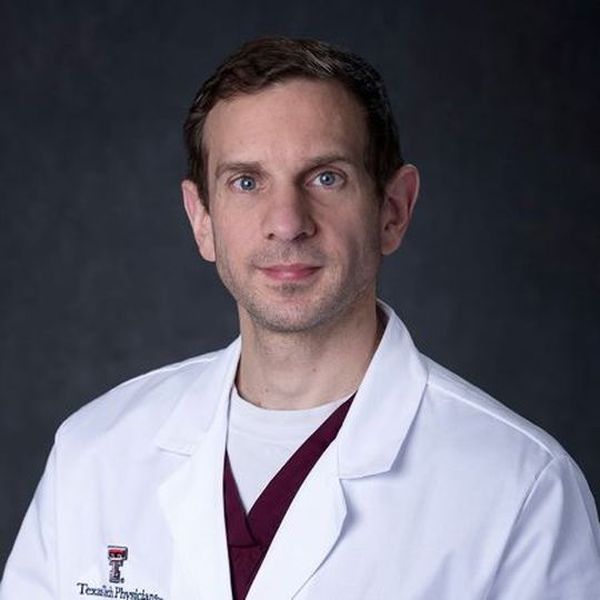
Newswise — Dr. Nickel’s interest in the work grew from a problem he saw firsthand. While new devices and catheter-based approaches have changed how some blood clots are removed, he noted that medication-based innovation for dissolving pulmonary embolisms has lagged for decades.
“Over the last 30 to 40 years, there has really not been any research to find new medications that can dissolve these clots,” Dr. Nickel said. That gap made the TS23 study especially compelling. He said the investigational drug has shown promising results, and El Paso quickly became one of the study’s strongest enrolling sites.
That local success helped elevate Dr. Nickel’s role on a national level. As the national principal investigator, he now advises on clinical questions related to screening, enrollment, and complications during or after the infusion of the study drug. In other words, the expertise gained in El Paso now informs decisions across a broader clinical research network nationwide.
His path to El Paso was not a straight line. Dr. Nickel was born in Germany and completed his medical training there. He continued his professional development in the United States, including fellowship training at Stanford University. He moved to El Paso during the COVID-19 pandemic and California wildfires, when family considerations influenced an important decision. What started as a relocation gradually grew into something more meaningful.
“I didn’t know what I was getting into. I didn’t know much about El Paso, didn’t know much about Texas Tech Health El Paso, but I’m very happy,” Dr. Nickel said. “The people are nice. It’s a good place to raise a family.”
That sense of community also shapes how he talks about treatment. He said that, in many cases, delivering medication through an IV can avoid more complicated catheter procedures. In a busy hospital, especially when time is critical, that can be a major advantage.
“Activating a cath lab and bringing in a full team takes time,” Dr. Nickel said. “However, we already placed an IV in the emergency room. We give them medication, and it usually works.”
For El Paso, the story goes beyond a single doctor or trial. As an assistant professor at Texas Tech Health El Paso, Dr. Nickel sees his work as proof that complex, high-level clinical research can be done here. He emphasized the growth in research support, coordination, and funding within the Department of Internal Medicine and said that this progress is helping to position the university as a leader in innovative clinical trials while training the next generation of healthcare providers.
Just as importantly, he believes the work could increase access to treatment for patients in communities that do not always have immediate availability of catheter labs or other advanced interventions.
In Dr. Nickel’s view, that is the true promise of this moment: not just recognition, but reach. As El Paso expands its role in academic medicine, patients here and across the region will increasingly benefit from research that is both nationally significant and deeply local in purpose.
About Texas Tech Health El PasoTexas Tech Health El Paso serves 108 counties in West Texas and is dedicated to preparing the next generation of health care heroes. Established as an independent university in 2013, Texas Tech Health El Paso is a uniquely innovative destination for medical, nursing, biomedical sciences and dental education.
Focusing on excellence in health care education, research, and clinical service, Texas Tech Health El Paso has graduated over 2,600 professionals over the past decade. For more information, visit ttuhscepimpact.org.