
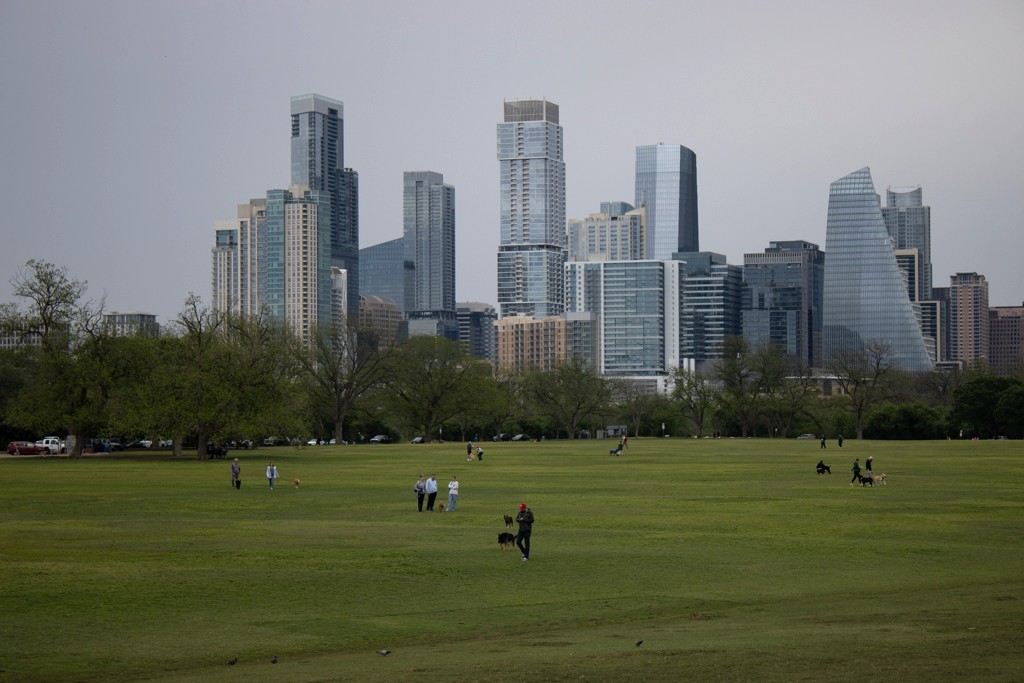
Austin City Council passed a resolution to create a process to protect city-owned parklands from being condemned, which can lead to park loss. The proposed process will be published by May 28.
“We’re not making any more land around here,” said District 5 Council Member Ryan Alter, who supported the resolution. “We need to protect the land that we have and that the public has a right to use.”
The March 26 resolution came in part because of “park deficiencies,” where a person either does not live within a quarter-mile or a half-mile within a park, depending on where they are in the city, occurring throughout all council districts. The city only met 70% of its goal to provide all residents with park access, according to the resolution.
“These are pieces of land that are more valuable than just the dollars and cents, right?” Alter said. “Our outdoor spaces are absolutely vital, especially in the urban area where they’re diminishing.”
Through interlocal agreements, the city and Austin Independent School District have historically allowed certain lands to be jointly used as school playgrounds and parks for the public.
The district began in 2020, condemning or buying out the city’s interest in the agreement in these properties, which included around 95 acres of land located around its campuses, according to the resolution.
The district is continuing to monitor the city’s process as the proposal is developed, James Valadez, the district’s director of real estate and asset management, wrote in an email.
“Austin ISD’s role in this initiative is as a partner in conversation,” Valadez wrote. “The district follows a structured process to determine whether a site is needed for district purposes or can be repurposed. Any condemnation proceedings are governed by state law. Any coordination with the City would complement the district’s process, not replace it.”
Junie Plummer, a board member of EverGreen Austin, an organization advocating for more green space and infrastructure, said that she realized these condemnations were occurring without a clear plan to replace them.
“If you condemn 3.275 acres here, where’s that replacement?” Plummer said. “We just began to really want to advocate for the protection of our existing parkland, much less advocate for additional funds for new parks.”
Alter said part of this resolution is looking at how to mitigate the impacts of parkland loss.
“We’re not just doing a monetary transaction, but we’re … preserving public access to public spaces and park spaces,” Alter said.