
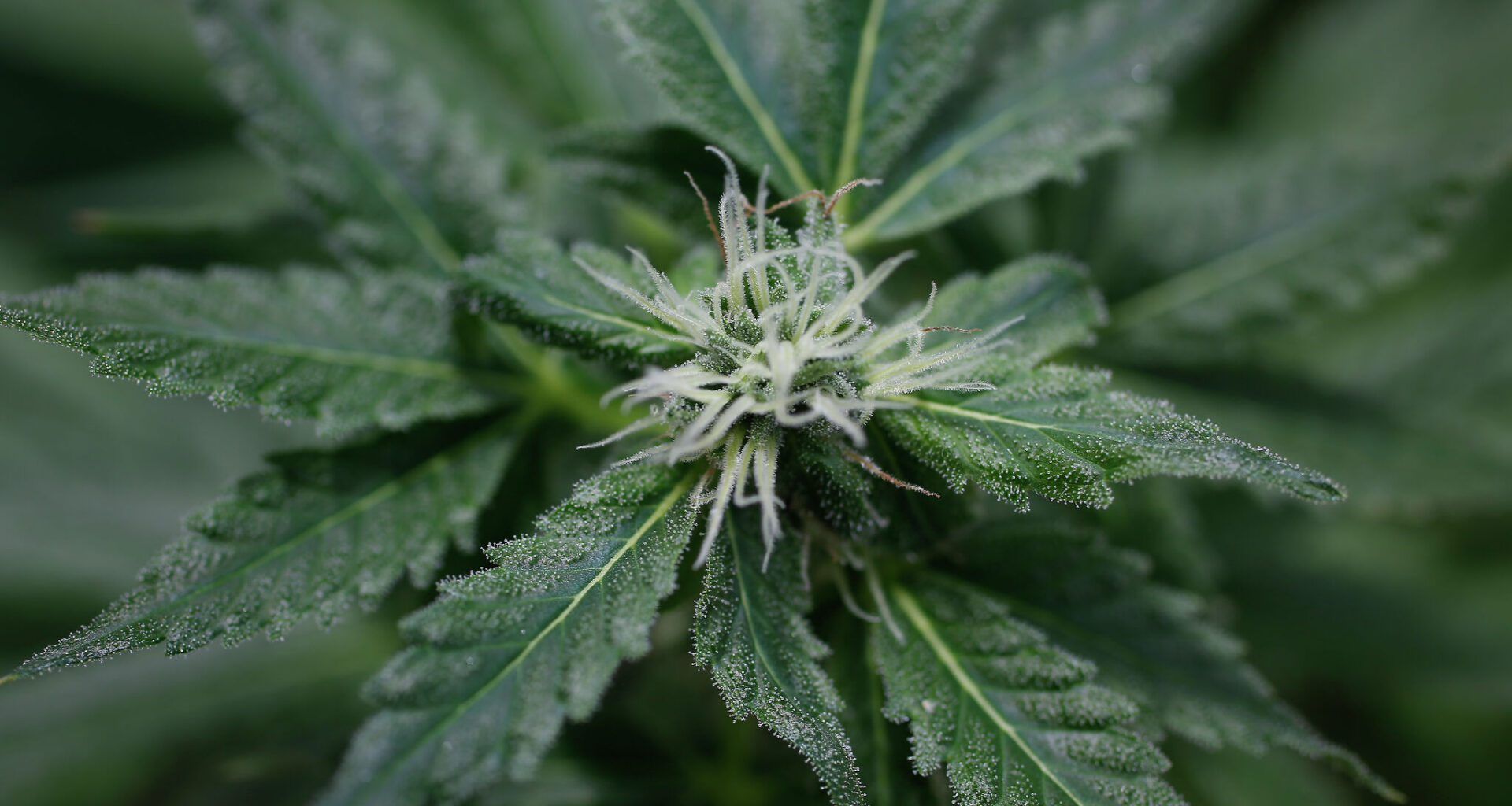
A hemp / legal cannabis plant in a greenhouse at Texas A&M Soil and Crop Sciences Friday, April 8, 2022, in College Station. The cannabis plants greenhouse, each containing no more than the legal limit of THC in Texas. These hemp plants can be grown and sold legally.
Steve Gonzales/Staff photographer
Bahama Mama’s flagship store on Westheimer Road in Montrose. Many of Bahama Mama’s 85 stores across Texas will struggle to stay open if Gov. Abbott signs a statewide ban on hemp-derived THC and CBD products.
Raquel Natalicchio/Staff photographer
Industrial hemp is shown under a grow lights in a greenhouse at Prairie View A&M University in Prairie View, Wednesday, March 26, 2025.
Melissa Phillip/Houston Chronicle
Unprocessed harvested hemp on Thursday, June 24, 2021, in Houston.Bayou City Hemp is one of the largest hemp manufacturing outposts to launch since Texas legalized hemp in 2019. Founding executives left the oil and gas industry after the bill passed and got into the growing CBD industry.
Godofredo A. Vásquez/Staff photographer
Howdy is one of the non-alcoholic seltzer brands from Bayou City Hemp.
Courtesy of Bayou City Hemp
Petitions asking Gov. Greg Abbott to veto SB3, which would restrict THC, are displayed at a news conference on the last day of the 89th Texas Legislature at the Capitol in Austin, Monday, June 2.
Jay Janner/Austin American-Statesman
Lt. Gov. Dan Patrick speaks about a range of intoxicating THC products available in Texas to illustrate his concerns that seemingly harmless snacks and drinks pose a danger to public health among children and adults. He urged reporters during a news conference to “take this story seriously,” as Senate Bill 3, which bans all THC products and has been sent to Gov. Greg Abbott’s office on Wednesday, May 28.
Sara Diggins/American-Statesman
There was once a full-service retail shop that sold dozens of strains of marijuana, a handful of hallucinogens and other felony illicit drugs in the heart of a major Texas city’s bar district.
I visited this 21st-century speakeasy four years ago after a friend vouched for me with the owner. I’m going to call him Dale McKussic, after the main character in the 1988 movie Tequila Sunrise.
Because, like the fictional McKussic, the shopkeeper gave up selling illicit drugs three years ago to start a legal hemp business, only for a feckless government to make him reconsider going legit.
Article continues below this ad
“We had quite the menu, if you recall,” he reminded me when we caught up recently. “When you have everything, something for everyone, it was really good. And no sales tax. Just my own personal tax. It was very lucrative.”
Leaving the shadows
McKussic’s store resembled the posh marijuana dispensaries found in Colorado or New Mexico, where it’s legal. Display cases held a dozen glass jars full of marijuana flower and four flavors of magic mushroom chocolate bars. A digital menu on a 60-inch TV offered LSD, MDMA, DMT, Ketamine and other hallucinogens that new scientific research says have real potential to treat addiction, depression and PTSD.
Because fundamentally, McKussic sees himself as a purveyor of natural medicines that mainstream society does not understand. He says he won’t sell destructive drugs like crack cocaine. He thinks adults should have choices.
Article continues below this ad
McKussic made the jump to the legal trade after selling drugs illicitly for 10 years. He’s never been arrested or charged with a crime. Most of all, he doesn’t want to spend his child’s youth in prison, which is why I’m protecting his identity so he can speak freely.
When I visited the store, carpenters were expanding the showroom so McKussic could open to the public, selling hemp and CBD products legalized under the state and federal farm acts in 2018.
Hemp is the same plant as marijuana, only with lower levels of THC, the compound that makes people feel stoned. Advocates hoped the new law was the first step toward society recognizing the utility of all traditional plant-based remedies, so-called soft drugs, which they argue are safer than alcohol or pharmaceuticals.
Lt. Gov. Dan Patrick, however, had other plans. He didn’t like that people were getting high from hemp, so last year, he tried to ban all THC products, including popular gummies that contain delta-8 and delta-9 THC compounds. Gov. Greg Abbott rejected the bill but ordered the Texas Department of State Health Services to come up with new rules for THC products.
Article continues below this ad
On March 31, Texas imposed new regulations that ban the sale of smokable THC products and drastically raise administrative fees on hemp shops from $160 a location to $5,000. Smokable hemp is the industry’s most popular product, representing 70% of retailers’ revenue, according to the Texas Hemp Federation. The political fight and a lawsuit filed on Wednesday challenging the rules will create uncertainty for business owners.
“It’s kind of hard when every six months you hear that we’re going to lose everything, which we kind of have in a sense,” McKussic said. “We have to make money in order to survive, but we’re very passionate, and we’re going to keep doing what we can to provide this medicine for people.”
Stifling entrepreneurs
The new regs couldn’t come at a worse time for Brian Bernardino, the co-owner of Pens and Papers 210. The San Antonio hemp delivery business is scheduled to open its first storefront on April 20 and cannot sell its bestselling products.
“The new regulations are going to mess up sales,” he told me. “Hardly anybody asks for gummies or drinks.”
Article continues below this ad
Connoisseurs prefer inhaling cannabis THC in smoke or vape form because unique strains smell and taste different. Experienced users also feel the effects more quickly and can modulate their high. Gummies or drinks can take an hour to kick in, and impatient people can overconsume and feel more stoned than they intended.
“Some people who take gummies, or even edibles or drinks, they’ll tell you about a bad aftertaste,” he said. The delivery business has already dropped off dramatically since the ban on smokeables, he added.
Bernardino says some people may go back to buying marijuana illegally. But based on his experience in the delivery business, he suspects more will order hemp online from other states, costing Texas growers, distributors and retailers their livelihoods.
McKussic and Bernardino say they will experiment with turning their shops into cafes, where cannabis enthusiasts can try THC drinks and gummies alongside coffee, soft drinks and snacks. But they will lose that business, too, unless Congress reverses a federal law passed that will ban all THC products in November.
McKussic says he will go back to the speakeasy model, which exists in almost every city.
Article continues below this ad
“I went legal, and people didn’t like it,” he said, laughing about his customers’ dismay. “They didn’t accept it. So, maybe I’ll get those clients back.”
Business people like McKussic and Bernardino are not comic book villains forcing naïve children to take deadly drugs. They believe THC and mild hallucinogens offer adults a better alternative to alcohol and pharmaceuticals, and people should choose for themselves.
Every month, new research supports their arguments. But they still suffer from an outdated stigma and prohibition that will likely do more harm than good by criminalizing plants that humans have used for millennia.
Award-winning opinion writer Chris Tomlinson writes commentary about money, politics and life in Texas. Sign up for his “Tomlinson’s Take” newsletter at houstonchronicle.com/tomlinsonnewsletter or expressnews.com/tomlinsonnewsletter.