
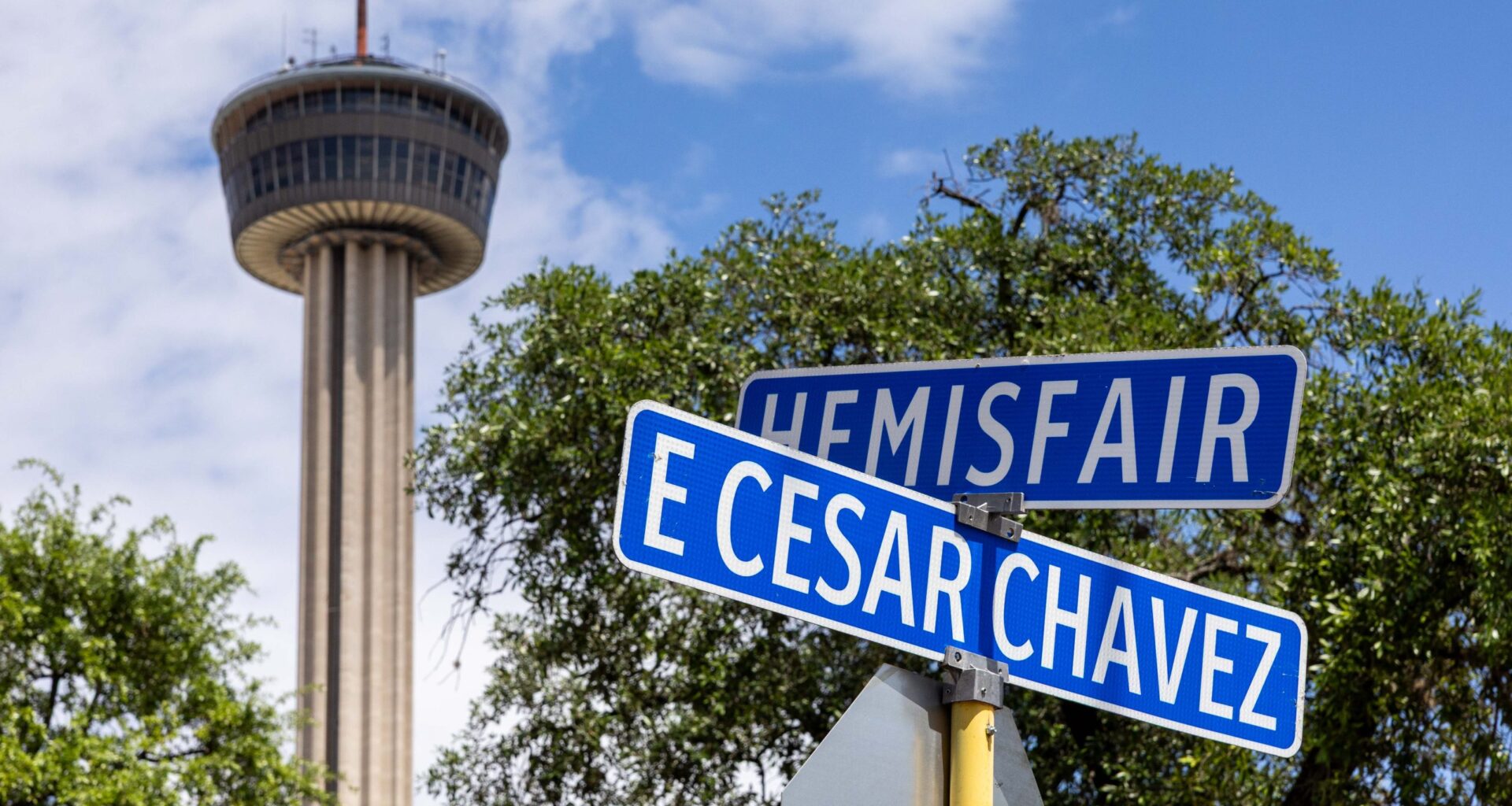
San Antonio officials are moving forward with plans to rename Cesar E. Chavez Boulevard, with survey results showing most respondents favor reverting to the street’s historic name, Durango Boulevard.
A city survey conducted March 23 through April 2 drew more than 18,000 responses, with 64% supporting a return to Durango Boulevard and 36% suggesting alternative names. Support was even stronger among people who live along the corridor, where 79% of respondents favored reverting to Durango.
City officials are now gathering in-person feedback through community listening sessions as they work to determine what the street will be renamed.
At a Wednesday evening session at Jaime’s Place on the West Side, residents voiced a range of opinions — from restoring the original name to honoring broader movements or local figures tied to the community.
Raymond Najera, who grew up near the city’s core, said he supports returning the name to Durango Boulevard, pointing to its long-standing place in San Antonio’s history prior to its name change in 2011.
“I always knew it as Durango Street whenever we would go downtown,” he said. “Bringing that back to its original state would be more appropriate.”
Others said the name should reflect the broader legacy of farmworkers rather than a single individual.
Isabel Herrera, an East Side resident, said she would prefer “UFW Boulevard,” referencing the United Farm Workers movement.
“I would like to see it renamed to UFW Boulevard … so that it emphasizes all the voices who took part in the movement,” Herrera said.
Other residents proposed a range of alternatives, including honoring local civil rights leaders, military figures and historical figures tied to San Antonio’s West Side, reflecting a broader debate over how the street should represent the city’s identity moving forward.
But some residents said the street should not be renamed at all, citing concerns about cost and the impact on those who live along the corridor.
Rachel Linares, who grew up on the West Side, said she opposes changing the name, pointing to both the financial burden and Chavez’s broader legacy.
“It would be ridiculous for everybody to be paying so much money — taxpayers’ money or their own money — for the change,” Linares said. “Just leave it as it is.”
The cost
Logan Sparrow, assistant director for the city’s Development Services Department, estimated the total cost of a name change could run between $200,000 and $300,000, with most of that tied to replacing street signage, notifying agencies and assisting residents through the process.
City leaders said they are now weighing how to manage both the cost and the impact on residents as they review survey results and community feedback.
Councilman Ric Galvan (D6) said the city is exploring ways to reduce that burden, particularly for residents who would need to update addresses, identification and other records.
“We want to make sure that we’re trying to support them,” Galvan said. “We’re trying to find creative ways to spend some funding on that so that residents don’t take it all on their own.”
Galvan said officials are considering using leftover funds tied to the canceled Cesar Chavez march, along with exploring assistance from any remaining funds the Cesar Chavez Foundation may have had after shutting down, to help offset costs for those living along the corridor.
What’s next
Once the city determines a name, the renaming process would require a formal City Council request before moving through multiple stages of review, including the Governance Committee, Planning Commission and Historic and Design Review Commission.
Sparrow said the process typically takes about two to three months once formally initiated, though that timeline can vary depending on the review process.
Even after a decision is made, it could take several more weeks for city street signs to be replaced, with Texas Department of Transportation signage potentially taking months longer.
Before any of that can begin, city leaders must determine what the street will be renamed.
Councilwoman Teri Castillo (D5) said that while survey results show strong support for reverting to Durango Boulevard, officials are also hearing a range of proposals from residents who want the name to reflect San Antonio’s labor history and local identity.
“What’s telling today and evident is that residents throughout the city of San Antonio want to continue to honor the labor history and labor organizers here in San Antonio,” she said.
Residents who were unable to attend Wednesday’s meeting will have another opportunity to weigh in Saturday, April 11, from 3 to 5 p.m. at Tony G’s Soul Food on the city’s East Side, as officials continue gathering input before selecting a final name.