
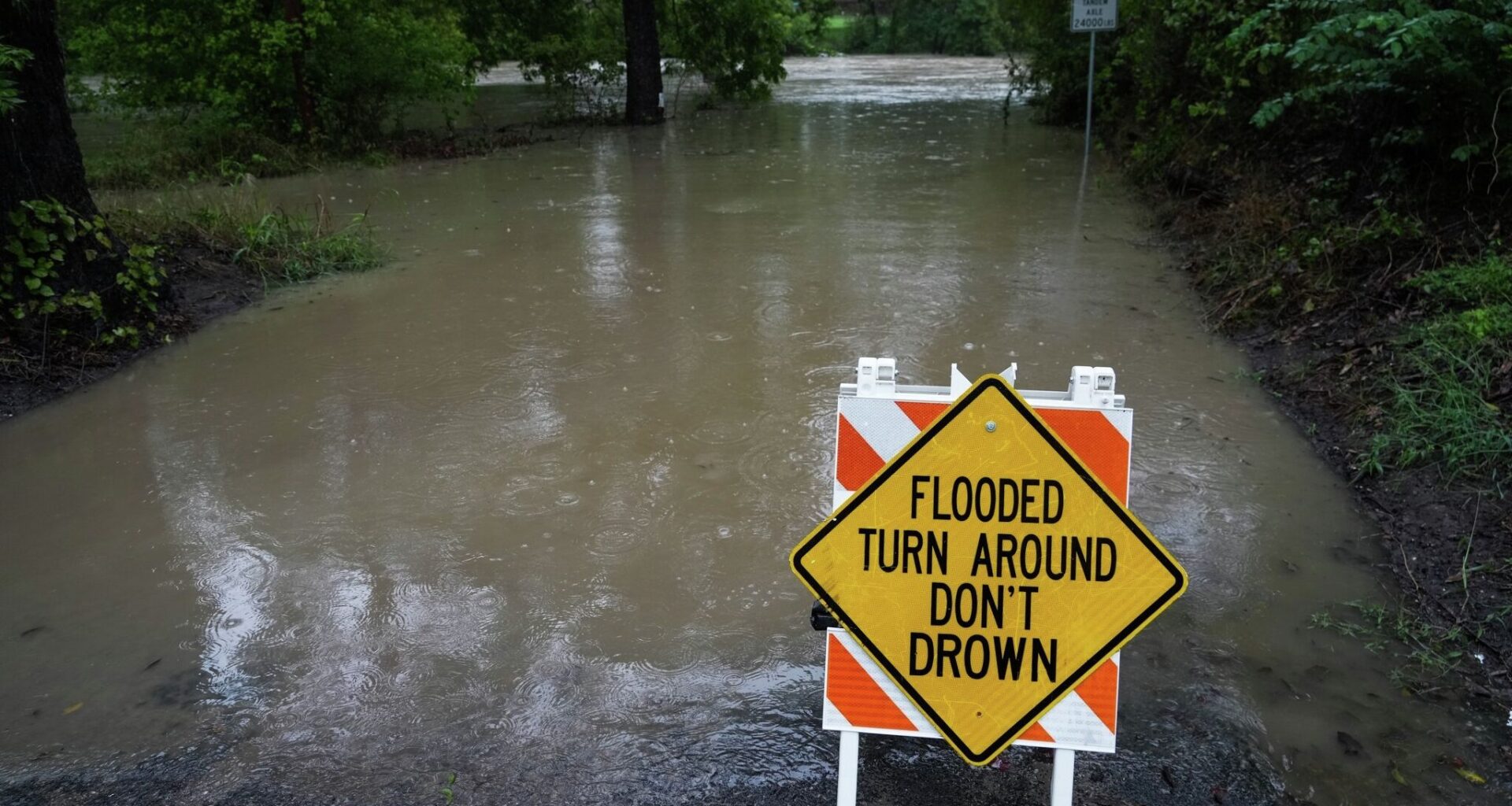
Flooding is one of the leading weather-related killers in the United States, causing an average of 90 deaths each year, according to the National Weather Service. More than half of those deaths occur when people walk or drive around barriers and into flooded roadways.
Many people underestimate the force and power of moving water. Just 6 inches of fast-moving water can knock an adult off their feet, while about 12 inches — the height of a cowboy boot — can float most vehicles.
Because most flood-related deaths are preventable, the National Weather Service launched a flood safety campaign in Texas more than 20 years ago during severe weather season, promoting the now widely recognized slogan: “Turn Around, Don’t Drown.”
The lifesaving campaign originated by Hector Guerrero, a warning coordinating meteorologist at the National Weather Service forecast office in Brownsville who became concerned about the safety of hurricane evacuees traveling from the Texas Gulf Coast to Central Texas. He worried that folks might flee from the hurricane, but they would be unfamiliar with the hazards of living in “Flash Flood Alley.”
He brought the warning idea to a team that included the National Weather Service Southern Region Headquarters, the Texas Division of Emergency Management, the Federal Alliance for Safe Homes, the Texas Floodplain Management Association, and the City of Fort Worth Fire Department to develop a broader campaign and safety program.
In 2004, the National Oceanic and Atmospheric Administration officially launched the “Turn Around, Don’t Drown” campaign to warn people about the dangers of walking or driving through floodwaters. Since then, hundreds of “Turn Around, Don’t Drown” signs and billboards have gone up along roads prone to flooding.
Guerrero’s four simple words have since become widely recognized and used by emergency officials and media outlets across the country. The “Turn Around, Don’t Drown” makes it easy to remember that, when faced with floodwaters, it is always safer to find an alternative route or wait for the water to recede rather than risk one’s life by attempting to cross.
“We can’t control the weather, but we can try and encourage all of our fellow Americans to make the right decisions when they are faced with a flooded roadway,” Guerrero said. “We wanted to make it very simple and that’s why the catchy slogan was very important.”
Recognizing the dangers of flash flooding across Central Texas roadways, the city of Austin supports a valuable resource for heavy rainfall events called ATXFloods.com. The site provides real-time updates on flooded roads, low water crossings, and closures across Travis, Williamson, Hays and Bastrop counties.
It is operated by the city through its Watershed Protection Department in a partnership with the Capital Area Council of Governments and other emergency management agencies.