
As Corpus Christi continues a fierce fight against the impacts of record-breaking drought, what led to this point reflects the history of hundreds of years of water development, according to an academic expert.
While there are differences compared to some of the earlier political dynamics in the state — and while the stakes have grown greater — “when I first started seeing articles about the Corpus Christi situation, I was struck immediately by this sense that sometimes things never change,” said Kenna Archer, an associate professor of history at Angelo State University.
Looking through a more than 200-year-old lens, Archer is set to bring her expertise to Texas A&M University-Corpus Christi with a presentation on April 16, offering a broad perspective of Texas’ history of water development, with some ties to some local and contemporary events.
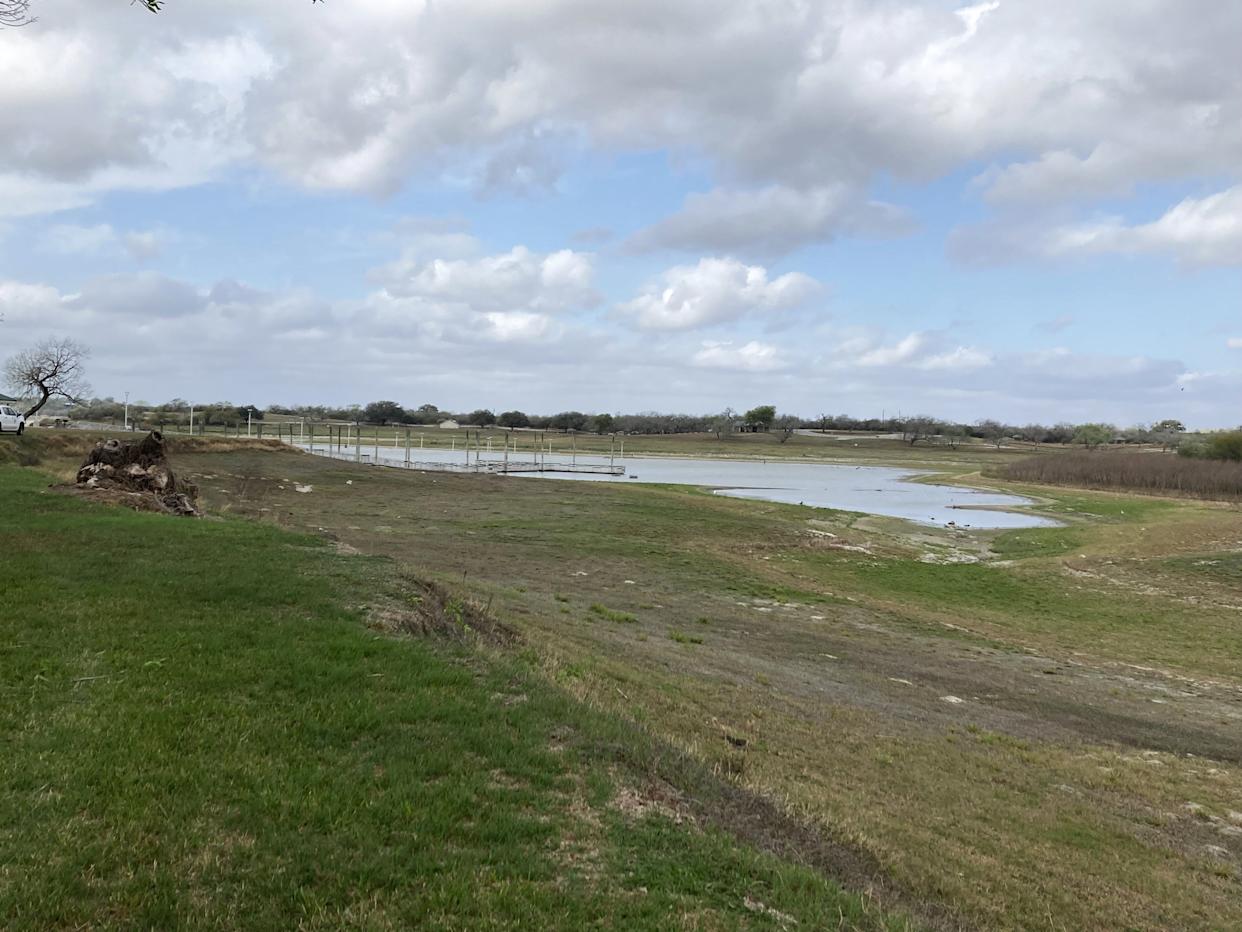
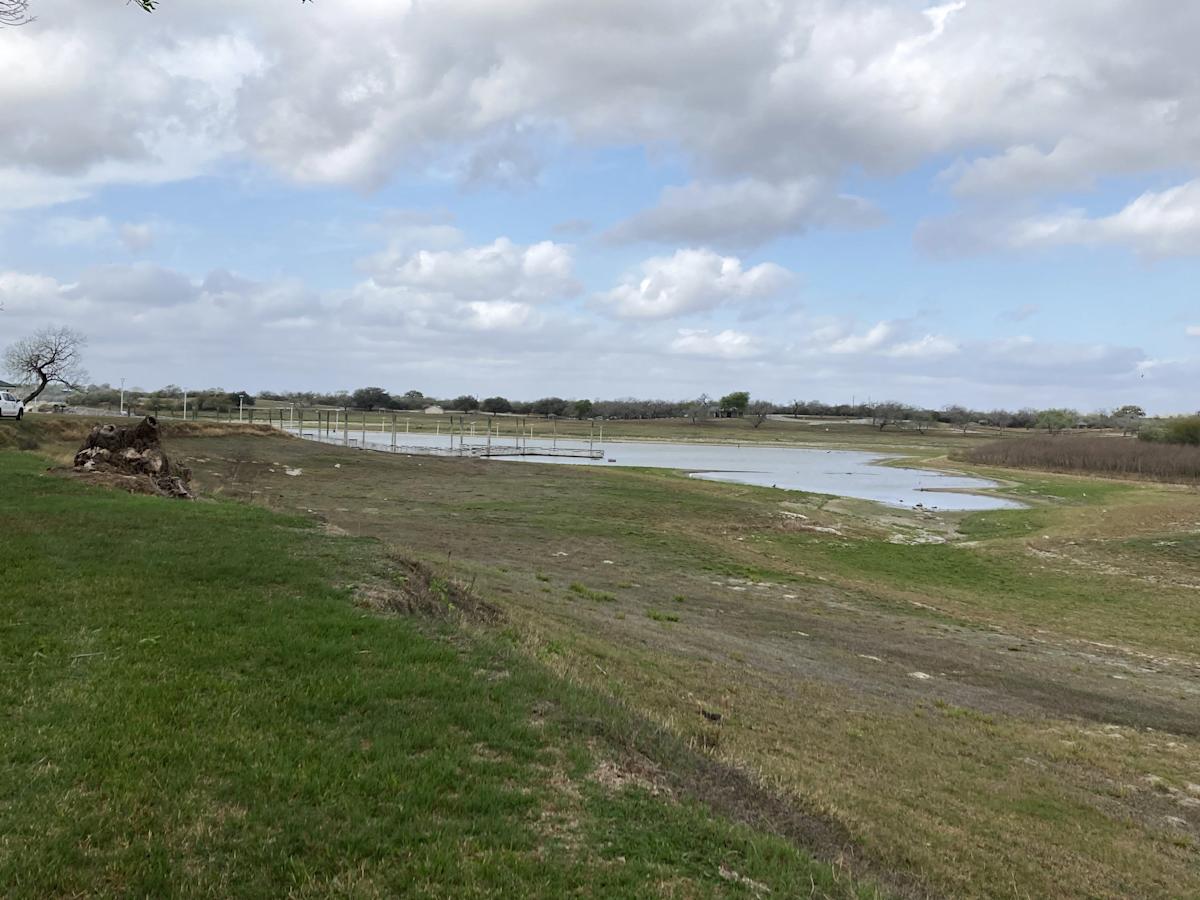
Lake Corpus Christi was recorded on March 5 at its historically lowest level, 9.9%.
“For much of Texas’ history, the focus was not on developing our water resources out of fear over water scarcity,” Archer told the Caller-Times on April 9. “That’s part of why we’re struggling right now — because for so long, water development was geared towards navigation or it was geared towards irrigation, but irrigating cotton fields in the Panhandle, not necessarily thinking about water resources to prop up cities.”
More on water crisis: Surcharge exemption remains for industry through water emergency
The idea of the forum is to provide the community a better contextual understanding of the city’s current water issues, according to TAMU-CC associate history professor Chris Wilhem.
“Everything has a history, and many of our social and political issues are rooted in it,” he stated in an April 13 email to the Caller-Times. “We invited Dr. Archer because water challenges in Corpus Christi and the Southwest run deep.”
‘Interurban conflicts’
What Archer described as “interurban conflicts” over water development can be found going back as far as the 1840s, when the city of Victoria was “complaining that they’re not getting enough support from the state or different groups to develop their bays and inlets and their passes because all the money is going to Galveston,” Archer said.
“You can look at the 1850s and Corpus is making similar complaints — ‘we are going to have to fund this by ourselves because we are not getting public money, it’s all about Houston, it’s all about Galveston,’” she said. “Even in Galveston, they’re complaining that it’s all Houston.”
Politics are among the challenges in water development, Archer said, and can “manifest in a lot of different ways,” extending state and local levels.
That includes groundwater.
“You are going to have politics at the local level between different communities that are going to prioritize and privilege some projects over other projects,” she said. “You can see this playing out, for example, in the Chicot and Evangeline aquifer projects, where the perception is that some communities will be benefited more than others and so that shapes the support sometimes you have for projects.”
Groundwater, she noted, falls under what is known as the “rule of capture” in Texas — sometimes described, Archer said, as “rule of the biggest pump” or her term, “finders keepers.”
Rule of capture means that property owners own not just the surface land area but also the water beneath the acreage, and may use it without regulation as long as the use is considered beneficial.
Regulation wasn’t available until the late 1940s, with the first groundwater district formed in the Panhandle in 1951, Archer said.
Nueces County currently does not have a groundwater conservation district, although there have been efforts to form one since groundwater well field developments have been pursued in earnest in the county. The now-existing well fields are currently regulated under the Corpus Christi Aquifer Storage and Recovery District.
The Evangeline groundwater project, meanwhile, is to be regulated by the San Patricio Municipal Water District.
Water development
Within the scope of history, Corpus Christi is among cities that had initially focused hydrological development on infrastructure related to shipping and navigation, such as development of the bays, inlets and jetties, Archer said — only later moving on to infrastructure more focused on water supply, such as reservoirs and dams.
Like much of the state, an eye on water resources first emerged after World War II, she said.
Proposals to boost supply in the 1970s ran the gamut, according to Archer — including importing water from Canada or Southern California, and a citizen’s suggestion that nuclear bombs be employed to develop reservoirs.
Although the upcoming forum will include discussion on some of the contemporary issues — for example, drought, groundwater, population growth and data centers — it will primarily focus on a 200-year state history, starting with Stephen F. Austin in 1821, Archer said.
The disputes over water reflects the awareness of water’s importance, she said.
“We become really invested in our water resources, partly because it’s something we take for granted until it’s no longer there,” Archer said.
Archer’s presentation, titled “When the Well Goes Dry: A history of water feast, water famine and hydrological development,” is scheduled for 6 p.m. April 16 at Texas A&M University-Corpus Christi’s University Center, in Legacy Hall.
Kirsten Crow covers city government and water news. Have a story idea? Contact her at kirsten.crow@caller.com.
Consider supporting local journalism with a subscription to the Caller-Times.
This article originally appeared on Corpus Christi Caller Times: Water development, politics go back hundreds of years