
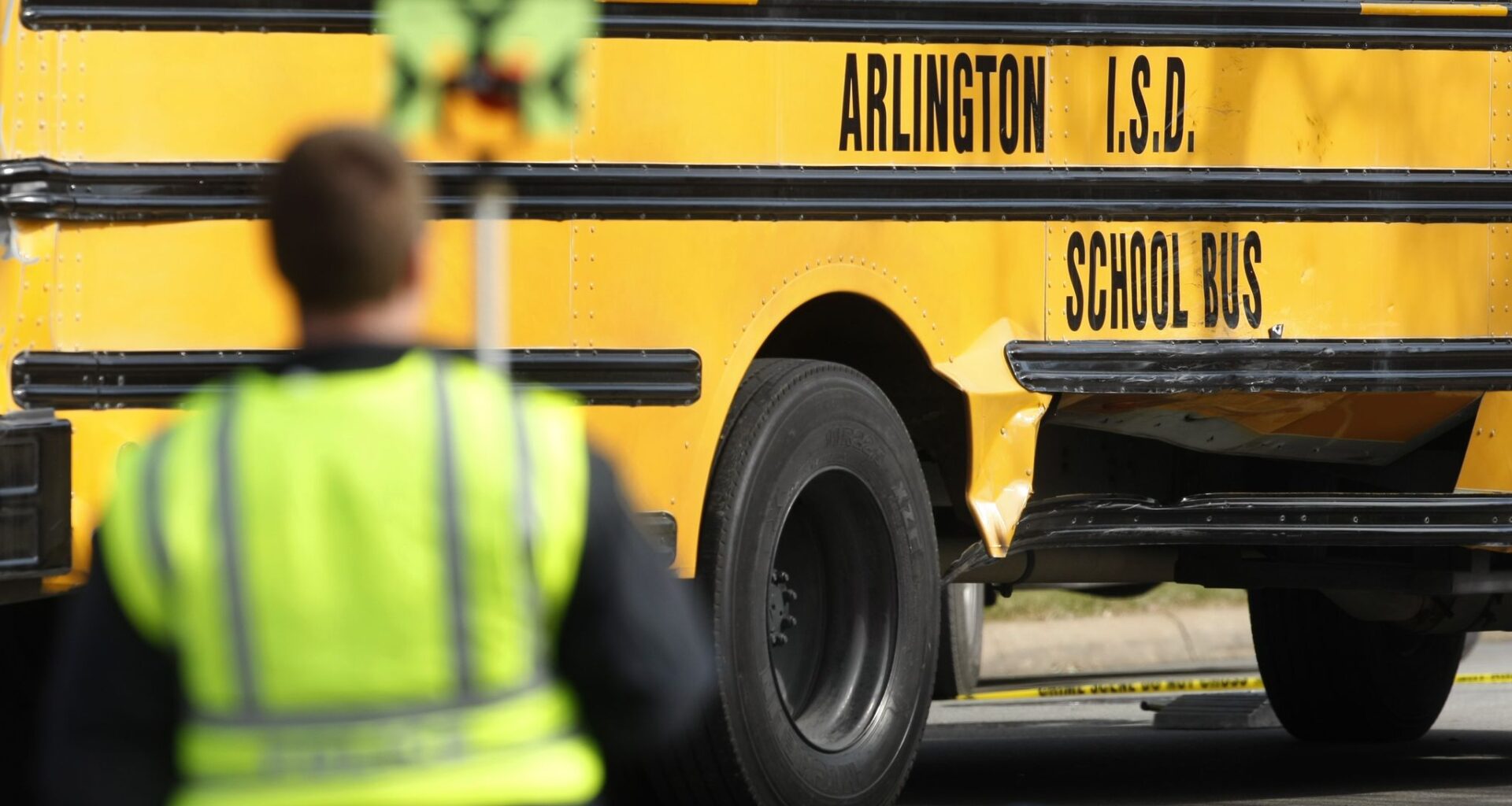
Arlington ISD is asking voters to approve a bond package totaling about $501.3 million. If passed, the funds would replace two elementary schools, upgrade technology, improve athletic equipment and more.

Districts use bonds to raise money for major construction projects that can stretch for many years. State funding is restricted to day-to-day expenses, like teacher salaries and supplies, leading districts to call bond elections.
It’s a bond measure that would impact a district serving about 51,100 students across roughly 76 campuses. Ahead of the bond election on May 2, here’s what you need to know.
Article continues below this ad
Related: 2026 May election voter guide
What is a bond?
Similar to a home mortgage, a bond is a contract to repay borrowed money with interest over time. Essentially, the district is taking out a loan and paying it back.
Make Dallas News a preferred source so your search results prioritize writing by actual people, not AI.
Add Preferred Source
Related: Dallas ISD’s $6.2 billion bond issue is on the May 2 ballot. Here’s what to know
Article continues below this ad
School districts can sell bonds to competing lenders to pay for major renovations and construction projects. Districts are required by law to ask voters for permission to sell bonds to investors. Bond funds cannot be used to pay for daily expenses, like teacher salaries or supplies.
The bond election is May 2. Polls will be open from 7 a.m. to 7 p.m. Early voting runs from April 20 through April 28.
What will voters get with Arlington ISD’s bond money ?
Arlington ISD’s bond proposal is broken into three parts. As of 2020, school districts are required by state law to separate their bond election into ballot propositions. That allows voters to veto certain projects, while approving others.
Article continues below this ad
Proposition A ($438.8 million) is the largest of the three. It would replace South Davis Elementary and another elementary school that has not been identified yet. The second campus will be announced, following an analysis of enrollment trends. The proposition would fund security upgrades, 45 new school buses and upgrade equipment in fine arts and special education programs. Proposition A would also build a facility for its 18 PLUSS Special Education program, which offers vocational training support for students with special needs.
Proposition B ($31 million) would replace technology.
Proposition C ($31.6 million) would install synthetic turf at six high school baseball and softball fields, add athletic storage facilities and replace athletic equipment.
How did Arlington ISD identify what to include in the bond?
Arlington ISD conducted a “comprehensive, independent third-party review” of its facilities, according to its website. A committee — made up of parents, educators, business owners and more — identified improvements and presented recommendations to the school board.
How much will the bond cost homeowners in property taxes?
The bond would be funded with a one-cent increase to Arlington ISD’s current tax rate, per financial projections. The tax would not affect homeowners over the age of 65 who have filed for the exemption with Tarrant County.
Article continues below this ad
When was Arlington ISD’s last bond election?
In 2019, Arlington ISD asked for a $966 million bond issue, which ultimately passed. About $852.7 million went toward renovating facilities, classrooms and a full-day pre-K program.
The 2019 bond issue entails 95 construction projects: 28 are still being designed, 17 are under construction, 20 have been completed and 30 are for the future, according to the district website.
Related: ‘This isn’t just about a ride’: DART riders voice concern as 3 withdrawal elections loom
Article continues below this ad
Trustee Larry Mike cited setbacks from the pandemic and inflation. “They had to go back, rebid and redo things,” he said. “Inflation is the beast.”
Why is the district asking for more money?
Texas districts are constrained in the way they use state funding. Districts use state funding to pay for day-to-day costs, like teacher salaries and transportation, but those dollars can’t finance big renovations and new facilities. Instead, school boards turn to voters for approval to issue bonds.
In Arlington ISD, many campuses were built in the 1950s and 1960s. At some elementary schools, aging and poorly-designed HVAC systems are “maintenance-wise, just horrible to deal with,” Mike said.
Article continues below this ad
If the bond proposal doesn’t pass, Arlington ISD will be “stuck with the same facilities,” he said.
The district is in “dire need right now” due to a budget deficit and declining enrollment. Arlington ISD is expected to see under 50,000 students by 2032, compared with this school year’s roughly 51,100 students.
“If none of these bonds pass, we’re going to still have to make some tough decisions with regards to consolidating schools,” he said.
Compared with past years, Mike senses more pushback to the 2026 bond measure, which he attributed to a changing political landscape, enrollment challenges and a recent increase in city property taxes. For those who are skeptical, Mike encouraged them to take a visit and observe the state of a campus.
Article continues below this ad

By signing up, you agree to our Terms Of Use and acknowledge that your information will be used as described in our Privacy Policy.
“Look, if you have questions, don’t just … listen to me,” he said. “Don’t listen to anyone else. Go lay eyes on it, and you decide for yourself.”
The DMN Education Lab deepens the coverage and conversation about urgent education issues critical to the future of North Texas.
The DMN Education Lab is a community-funded journalism initiative, with support from Bobby and Lottye Lyle, Communities Foundation of Texas, The Dallas Foundation, Dallas Regional Chamber, Deedie Rose, Garrett and Cecilia Boone, Judy and Jim Gibbs, The Meadows Foundation, The Murrell Foundation, Ron and Phyllis Steinhart, Solutions Journalism Network, Southern Methodist University, Sydney Smith Hicks, and the University of Texas at Dallas. The Dallas Morning News retains full editorial control of the Education Lab’s journalism.