
Corpus Christi city leaders say key water projects are moving forward as reservoir levels remain critically low, with new timelines, contracts and conservation plans outlined during Thursday’s weekly update.
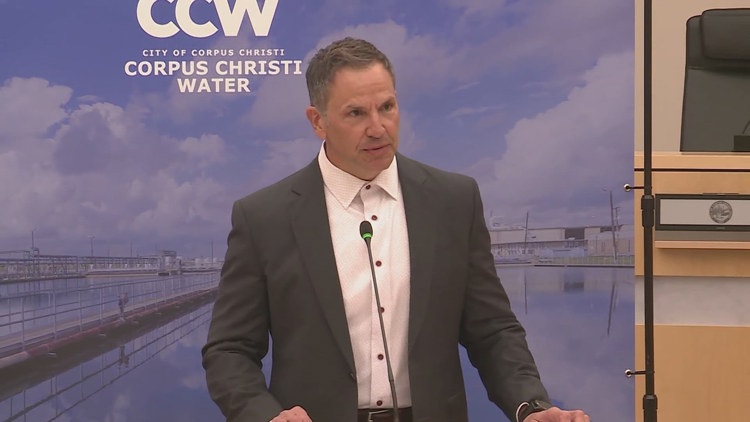
On Thursday’s weekly water briefing, City Manager Peter Zanoni said the city’s primary reservoirs continue to struggle. Choke Canyon dropped to 7.6% capacity, while Lake Corpus Christi held at 8.5%. In contrast, Lake Texana improved to about 54.8% after recent rainfall.
“We know we have two reservoirs in the west and one in the east,” Zanoni said, noting the city is closely tracking all sources as drought conditions persist.
To boost supply, the city reported progress on its groundwater program in Nueces County. Adding that 14 are now in place, producing about 14 million gallons per day—roughly two-thirds of the potential capacity due to water-quality restrictions.
“We’re only producing about 14 million gallons a day… about 7 million gallons less than what we could be producing,” Zanoni said, adding the city plans to seek flexibility from regulators.
A major milestone was also announced for a future project for the Nueces Groundwater Program. The city signed a contract with Aqualia to design and build a modular brackish RO system. The $175 million project is expected to begin producing water within 11 to 12 months.
“That project will be done in total in about 24 months, but we’ll begin to see it… in operation in about 11 to 12 months,” Zanoni said. “Producing 4 million gallons on the first phase,” Zanoni added.
In neighboring San Patricio County, a separate groundwater project is advancing quickly, reaching 60% design in just two months. Construction is already beginning, but pending legal challenges could impact permitting decisions later this month.
Meanwhile, a planned vote on the Inner Harbor desalination project has been pushed back to June 2 due to delays in environmental modeling. Officials say the extra time is needed to complete the analysis of potential impacts to the bay.
The city is also preparing for the possibility of a Level 1 water emergency. A workshop next week will outline potential restrictions, including water use reductions, fees, and limits on outdoor watering.
Despite conservation concerns, most public pools will remain open this summer, while splash pads will operate on reduced schedules.
“We do care about our families… the decision to keep pools and splash pads open is really a family-based one,” Zanoni said.
City leaders say more community meetings are planned to keep residents informed as conditions evolve and major water decisions approach later this month.