
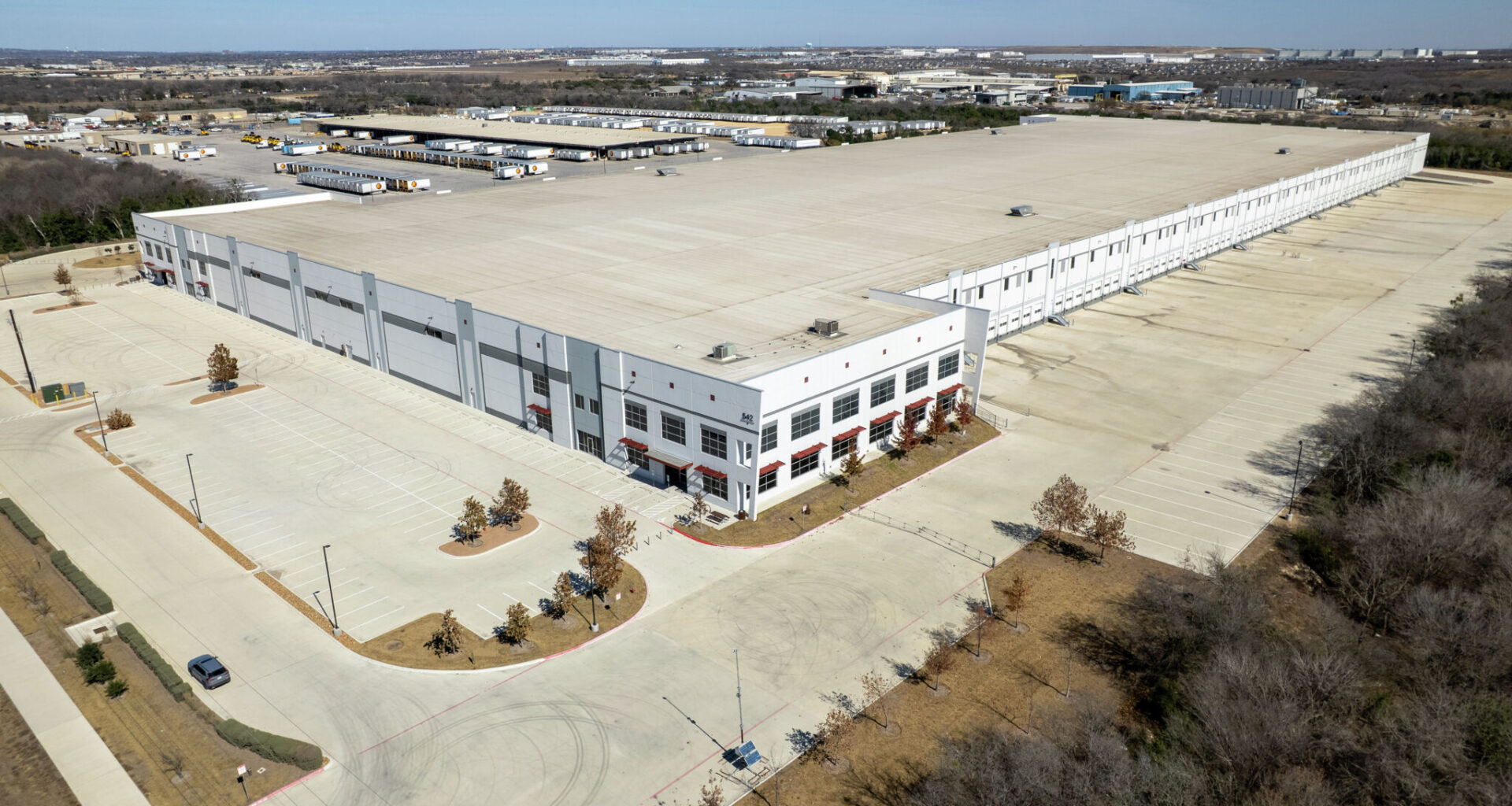
U.S. Immigration and Customs Enforcement in January purchased Oakmont 410, an industrial building constructed by Oakmont Industrial Group on San Antonio’s East Side.
Monte Bach/San Antonio Express-News
The City Council can’t do much to stop an immigration detention center that’s slated to open on the East Side, but a majority of members are trying to thwart private-sector companies from building a similar facility inside city limits.

In a 9-2 vote on Thursday, they changed the city’s zoning code to bar detention centers from opening within 1,000 feet of homes, schools, places of worship and public parks without City Council approval, among other new regulations.
Article continues below this ad
That won’t keep U.S. Immigration and Customs Enforcement from converting an empty warehouse it bought at 542 S.E. Loop 410 to a detention facility, a plan that sparked a backlash from local officials and residents. Council members’ hands are tied because the city has no zoning and permit authority over property owned or leased by the federal government.
Instead, they’re taking aim at what they can control: private facilities.
Operators would have to seek a special zoning designation to open a detention center, unless they can prove they are exempt from the rules — and only federal agencies are exempt. They also have to notify the city of their plans, a rule change that council members wanted because they and other local leaders had been caught off guard by ICE’s acquisition.
RELATED: Want to know how often San Antonio police assist ICE? Now you can.
Article continues below this ad
Most people in ICE custody nationwide are held at private facilities because the federal government has turned to companies for help as its detainee population has swelled. However, there are currently no privately operated immigration facilities in San Antonio.
Council members Marc Whyte and Misty Spears opposed the code revisions, calling them a waste of taxpayer money that could put the city in the crosshairs of Texas leaders.
“What is being attempted here today is to use our code and change it to make a political statement — a political statement regarding federal immigration enforcement activities — and to use our code for those purposes is simply wrong,” Whyte said.
He said Councilman Jalen McKee-Rodriguez, whose district includes the site of the planned ICE warehouse, led the charge and is “good at ginning things up like this.”
Article continues below this ad
McKee-Rodriguez shot back, saying Whyte was complaining about wasting city staff’s time after he spent several minutes “trying to get a quote in the paper.”
He said he’s concerned about poor conditions that have been documented at privately run immigration facilities, as well as companies that could work with the federal government to open centers in cities where ICE is increasing its presence — like San Antonio.
“It would be foolish to think that just because there aren’t any facilities now, that there won’t be in the future,” McKee-Rodriguez said.
ICE, which is part of the Department of Homeland Security, bought the warehouse as it expands its detention operations nationwide. The agency said it plans to turn the 639,595-square-foot building into a detention facility but has not said when it will do so.
Article continues below this ad
ICE said in a planning document two months ago that it will spend $38.3 billion to buy and renovate 34 detention and processing centers by Nov. 30.
Local officials and residents have cited a litany of concerns about the operation, ranging from potentially poor conditions for detainees to burdening city-owned utilities and emergency services to discouraging investment in an area that’s already struggling.
City Council members have been under pressure by San Antonians opposed to the center to keep ICE from opening it.
“For those on City Council who may hesitate to use your local authority because of a retaliatory state and federal government, we urge you to be bold,” ACLU Texas policy and advocacy strategist Sarah Cruz told council members Thursday. “You can play a critical role in protecting San Antonio residents and help keep families together.”
Article continues below this ad
“We understand that the city has been placed in a difficult position, that your options are limited and that you may have a lot of competing priorities, but helping protect constitutional rights of your residents should be among the top,” she said.
RELATED: San Antonio mayor urges feds not to open ICE detention facility
Brooks Development Authority CEO Leo Gomez and James Nortey, CEO of San Antonio for Growth on the Eastside, said in letters to City Council that they support the code changes because a detention facility would hurt businesses and residents on the East Side. Councilwoman Phyllis Viagran said people won’t want to open a store or restaurant near the detention center, or buy or rent a home in the vicinity.
“Texans don’t want to live next to detention facilities,” she said.
Article continues below this ad
The city’s Zoning Commission, a panel of residents that considers zoning requests, recommended at a recent meeting that council members reject the proposed changes. Commissioners called it political gamesmanship that they didn’t want city staff devoting more time to.
They also said the code revisions would be moot because ICE could get an exemption, and there aren’t any private detention centers in San Antonio that would be affected.
“This might be a (Unified Development Code) amendment in search of a problem,” said commission chair John Bustamante.
“We’re not a political instrument,” said Commissioner John Whitsett, who also complained that city staff had been rushed because City Council had set a 45-day timeline for the zoning changes. “We’re supposed to be a safeguard, and our job is to protect the integrity of the process, and when council uses us to try to jam something through that’s just for a symbol, I have a real problem with that,”
Article continues below this ad
Councilman Edward Mungia, who voted in favor of the code revisions, disagreed.
“I would just say that every decision that is made up here is political,” he said Thursday.