
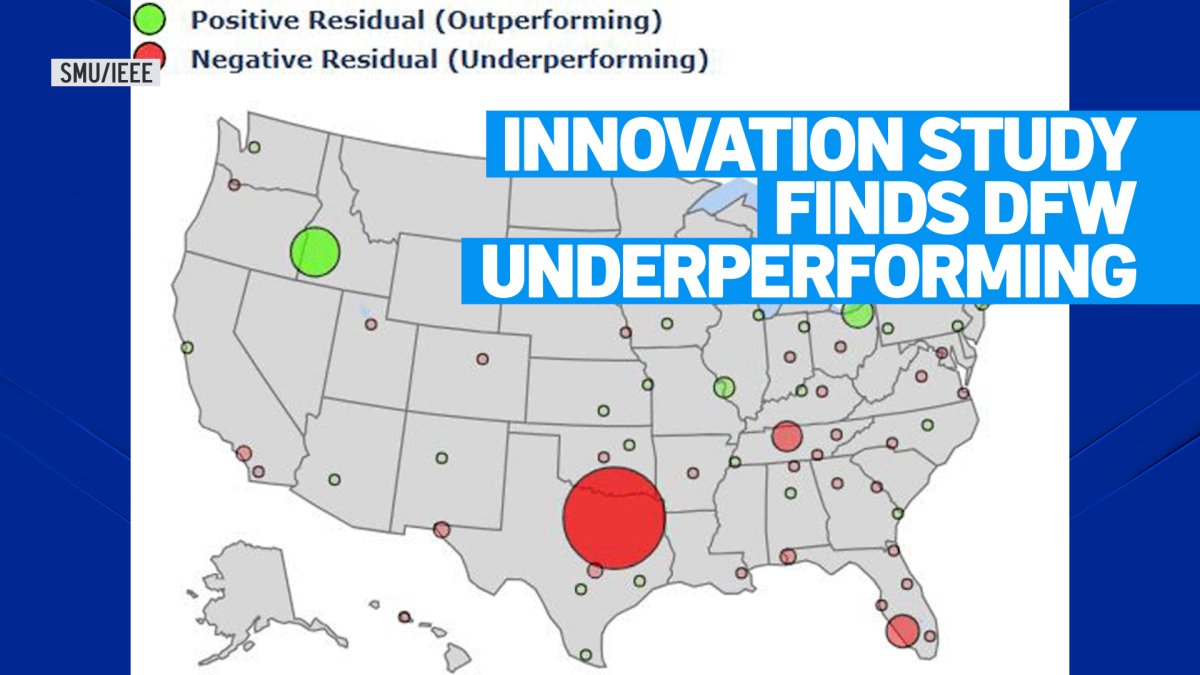
The study, led by researchers at Southern Methodist University and supported by the National Science Foundation, is part of a broader effort to better understand how regions can drive long-term economic growth through innovation.
Researchers say Dallas-Fort Worth is producing around 35% less innovation than expected based on its resources, leaving economic innovation potential untapped.
Khaled Abdelghany, Ph.D., is a professor of civil and economic engineering and one of the lead authors of the study.
“We define innovation productivity as: how will a city turn its resources, like talent, funding, and infrastructure, into real innovation?” Abdelghany explains, “real innovation is defined by the number of patents, by startups, and the new technologies.”
The study measured the DFW metroplex against 65 U.S. regions in patent activity and adjusted for income, unemployment, and startups. It found one significant gap that Abdelghany believes illustrates untapped potential for the region.
“Dallas has great universities, strong corporations, and startups, but they are not fully connected,” said Abdelghany, a professor of civil and environmental engineering at SMU.
The study found North Texas has the building blocks to compete nationally, but researchers say the region is not converting those strengths, which could impact economic growth and have long-term consequences over time.
“Innovation contributes to the economy by about 80%,” explained Abdelghany. “So if we continue to create a healthy, innovative ecosystem in the longer term, this helps the region to stay economically vibrant and strong, said Abdelghany.
Experts say that means missed innovation today could translate into slower job growth, fewer startups, and reduced competitiveness in the future.
The role of STEM education
Researchers say one of the strongest drivers of innovation is STEM education, and expanding that pipeline could help boost DFW performance.
“We found out that STEM is one of the strongest variables,” Abdelghany said. The study shows that a 50% increase in STEM degrees was associated with a 33% rise in innovation productivity.
He said increasing the number of STEM graduates in the region can directly fuel innovation by supporting new technologies and research.
“The human capital is really important in promoting innovation in any region or in any city,” said Abdelghany.
Impact of connectivity
Still, even with strong talent, experts say innovation depends on how well those resources are connected.
Abdelghany explained that an important first step to improvement is to encourage more connections between different cities and industries.
Researchers say DFW already has what it needs to compete nationally, but without building those pipelines and partnerships, much of that potential could remain untapped.
Abdelgany suggests that regional policymakers should explore the study’s data-driven insights and help find opportunities to create policy that fosters more innovation.