
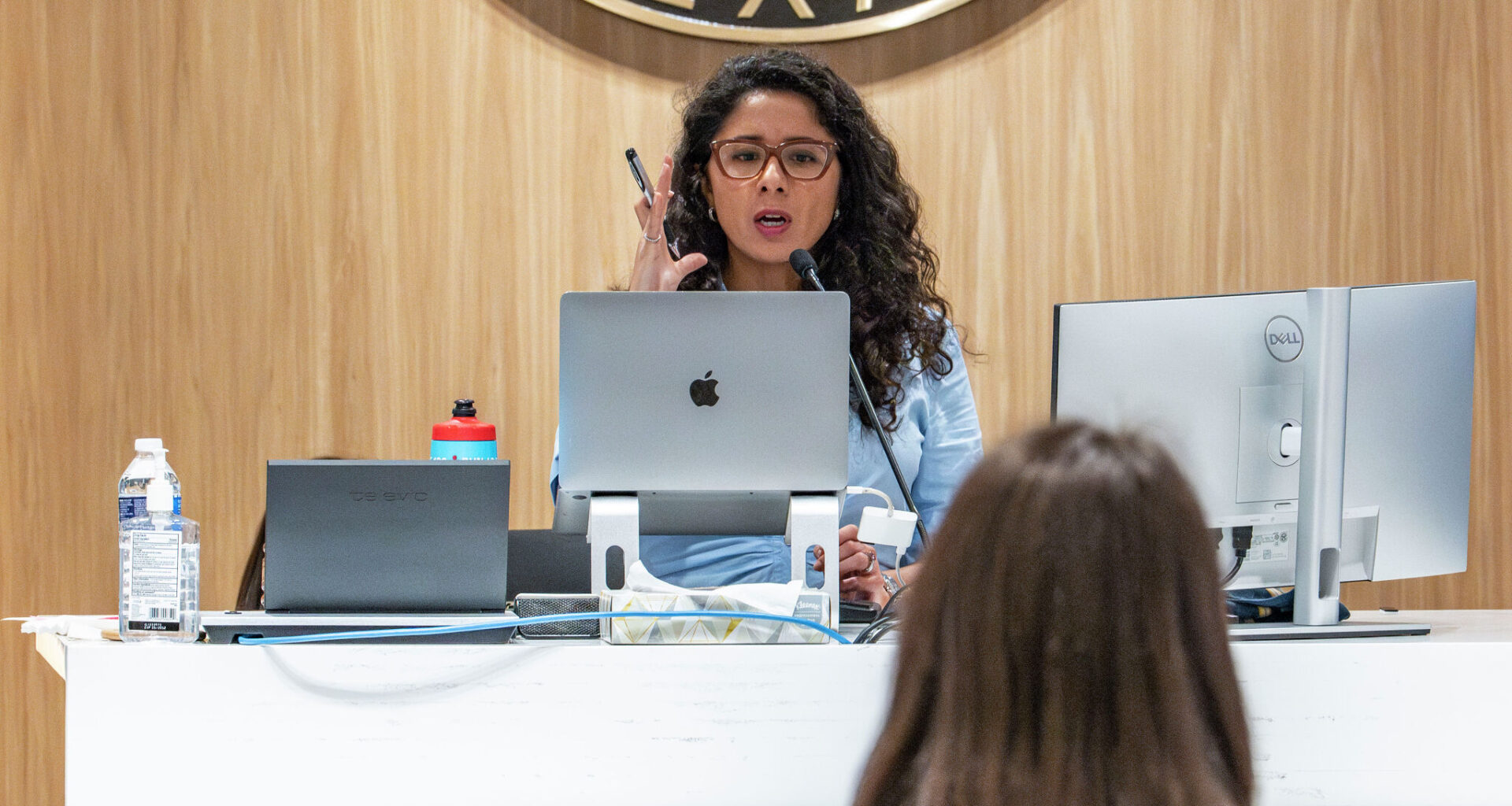
Hidalgo’s remarks came during a tense exchange at Commissioners Court with Petersen, who Hidalgo accused of failing to provide information on the status of 28 projects the district is funding with disaster recovery grants Congress approved after Hurricane Harvey. The grants come with strict deadlines, and Harris County could be forced to repay the federal government if it fails to meet them.
“I requested a timeline that showed where we are, what the deadlines are and what we’re going to do to meet those deadlines,” Hidalgo said to Petersen. “Unless I’m missing something, I think I just lost my confidence in you.”
Hidalgo said the district failed to provide details she sought on the status of the projects. She said she also asked for information on delays and their causes, and was “baffled” at how little information she received. Petersen said the flood control district “misinterpreted” the judge’s request, and promised to deliver the information Hidalgo requested.
Of the 28 projects the district is pursuing, all but two have yet to break ground. Eleven of the projects, earmarked for areas directly impacted by Harvey, must be finished by late February. The other 17, designed to mitigate future flooding elsewhere in the county, face a March 2028 deadline. All are funded by U.S. Department of Housing and Urban Development grants.
Commissioners unanimously approved a motion brought by Commissioner Tom Ramsey mandating that the flood control district provide monthly updates to Commissioners Court with specific project details and timelines. The first report is expected May 1.
While Hidalgo said she had lost faith in Petersen, Commissioner Adrian Garcia thanked Petersen for her work and noted that flood control had reported project deadlines, though not specific timelines. Commissioner Rodney Ellis warned that “judgement day” was approaching, and said the district must act fast to complete the projects.
Despite the dust-up between Hidalgo and Petersen, commissioners voted to approve the district’s request for staff to travel to Tokyo as part of a U.S. Army Corps of Engineers-funded trip to the Japanese capital to learn about its large-diameter tunnel system, which ferries storm water from the region to Tokyo Bay.