
Dominic Anthony Walsh / Houston Public Media
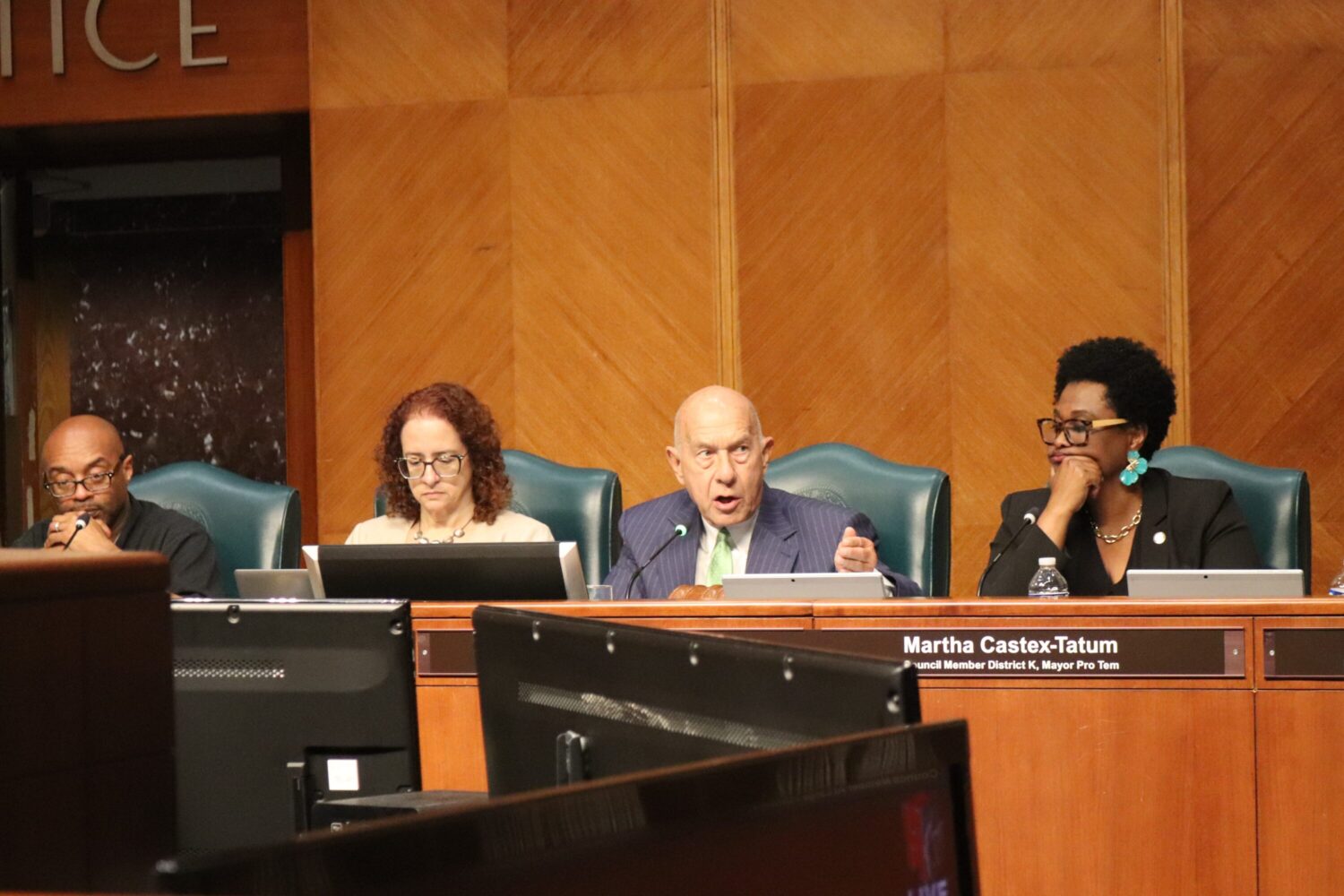
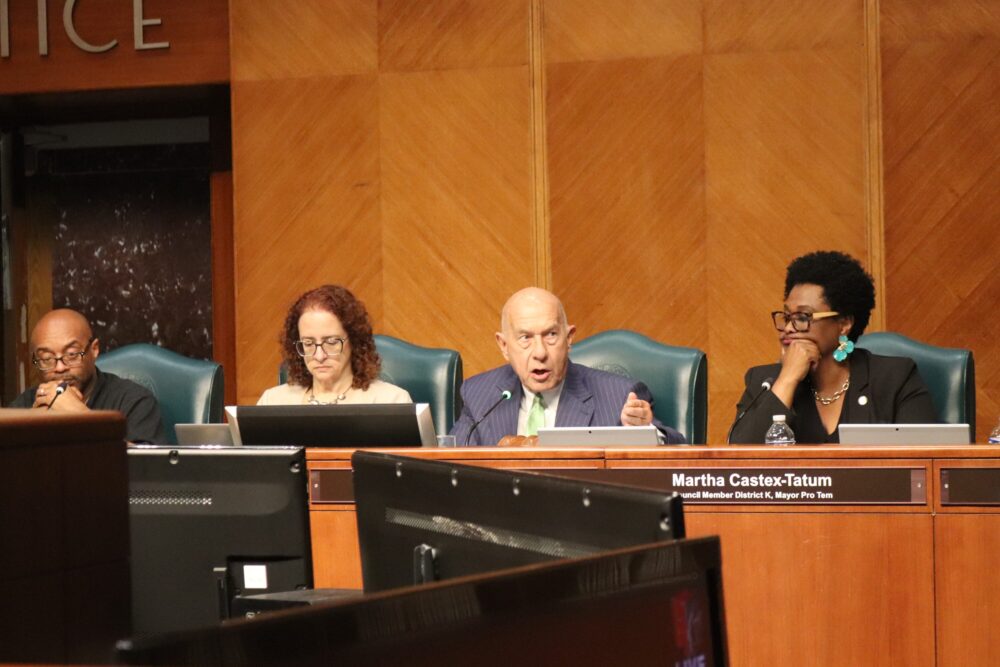
Houston Mayor John Whitmire calls for the city council to repeal an ordinance on April 14, 2026.
Houston Mayor John Whitmire faces a test of his political influence as he reacts to a threat by Texas Gov. Greg Abbott.
On Monday, Abbott issued an ultimatum to Whitmire — repeal an ordinance limiting the police department’s cooperation with U.S. Immigration and Customs Enforcement (ICE) or lose more than $110 million in grants for public safety.
“Yes, I voted for it last week because it was the right thing to do,” Whitmire said on Tuesday. “It’s been rejected by people that control our purse strings. So, a reasonable thing to do is to revisit it, discuss it, pass an ordinance that will comply with state law under the judgment of the governor’s criminal justice department. … It will hurt Houston every minute that we don’t resolve it.”
Sign up for the Hello, Houston! daily newsletter to get local reports like this delivered directly to your inbox.
The threat marked a first-of-its-kind rupture in Whitmire’s relationship with the Republican-controlled state government. The former Democratic state lawmaker initially called a special meeting of the Houston City Council for Friday to consider reversing the measure.
On Thursday, Whitmire scrapped the special meeting “after discussions with the governor’s office.” The matter will now be addressed at a regular meeting on Wednesday, when the extent of the mayor’s influence over municipal governance will be measured.
“This strikes a balance to protect our people, essential services, and our finances,” Whitmire said in a statement on Thursday. “As I said earlier, this is a crisis. We have already lost state grant funding, which affects the Houston Police and Fire Departments, public safety services across our city, preparations for the 2026 FIFA World Cup, and the Department of Homeland Security. Our public safety departments rely on a combination of local, state, and federal resources to operate effectively.”
Shortly after Whitmire’s announcement, Texas Attorney General Ken Paxton said he had filed a lawsuit against the city and some of its elected officials over its ordinance. Paxton alleges the ordinance violates Senate Bill 4, passed during the 2017 Legislative Session.
“Under SB 4, a local entity such as the City of Houston may not adopt, enforce, or endorse a policy that prohibits or materially limits the enforcement of federal immigration laws,” Paxton said in a release announcing the lawsuit. “However, Houston adopted a city ordinance that blatantly violates this law.”
Whitmire faces tough math in his push to repeal
Last week, the city council approved a measure in a 12-5 vote prohibiting police officers from detaining people or prolonging traffic stops due to civil immigration warrants issued by ICE.
Whitmire supported the ordinance but now wants it reversed. Of the remaining 11 council members who backed the measure last week, only four have publicly committed to standing firm.
Ordinance authors Alejandra Salinas, Abbie Kamin and Edward Pollard — all of whom are attorneys — have called for the city to engage in a legal battle against Abbott’s threat. Council member Tiffany Thomas agreed.
“We owe it to Houstonians to fight for our values,” Thomas said. “That’s why we have a city attorney — to represent the city’s interest.”
Whitmire ruled out legal challenges this week, calling it a “waste of time” as some grant accounts have already been frozen.
City Attorney Arturo Michel — who reports to Whitmire — argued the city would lose in court.
“It’s at the governor’s discretion, so that is going to be difficult to have any court say the governor cannot exercise his discretion to either give the grant or not give the grant in any sense really,” Michel said.
Dominic Anthony Walsh / Houston Public Media
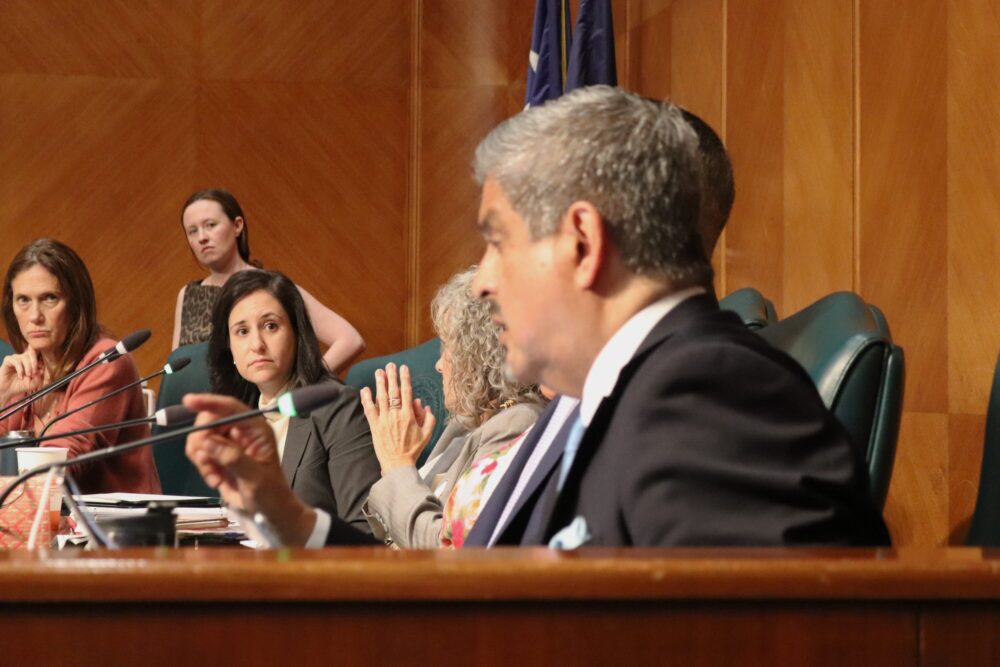
Council member Alejandra Salinas listens to City Attorney Arturo Michel on April 1, 2025.
To reach a simple majority, Whitmire would need to win over three of the seven who have not taken a public stance.
Under city council rules for reconsidering a recently passed measure, he would have needed to secure a two-thirds majority vote in a special meeting on Friday — for which he would have needed support from six of the seven.
“There’s tough decisions,” council member Joaquin Martinez — who supported the measure last week — said on Wednesday. “Ultimately, we need to think about the entire city, and so I’m still thinking through the process, understanding what the best options are. Intentions are always great, but ultimately, we have to fulfill the duties of all Houstonians.”
Throughout his first term, Whitmire hasn’t lost a vote — but he’s flown close to the sun. At the beginning of 2026, he secured a razor-thin win for a demolition program supported with stormwater funding in a 9-7 vote.
RELATED: Divided Houston City Council greenlights $30 million demolition program using stormwater funds
When it comes to immigration enforcement, University of Houston political science professor Brandon Rottinghaus said, the administration has seen “political fractures and growing discontent,” leading to “a new willingness of council to push back.”
“This is the first serious pushback on John Whitmire from council,” he said. “The fact that John Whitmire has to some degree caved on this issue means there is going to be backlash from liberal members who wanted to push the city into a direction that looked more like some of the other more progressive cities in Texas.”
According to Houston Police Chief Noe Diaz, officers turned over about 85 people to ICE last year. The Houston Chronicle reported the figure included people who called for department for help.
The city council’s agenda for its meeting next week includes potential amendments to rules around “Law Enforcement Field Encounters and Interactions with Federal Immigration Authorities.”
HPD-ICE policy ruptures warm relationship with state government
After five decades in the Texas Legislature — including 30 years as chair of the senate’s criminal justice committee — Whitmire, a lifelong Democrat, came into the mayor’s office as a friend of the Republican-controlled state government.
For his first two years in the mayor’s office, the relationships largely paid off. Abbott sent more than $30 million to the city for recovery from the derecho wind event and Hurricane Beryl in 2024.
Whitmire’s administration boasted more than $260 million in state funding secured from the Texas Legislature in 2025 for parks, water infrastructure, police vehicles and dredging Lake Houston.
“Mayor Whitmire ran partially on his expertise in criminal justice and his relationships with those in Austin because he did have a track record of being able to work across the aisle,” said Renée Cross, senior executive director of UH’s Hobby School of Public Affairs. “However, you know, this is a whole different ball game. He’s no longer a state senator. … We’ve seen this tension between these urban leaders and those in the top positions in Austin.”
Under the late Mayor Sylvester Turner — who preceded Whitmire as mayor — the Texas General Land Office (GLO) initially withheld funding from the city after the state received more than $5.6 billion from the federal government for recovery from Hurricane Harvey in 2017.
The city and state would spend years sparring over the recovery programs until Whitmire reached a resolution with the GLO in 2024.
Last week, the warm relationship between the former state senator and Abbott froze over.
According to Whitmire’s office, the governor’s office froze grant accounts for the city’s public safety initiatives on Monday — a week ahead of the deadline imposed by Abbott. The long list of grants includes support for police overtime, a task force addressing digital crimes against children, along with services for victims of domestic violence and human trafficking.
“We’re trying to figure out exactly what we can afford to absorb and what we can’t,” said Steven David, Whitmire’s chief strategy and operations officer. “Obviously, these are all mission-critical things.”
Dominic Anthony Walsh / Houston Public Media
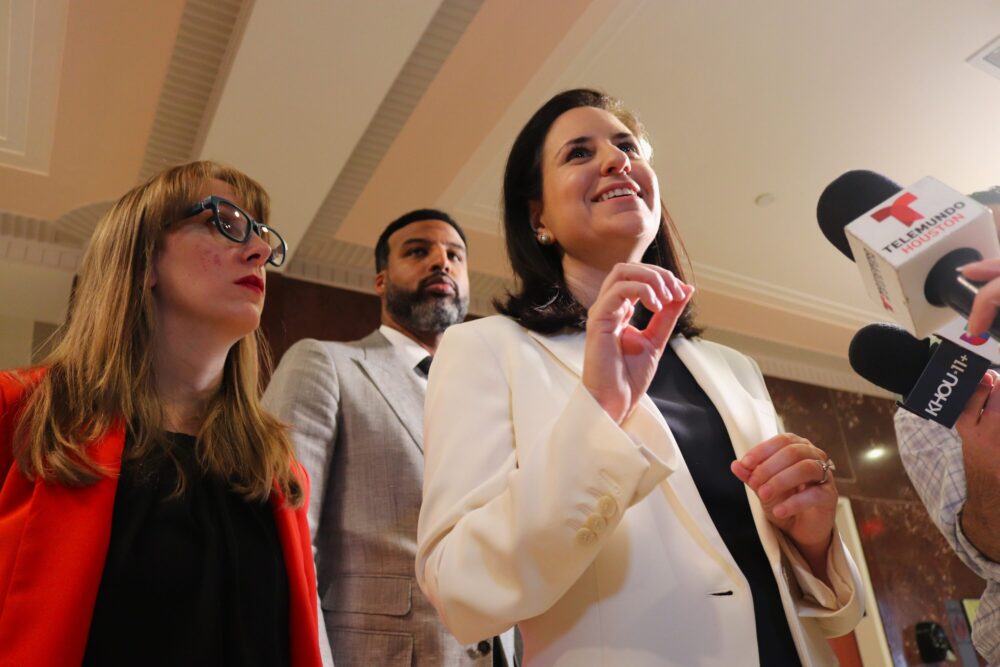
Council member Alejandra Salinas, right, speaks to reporters with Abbie Kamin and Edward Pollard after an HPD-ICE policy change passed on April 8, 2026.
Salinas — the city council member who spearheaded the ordinance — argued now is the time to fight back.
“We need to prove to the governor that we’re going to stand up to his bullying,” she said. “There’s absolutely no reason why we should not at least make an effort to stand up for Houstonians and our constitutional rights.”
It’s unclear what will happen if the city fails to meet the new Wednesday deadline. The governor’s office did not immediately respond to a request for comment about that possibility.
Although he called the moment a “crisis situation,” Whitmire said this isn’t his first battle with opposing forces at the state level.
“I have been in tougher legislative situations than what we’re talking about now,” Whitmire said. “You have to do the right thing — look out for the general public, keep politics out of your decision making, and make Houston safer.”