
TEXAS DPS: BORDER ENCOUNTERS LOW, DRUG SEIZURES SURGING
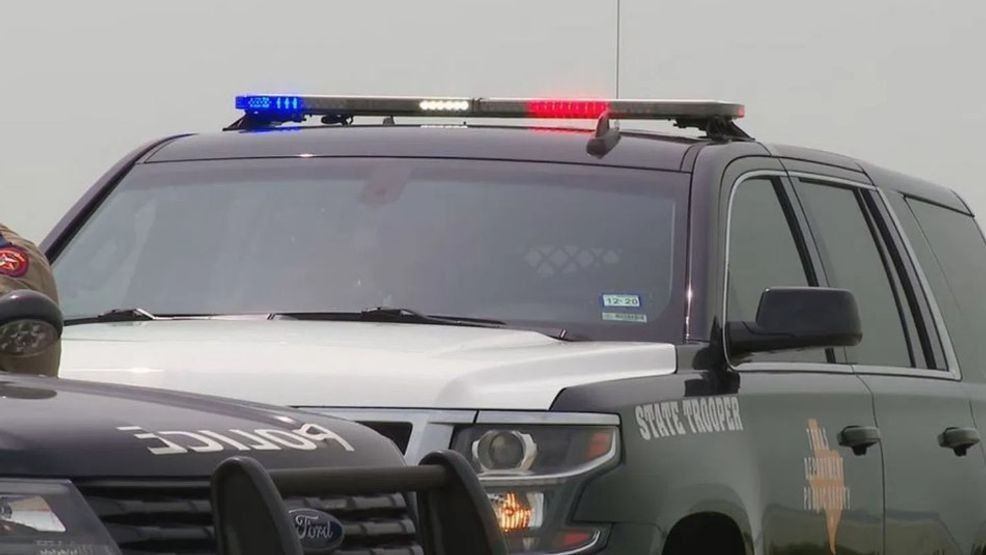
Texas Department of Public Safety officials say migrant encounters at the southern border remain significantly lower than in recent years, with troopers reporting roughly 80 to 100 arrests per week — or about 300 to 400 per month — for people crossing between ports of entry.
Despite the drop, DPS leaders told the Public Safety Commission that enforcement activity has not slowed overall. Instead, the agency says its focus has increasingly shifted beyond the border itself and onto Texas highways, where troopers are encountering what officials describe as some of the largest drug seizures in recent memory.
Authorities say illegal narcotics continue to make their way into the state, prompting heightened efforts to identify and stop suspected trafficking vehicles. DPS says troopers are actively conducting traffic stops tied to cartel smuggling operations, leading to arrests and major drug busts across Texas roadways.
FAA, PENTAGON REACH AGREEMENT ON LASER SYSTEM AFTER BORDER INCIDENTS
A counter-drone laser system that previously triggered a major airspace shutdown over El Paso is now the subject of a new agreement between the Federal Aviation Administration and the Pentagon.
The system, identified by Reuters as the LOCUST Laser Weapon System, is designed to disable drones using high-energy beams. Federal officials say recent safety assessments determined the technology includes safeguards that “do not pose undue risk to passenger aircraft.”
The agreement comes after multiple high-profile incidents raised concerns. In one case near El Paso, a Pentagon-loaned laser operated by U.S. Customs and Border Protection was used to shoot down what was later identified as a Mylar balloon. Weeks later, another incident near Fort Hancock involved soldiers mistakenly targeting a CBP-operated drone.
Officials say improved coordination between agencies is critical as the technology becomes more widely used near border regions and military installations.
We spoke with Victor Manjarrez, a former Chief Patrol Agent for CBP, about the implications of this system and how it could impact both border operations and communities nationwide.
“The beauty of a laser it’s very focused, very efficient and very accurate,” Manjarrez said. “It’s also the least riskiest to the environment and the public.”
Manjarrez says the agreement between federal agencies reflects a broader effort to catch up with rapidly evolving drone technology, something he believes has outpaced existing rules.
Looking ahead, Manjarrez expects the use of laser systems to expand beyond the border, especially as drones become more common.
“The current technology will not be the same a year from now,” he said. “I’m hoping the policy and coordination between agencies advances as quickly.”
![The LOCUST Laser Weapon System (LWS) integrated on an Oshkosh Joint Light Tactical Vehicle (JLTV) was delivered to the U.S. Army Rapid Capabilities and Critical Technologies Office (RCCTO) as part of the second increment of the Army Multi-Purpose High Energy Laser (AMP-HEL) prototyping effort. [Credit: AV, 2025]](https://www.newsbeep.com/us-tx/wp-content/uploads/2026/04/1776427032_349_5519cf14-fb3b-47ba-8ee9-60b08ee8877e-avampheljltv__banner.jpeg)
The LOCUST Laser Weapon System (LWS) integrated on an Oshkosh Joint Light Tactical Vehicle (JLTV) was delivered to the U.S. Army Rapid Capabilities and Critical Technologies Office (RCCTO) as part of the second increment of the Army Multi-Purpose High Energy Laser (AMP-HEL) prototyping effort. [Credit: AV, 2025]
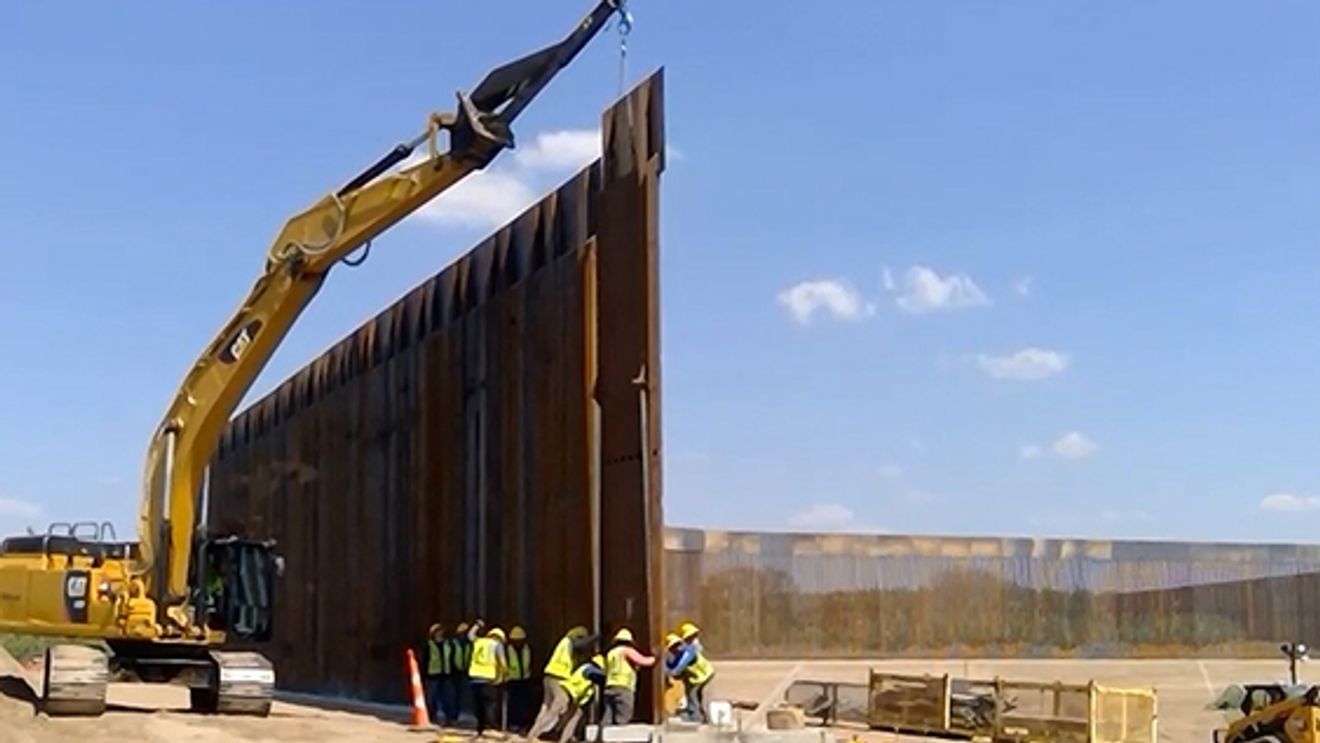
TEXAS BORDER WALL CONSTRUCTION NEARLY COMPLETE
Construction on Texas’ state-funded border wall is now in its final stages, with officials saying the project is just weeks away from being finished.
The Texas Facilities Commission reports more than 82 miles of wall have been built since 2021, totaling roughly $3 billion in state funding.
State officials say construction is now wrapping up. During a recent commission meeting, Executive Director Will McKerall described the project as entering its final phase.
“We are right at the end of this journey, and it continues to shut down in an extremely organized fashion,” McKerall said.
He added that crews have already installed the final section of wall.
“We’ve placed the last panel we are now at 82.2 miles of wall placed,” he said.
According to McKerall, only minor work remains before the project is fully complete.
“We’re only working at really two sites right now finishing up some bridge work,” he said. “By the time this commission meets next, I fully expect that we will be saying mission accomplished.”
The project has faced criticism over its cost and effectiveness. A Texas Tribune investigation previously found that wall segments were often fragmented, raising questions about how much they contributed to broader border security efforts.
State leaders say the decision to scale back is tied in part to increased federal investment in border infrastructure. With billions of federal dollars now being directed toward barriers and related security measures, Texas is shifting its approach.
Officials say border security efforts will continue under the federal government’s broader “smart wall” strategy, which includes not only physical barriers but also surveillance technology, buoys, and roadway infrastructure.
Border wall construction in 2024 (TFC)