
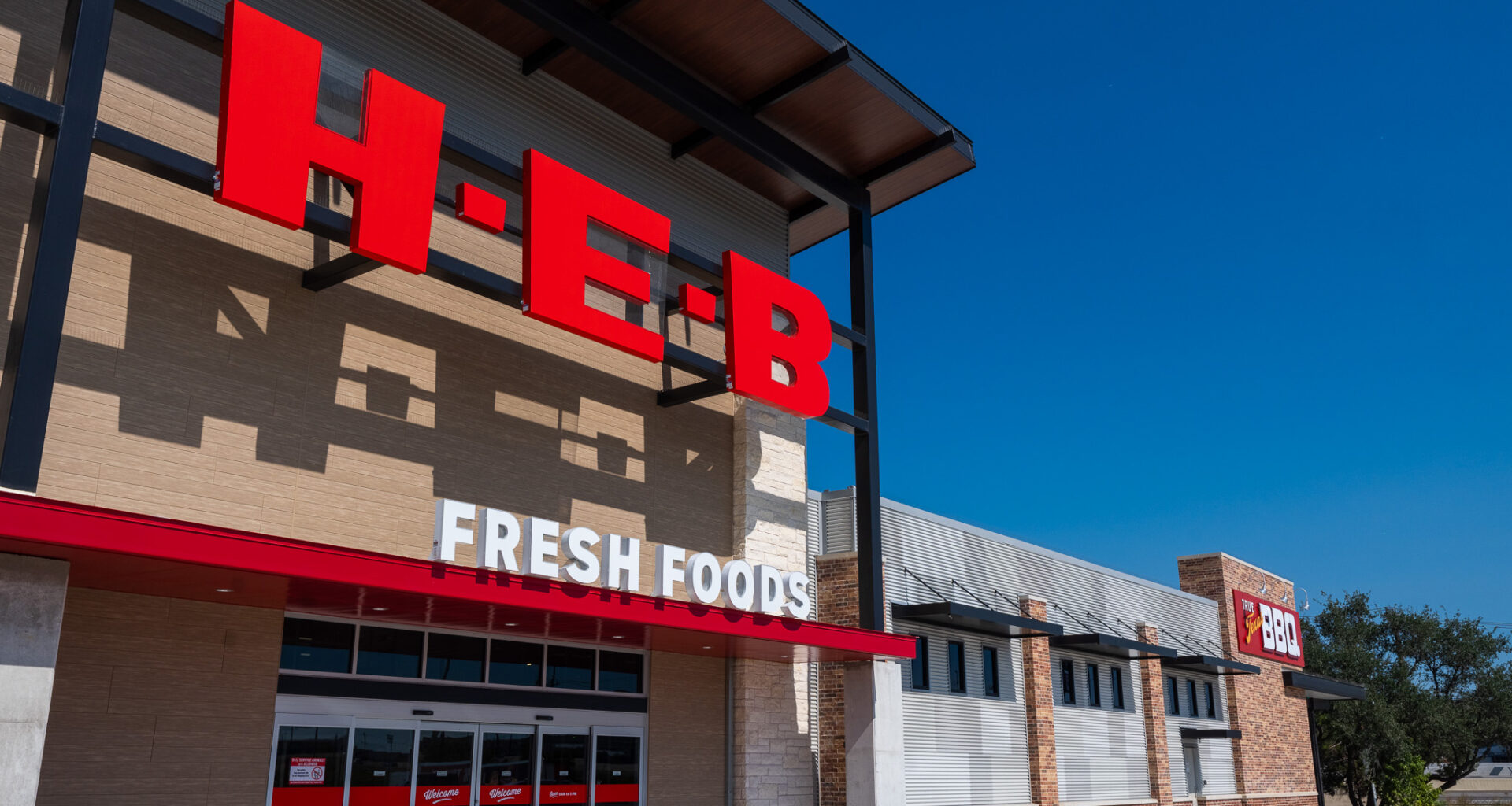
Customers and H-E-B celebrated the opening of an 111,000 square-foot shopping center near the University of Texas at San Antonio last year. The answer to bad capitalism isn’t no capitalism. It’s better capitalism. Our guest columnist calls for “H-E-B capitalism” — businesses that invest in their people, listen to their communities, and compete through trust, not fear.
H-E-B
Jason Thurlkill is a political writer and communications strategist.
Courtesy of Jason Thurlkill
As New York Mayor Zohran Mamdani pushes for city-run grocery stores, Americans are being offered a false choice: Ruthless, profit-driven corporations on one side and socialist alternatives on the other.

It’s part of a larger debate about whether the “free market” has failed workers. But there’s a third option, and it’s here in San Antonio. H-E-B isn’t just a grocery store. It’s proof that capitalism can still work when it’s done right.
Article continues below this ad
For the fifth time in nine years, H-E-B has been rated the nation’s best grocery chain, according to the Retailer Preference Index, which measures financial performance and customer satisfaction. The company’s success stems from what you might call committed community capitalism.
Take care of your people. Know your customers. Deliver quality at fair prices. Reinvest in the places you do business.
The study found that 41% of a retailer’s long-term success depends on helping customers save money, and H-E-B consistently delivers. Yes, prices have risen, like everywhere else, but the chain softens the sting with affordable produce, its line of private-label products and home delivery for under five bucks. It feels less like a profit predator and more like a trusted neighbor.
Unlike many retailers that treat employees as cheap and disposable, H-E-B calls them “partners.” The state’s largest private employer pays stockers and customer service representatives more than twice the minimum wage. They can also earn a stake in the company. The stores have good vibes because employees seem happy, knowledgeable and eager to help.
Article continues below this ad
H-E-B creates loyal customers by forging strong community bonds. The company gives to schools, food banks and first responders.
Then there’s infrastructure.
H-E-B runs more like the Federal Emergency Management Agency than Whole Foods Market. It operates a disaster operations center that rivals Texas’ emergency agency. When Hurricane Harvey hit Houston in 2017, my local H-E-B stayed open while competitors shuttered. It rolled out curbside pickup and online ordering years before the COVID-19 pandemic made them the industry’s standard.
Volunteer Saphira Serrano stacks dinner plates during the 33rd annual H-E-B Feast of Sharing on Dec. 20, 2025, at the Henry B. B. Gonzalez Convention Center in San Antonio.
Marvin Pfeiffer/San Antonio Express-News
It’s hard to imagine how government workers would have the institutional know-how to replicate what H-E-B has spent generations fine-tuning, no matter how well-intentioned they are.
Article continues below this ad
Neoliberalism is facing a stress test. In sectors like housing, the free market often feels anything but free — a system that puts profit over people. Consumer resentment has fueled populist backlashes on the left and right.
Still, the answer to bad capitalism isn’t no capitalism. It’s better capitalism. Call it “H-E-B capitalism” — businesses that invest in their people, listen to their communities and compete through trust, not fear.
If more companies adopted H-E-B’s approach, the backlash against markets — and the rise of socialist solutions — might lose much of its moral urgency.
H-E-B offers a quiet truce. It’s proof that profit and integrity aren’t incompatible, and that markets built on trust can still deliver what customers want, effectively and efficiently.
Article continues below this ad
H-E-B’s success is a signal that should be heard above the noise about the failure of the neoliberal order. It’s a model of what a more humane version of capitalism can look like.
More companies should follow H-E-B’s lead. Stakeholder capitalism isn’t just about who owns your shares, but who you serve.
Charles Butt and his family are worth more than $20 billion. Yet, amid all the billionaire bashing, you don’t hear Texans crying for his head on a platter.
Article continues below this ad
In a world second-guessing capitalism, H-E-B is evidence that there’s a way to be rich, responsible and respected.
Jason Thurlkill is a political writer and communications strategist.