
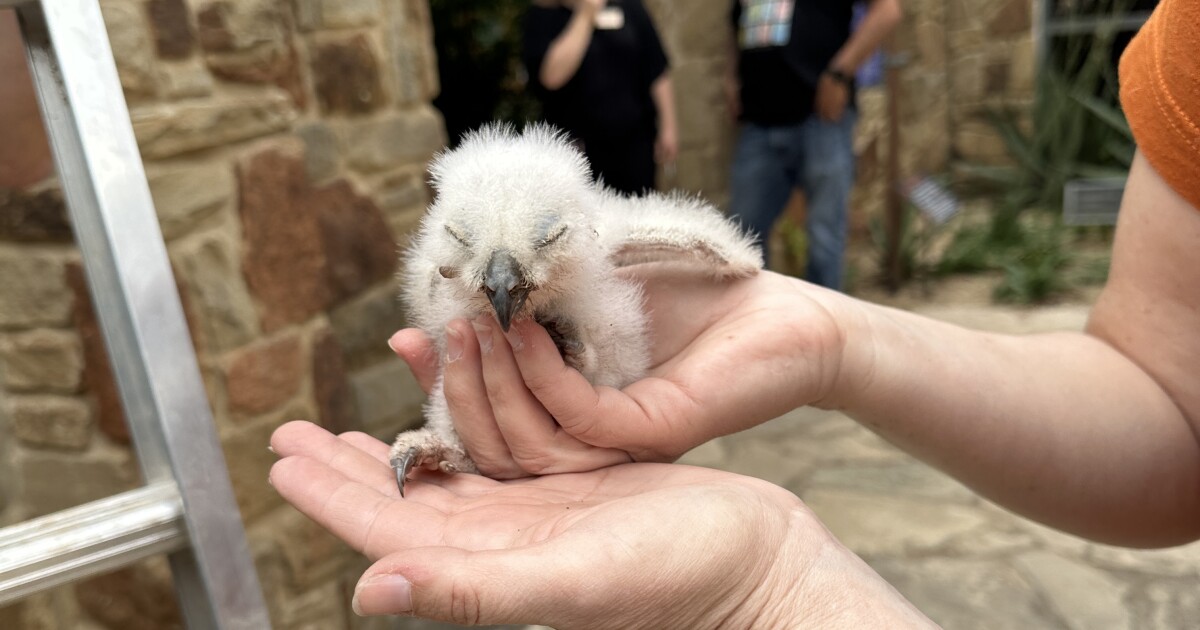
After an uncertain weekend, an owlet at the Lady Bird Johnson Wildflower Center was found alive and is being rehabilitated. It is one of two babies of the resident great horned owl Athena, who has nested at the center since 2012.
On Friday, the Wildflower Center shared that one of the two owlets from Athena’s 2026 nesting season had died, and the second one died the following day. But then came some signs of hope.
Scott Simons, a spokesperson with the Wildflower Center, said while staff turned off the popular online stream of the nest, experts at the Cornell Lab of Ornithology continued to monitor the site.
“They noticed [Sunday] midday that there was some slight movement with the owlet,” Simons said.
He said they immediately got in contact with the team at the nonprofit Austin Wildlife Rescue. They were able to quickly retrieve the owlet and begin rehabilitation.
“It was a very eventful day, but this is a plot twist that we are very glad to see,” Simons said.
Lack of food, warmth
Ben Walters, who leads the Bird Cams project at the Cornell Lab of Ornithology, said the group noticed a slight reduction in food supply at the nest leading up to Friday.
“It seemed like there was not enough food, potentially as one reason why that first chick died, because there wasn’t enough to support both owlets at that time,” Walters said. “This is pretty common thing you see in bird nests when food supply is limited.”
He said another concern was that Athena was spending long stretches of time away from the nest at nighttime, which isn’t typical. He said owlets at this early stage need the warmth of their mother.
“She was spending more time off the nest, which we think she was probably spending that time hunting,” he said.
The male owl — Athena’s mate — is the primary hunter, but for unknown reasons, he didn’t appear to be hunting in recent days.
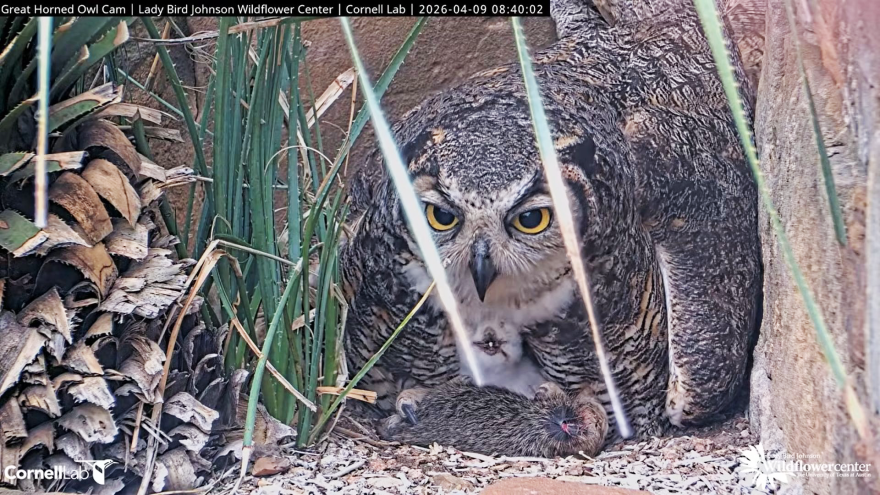
Lady Bird Johnson Wildflower Center
The first baby owl hatched on April 8. It was one of two eggs that hatched this season.
Austin Wildlife Rescue steps in
Walters said the timing of this rescue was strategic. If an adult owl is still tending to the nest site, rescuers won’t intervene.
“We wouldn’t want to have Athena abandon that site or view that site as a risky place to be when she’s been successfully raising owlets there for more than a decade,” he said.
Over the next several weeks, Austin Wildlife Rescue will work to get the owlet in good health. Simons said the owlet has started to eat regularly, and its strength is returning.
Over the next week or so, the owlet will live in an incubator. Then, it will be placed with a surrogate owl parent at the rescue that is experienced in raising orphaned owlets.
“That will be done in an outside environment,” Simons said. “So the owlet can be returned back to the wild.”