
SAN ANTONIO — The words “I love public housing” have a profound meaning for Leticia Sanchez.
“We support housing as a human right, that is the message we want everyone to understand,” Sanchez said.
Her West San Antonio barrio has some of the oldest housing projects in the country. Through the years, Sanchez has seen different efforts to try to improve them.
“We’re not just gonna accept what you say, we want to see what the research says,” Sanchez said.
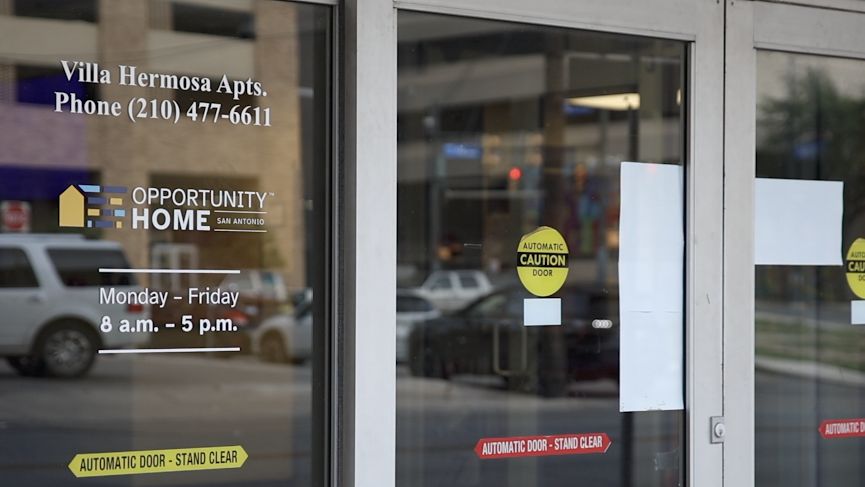
She feels the latest attempt to bring change to the old buildings — some of which are in great need of renovations — is just another move in the wrong direction. Opportunity Home San Antonio just applied for the Rental Assistance Demonstration, or RAD, program. It’s a program she believes will lead to the privatization of public housing.
RAD is a federal Housing and Urban Development (HUD) program which allows housing agencies to leverage private and public financing to restore aging properties. Opportunity Home officials believe it will help address the agency’s $550 million maintenance backlog.
“We are able to move that ownership from HUD over to our agency and we own it for the long haul,” Lorraine Robles said. “We are able to secure financing to do either rehabilitation or redevelopment.”
Robles is the chief real estate and development officer for Opportunity Home.
“There are concerns that my rent will change. Their rent is still 30% of income, so that will not change,” Robles said.
Robles says property management will also remain public.
Who could eventually manage public housing units is one of the concerns of San Antonio City Councilwoman Teri Castillo.
“We are hearing one thing, the documents say another,” Castillo said. “The concern is what is codified is that they [Opportunity Home San Antonio] can enter a private partnership with their public housing properties.”
San Antonio is one of the last major cities in Texas to bring in RAD.
Austin’s housing authority partnered with RAD 10 years ago, while Dallas’ agency recently adopted RAD last November.
A 2025 report by the Office of the Inspector General found HUD didn’t adequately oversee RAD projects and didn’t meet Housing Quality Standards. However, Robles says it will be different in San Antonio.
“Because the RAD program has changed so much, now there’s various ways for us to transfer that assistance,” Robles said.
Sanchez is skeptical.
“They may say that it’s gonna work this way but it ends up not, and who ends up losing? It’s people who are the most vulnerable,” Sanchez said.