
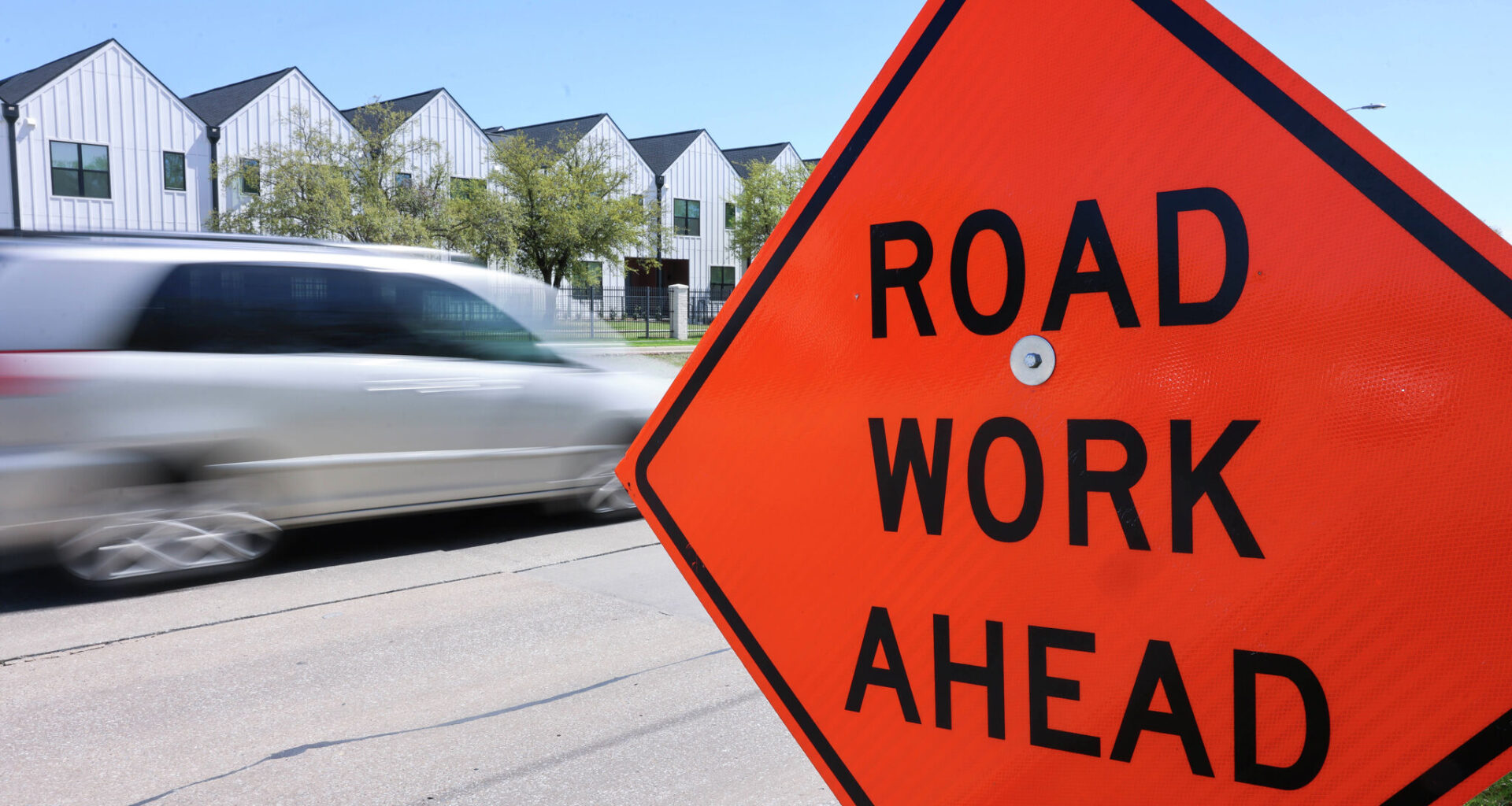
Transportation agencies across North Texas are urging motorists to be more mindful of highway workers and ongoing construction.
Data obtained by The Dallas Morning News showed almost 2,000 work zone crashes have occurred in North Texas in 2026.
43,526 crashes occurred across North Texas counties since 2020, involving over 111,000 people.
A statewide safety campaign from the Texas Department of Transportation launched this week to commemorate National Work Zone Awareness Week, running April 20-24. Work zones are classified as “an area where roadwork takes place and may involve lane closures, detours and moving equipment. Highway work zones are set up according to the type of road and the work to be done on the road. The work zone can be long or short term and can exist at anytime of the year, but most commonly in the summer,” according to the National Highway Traffic Safety Administration.
“We urge drivers to be attentive in work zones, not only for the safety of those who are doing their job, but also for the driver’s own safety,” said Elizabeth Mow, NTTA assistant executive director of infrastructure.
Data obtained by The News also showed Dallas County accounting for the majority of all work zone accidents in North Texas from 2020-25 at 41%. So far in 2026, Dallas County has seen 452 work zone crashes. Tarrant County accounted for 25%.
With more than 1,800 active work zones across the state, transportation officials are using this campaign to stress the importance of driver awareness and worker safety.
“Maintaining a safe highway system requires year-round effort from brave and dedicated work crews,” TxDOT Executive Director Marc Williams said. “Unfortunately, work zone crashes happen far too often. It’s crucial that drivers slow down, pay attention and give workers space. It’s the Texan thing to do.”
The state’s “Move Over or Slow Down Law” requires drivers to move to another lane or slow down to 20 mph below the posted speed limit “when approaching vehicles stopped with flashing lights activated on the roadside or shoulder. That’s not just law enforcement vehickes, but also emergency vehicles, TxDOT vehicles, tow trucks and utility vehicles,” according to TxDOT’s website.