
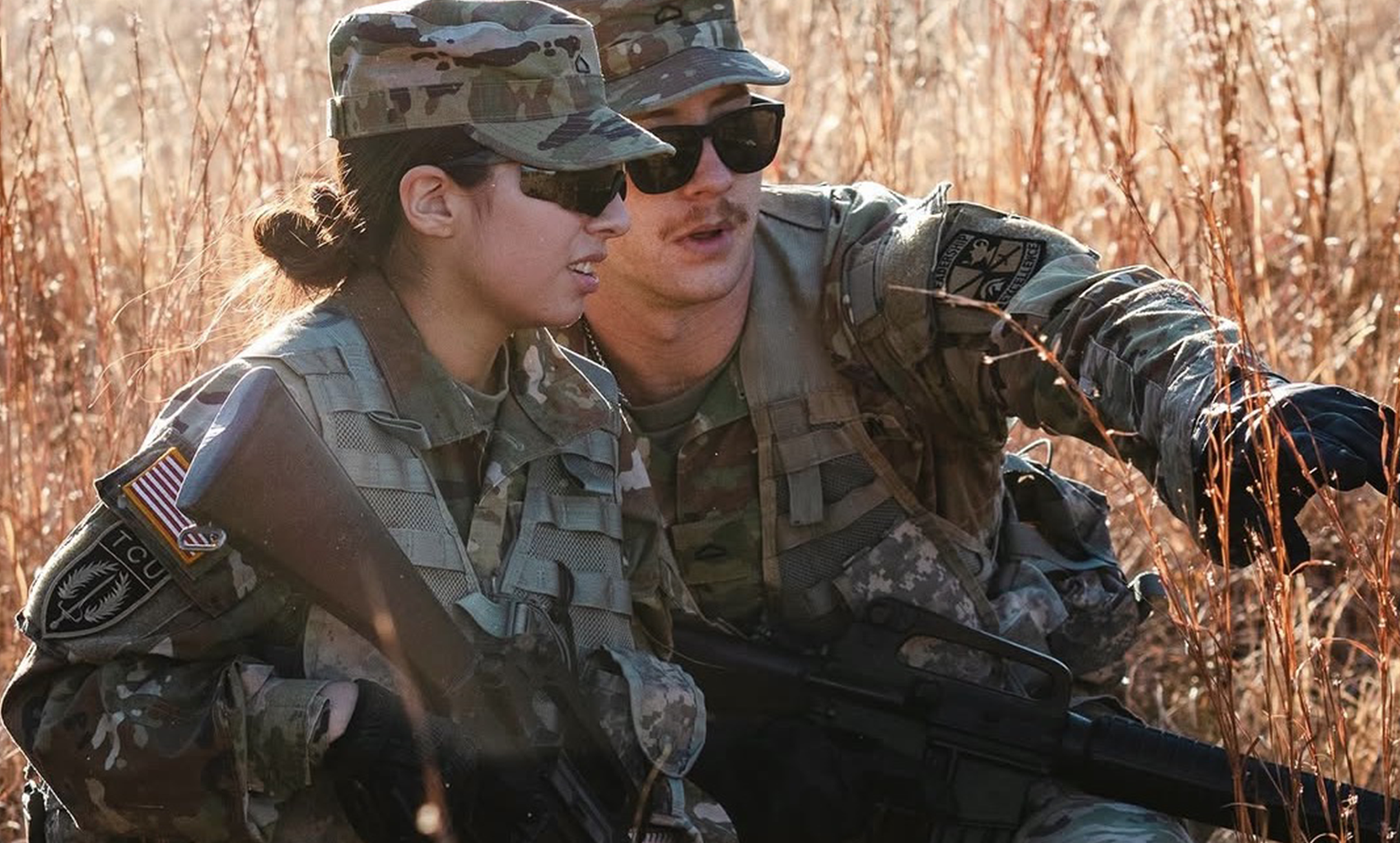
The military draft will automatically register men between the ages of 18 and 26 starting this December, according to a defense policy bill Congress signed into law late last year.
For decades, the Selective Service System has required all males to register with the government when they turn 18. Now, the government is considering pulling names from other official documents to reverse the decline in military recruitment.
“What they’re proposing is basically scouring every government data set to pick up on young men of the right age, and if we have a draft, they’re going to be in the draft pool of applicants,” said Ralph Carter, a political science professor at TCU. “If the number of people volunteering keeps going down, the military can’t do the jobs that it was previously doing because they just don’t have the personnel.”
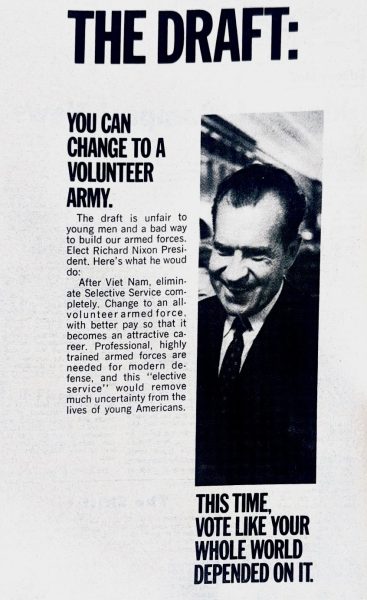 An advertisement from The Skiff in 1968 criticizing the draft and promoting former president Richard Nixon. (The Skiff Archives)
Although 46 states already link draft registration to driver’s licenses, federal control of the data would introduce new challenges. The expansion of federal power into personal data systems has sparked debate.
Some students are highly concerned that a draft would be disruptive to their future career plans.
“I am a sophomore right now, so I have two more years of college, and going into the draft would change my whole life’s trajectory,” said Drew Dodgen, a sophomore finance major. “If I got drafted, I would try to avoid the draft at all costs.”
Some students, on the other hand, said they would be happy to serve the country if a draft were to take place.
“I’d say I’m a pretty patriotic person, and so fighting for the United States would be an honor,” said Duncan Coppeans, a sophomore political science major. “If that’s what the government needs me to do, I’ll do it.”
Historically, the draft system in the United States has been controversial. The last time it was used was during the Vietnam War. Each year, young men were assigned a number based on their birthday, which determined their likelihood of being drafted.
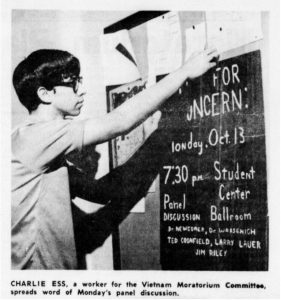 A member of the Vietnam Moratorium Committee advertises for a panel discussion on the war. (Horned Frogs at War)
TCU’s overall perspective on the war in the late 1960s and early 1970s was supportive. However, similar to many college campuses at the time, there were anti-war protests that actively criticized military efforts.
“As the ROTC presented itself to a visiting military general, the student purposefully walked through the demonstration wearing a shirt that read ‘F— War.’ TCU Police removed the student, and he was taken to Vice Chancellor Howard Wible’s office, where the vice chancellor told him to remove the offensive word on his shirt. So, the student proceeded to mark out the word ‘War,’ demonstrating his point that the war was what was offensive, not the obscenity,” scholars recorded in an online exhibit, ‘Horned Frogs at War.”
The draft was suspended when the Vietnam War ended because the Department of Defense preferred a volunteer military. Still, the U.S. maintained the Selective Service System in its basic framework in the event that the country needed to rely on a draft system during a national emergency.
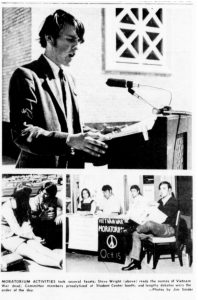 TCU Students take part in Vietnam Moratorium Day activities. (Horned Frogs at War)
“President Trump has said repeatedly that he wants to have the strongest military in the world to deter anyone from interfering with us pursuing our national interests,” Carter said. “We don’t want to scale back and start closing military bases because we don’t have enough people.”
The recent proposal to modify the SSS has raised questions about whether women will be required to register for the draft in the future.
“I think it’s interesting considering women are in the military, but they’re not able to sign up for the draft,” said Alissa Marrufo, a sophomore who has not declared a major. “If women want to be a part of the draft, they should be given the option to.”
Many countries already require mandatory military service, including for women, which raises questions about how U.S. policy compares globally. As the government considers potential changes to the draft system, the future of the draft reflects broader questions about military needs and national priorities.