
Both schools are considered among “The New Ivies,” a list of 20 colleges, 10 public and 10 private, across the U.S. that are preparing and graduating talented students that employers are seeking in this new era of artificial intelligence, according to Forbes. This year’s honorees were chosen based on input from a survey of more than 100 high-level and hiring executives, who were asked not only to rate schools, but also how AI was changing how they hire new grads.
Forbes introduced the list in 2024 as more employers questioned whether Ivy League degrees actually led to the best job recruits, while many of the brightest students came from demanding state flagship universities and lesser-known private colleges. The main eight Ivy League schools are: Brown, Columbia, Cornell, Dartmouth, Harvard, University of Pennsylvania, Princeton and Yale.
Forbes says that the Ivy League-wariness continues to persist today, with 37 percent of respondents this year saying they are less likely to hire Ivy League grads than they were five years ago, and only 6 percent saying they’re more likely to do so. Those numbers are nearly reversed for public universities, with 42 percent of employers saying they’re more likely to hire these grads, compared to 6 percent less likely to do so.
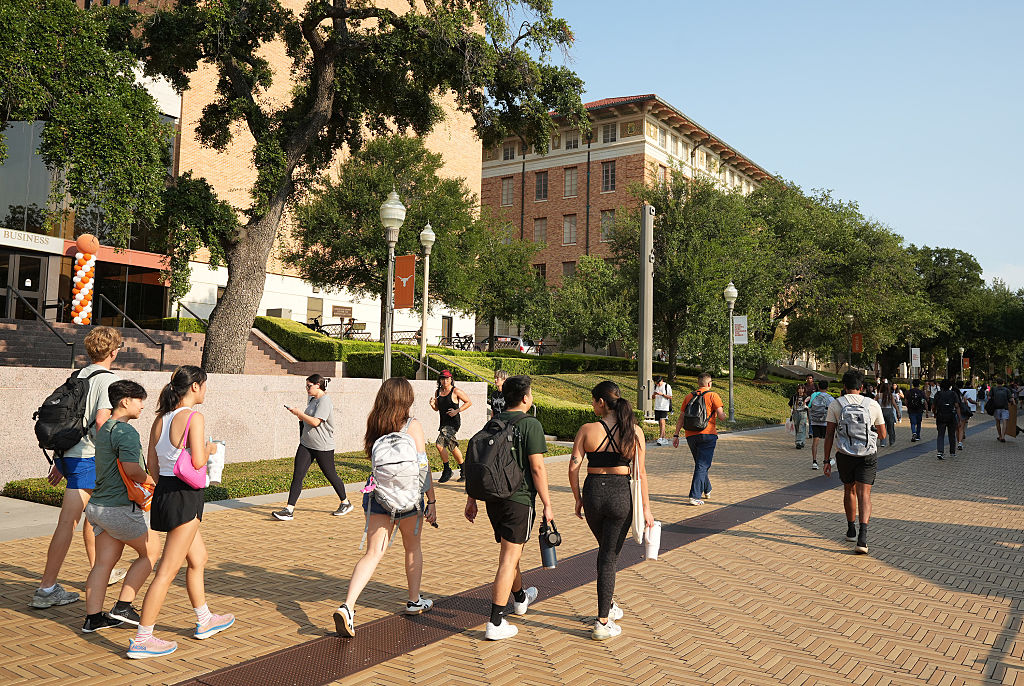
UT Austin was listed as one of Forbes’ “New Public Ivies,” while Rice was classified as a “New Private Ivy.” With more than 44,000 undergraduate students, the 40 Acres has an acceptance rate of 27 percent. The median SAT score for an incoming UT Austin student is 1390 and the median ACT score is 31.
UT Austin announced plans to hire 50 faculty members for a newly created School of Computing. The expansion aims to make computing and AI education more broadly available to students in all majors.
In Houston, Rice is a bit more competitive to get into, with an 8 percent acceptance rate and an average undergraduate enrollment of less than 5,000 students. The median SAT score for a new Rice student is 1550, and the median ACT score is 35.
Rice offers students upper-division data science courses tasked with making different AI models like ChatGPT and Claude to debate each other and assess their arguments. The campus also has an introductory English course where professors ask students to write an essay and prompt an AI model to write on the same subject, then discuss the different biases displayed in the machine compared to a human.