
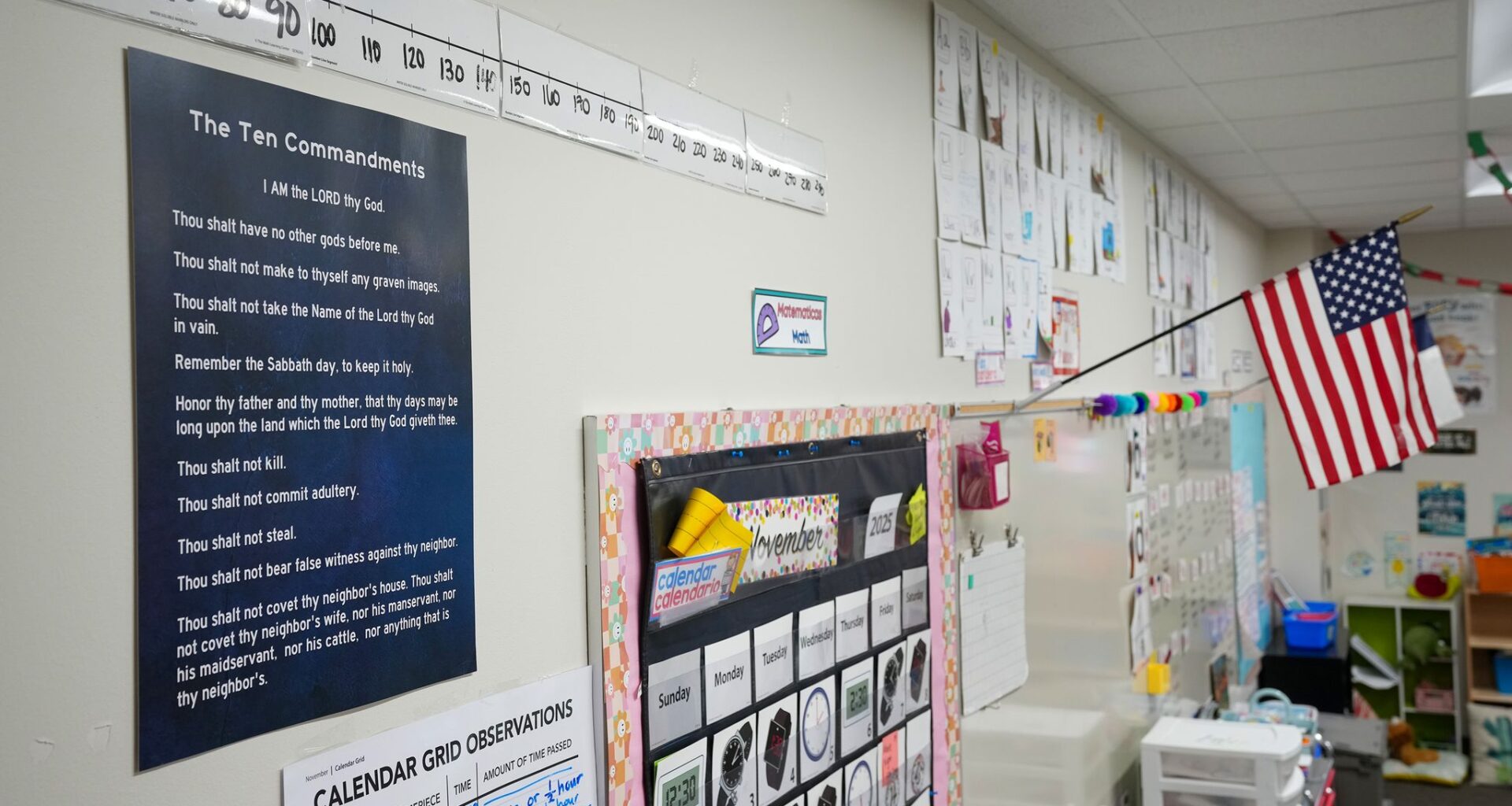
Lake Travis and Dripping Springs independent school districts are among the nine public school systems in Austin, San Antonio, Houston and North Texas that parents and local faith leaders sued over Senate Bill 10. The law, passed in 2025, requires public schools to post donated posters of the Ten Commandments on classroom walls.
Lake Travis ISD hasn’t received any donated posters, spokesman Marco Alvarado said Wednesday. The district is aware of the ruling but declined to comment. Dripping Springs ISD didn’t respond to a request for comment.
Austin ISD had been a defendant in the lawsuit, but last August, San Antonio-based U.S. District Judge Fed Biery granted the district’s request to dismiss the claims against it. The district agreed to adhere to any injunction and would abide by the final results of the case.
The other districts named in the suit are Alamo Heights, North East, Lackland, Northside, Fort Bend, Cypress-Fairbanks and Plano ISDs.
In the majority opinion, the judges said that SB 10 does not constitute a historical religious establishment.
“Students are neither catechized on the Commandments nor taught to adopt them,” the judges wrote. “Nor are teachers commanded to proselytize students who ask about the displays or contradict students who disagree with them.”
In a dissenting opinion, Judge Leslie H. Southwick insisted that “S.B. 10 is facially unconstitutional under the Establishment and Free Exercise Clauses.” Southwick was joined by judges Priscilla Richman, James E. Graves Jr., Stephen A. Higginson, Dana M. Douglas and Irma Carrillo Ramirez in the dissent.
Those who have supported SB 10 say the Ten Commandments are a historical document. Attorney General Ken Paxton called the appeals court’s ruling “a major victory for Texas and our moral values.”
“The Ten Commandments have had a profound impact on our nation, and it’s important that students learn from them every single day,” he wrote in a post online Tuesday evening.
Those opposed to the law say mandating Ten Commandments posters in classrooms shows preference for Christian faith over other religions.
“Religious freedom means the government does not get to decide which faith belongs on a classroom wall,” said Felicia Martin, president and executive director of the Texas Freedom Network, a religious freedom advocacy group. “This ruling gets that wrong, and it does so by just one vote.”
In February, the federal appeals court cleared the way for a similar 2024 Louisiana law to move forward. A three-judge appeals panel of the same court had previously blocked the law, ruling it unconstitutional.