
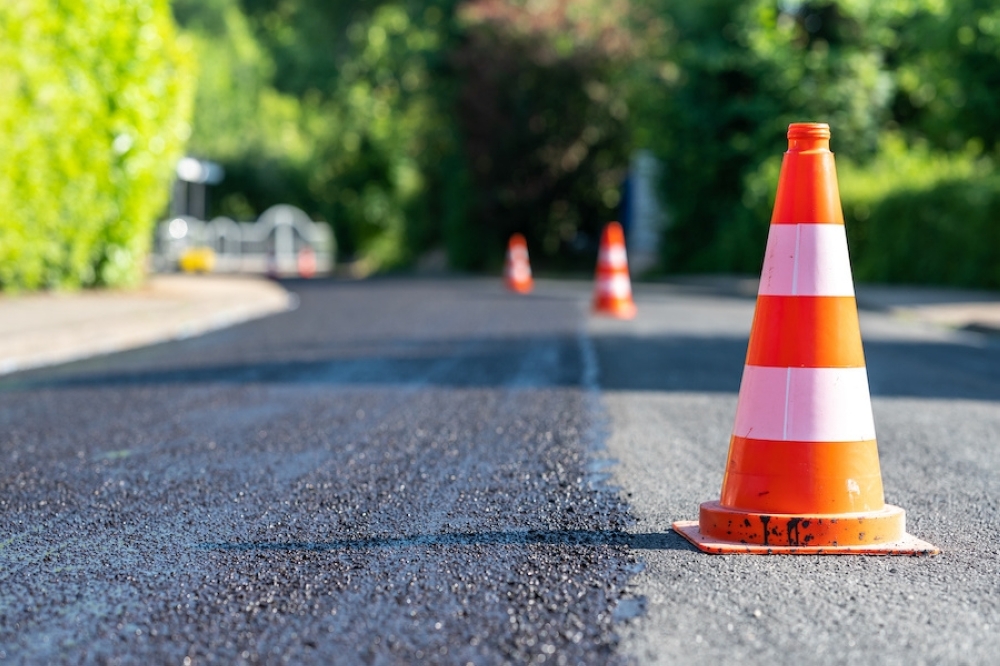
Richardson City Council is considering a new asphalt overlay program to address long-term street repair in the city.
Assistant City Manager Charles Goff presented information about a potential asphalt overlay program to council April 20, which would address streets in fair condition. However, he recommended that the city wait a few years before considering implementation.
The overview
Asphalt overlay is a method of street rehabilitation that involves applying a new layer of asphalt over existing pavement to extend the life of a street by at least a decade, Goff said.
Richardson conducted a pavement condition assessment in 2020 that classified streets as good, fair or poor, guiding the city’s prioritization of construction projects and determining what kind of work a street receives.
Goff said asphalt overlay could serve as a long-term strategy to address fair streets—streets that need repair work to bring them up to good condition, but don’t need full reconstruction. The pavement assessment found that about 65% of Richardson’s streets fell into the fair category in 2020.
Goff said the city does not recommend asphalt overlay for good streets, which require more minor preventative maintenance, or for poor streets, which need more intensive structural repair.
Richardson currently invests in localized concrete replacement to improve fair streets, a short-term fix that replaces one or two panels of concrete at a time.
“It’s pretty clear that asphalt does extend the life of concrete pavement,” Goff said. “The question is whether it’s a cost-effective way of doing that.”
Breaking it down
While asphalt overlay would require a more substantial investment up front, Goff said, it could prevent additional repair costs in the long term.
To make the investment worth it, Goff said the cost of the asphalt overlay, which would ideally last at least a decade, would need to be less than the potential costs of repeated concrete panel maintenance over the same time period.
Goff said the program wouldn’t make financial sense for all streets in fair condition. For example, the ongoing construction project on Renner Road is replacing nearly 5 miles of concrete panels and costs about $550,000, Goff said. Asphalt overlay on the same area would cost between $2.5 million and $5.4 million, which Goff said is much more than the anticipated cost of concrete panel replacement needs on Renner over the next decade.
Targeted asphalt overlay could still be a cost-effective option for other fair streets in Richardson, Goff said, but it would require more street maintenance funding than the city typically allocates.
Put in perspective
City Manager Don Magner said 80% of Richardson’s streets are 40 years or older, requiring sustained investment to prevent the city from falling behind on repairs.
“We’ve been doing this [concrete replacement] program for 10 years now,” Magner said. “And when I’m asked if we’re catching up, I say, ‘No, we’re just not falling behind.’”
Part of that investment includes the proposed 2026 bond program, which allocates more money than ever to street projects and, for the first time, includes funds for localized concrete replacement. Magner said this investment in localized repair, which will total about $5 million a year, will “move the needle” on repair for fair streets.
“I would love to see that our maintenance budget goes significantly up and that we go very aggressive on maintenance,” council member Arefin Shamsul said.
Mayor Pro Tem Ken Hutchenrider expressed concern about potentially putting even more funds toward road maintenance through an asphalt overlay program in light of increasing budget constraints caused by the state’s cap on property tax growth, which will likely lead to cuts in other areas.
“How are we going to manage this over the long term?” Hutchenrider said. “It’s one of those things [that is] ‘As many dollars as we can throw to it, we need to throw to it,’ and yet it seems to get gobbled up, and we’re still chasing our tails.”
Due to the increasing budget pressures, Magner said the city will likely come to rely on bond programs, rather than the city’s general fund, for a “substantial portion” of funds for both street rehabilitation and reconstruction projects.
Looking ahead
Goff recommended that the city wait a few years before considering implementing an asphalt overlay program. This time would allow city staff to observe the impact of the street repair investments in the potential 2026 bond and to consider options for the overlay program.