
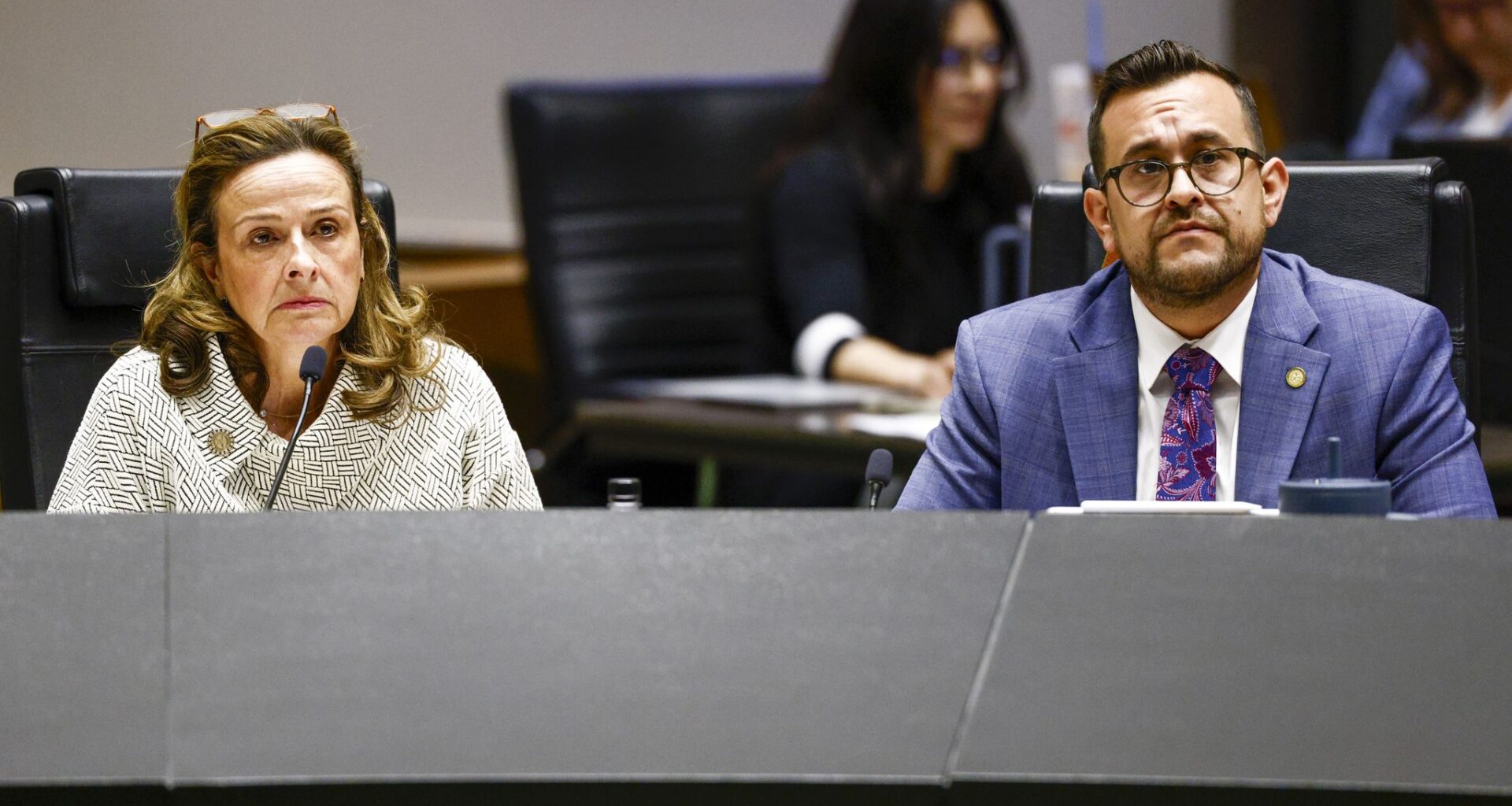
Dallas City Council members Paula Blackmon (left) and Adam Bazaldua listen to public comment during a Dallas City Council meeting on Wednesday, April 22, 2026, at Dallas City Hall.
Elías Valverde II/The Dallas Morning News
A controversial move to regulate churches and nonprofits serving free food to people experiencing homelessness was sent back to the drawing board.

The Dallas City Council veered away from imposing rules that would’ve mandated charitable organizations get permits to conduct food drives in public spaces.
Article continues below this ad
For years, faith-based groups and nonprofits have hosted food drives to assist those who experience heightened food insecurity on the streets. Several of the groups have set up tables and pop-up tents in the parking lots behind City Hall to help nearly hundreds of people at a time.
Council members debated whether these rules, which would’ve had the most visible impact in parts of downtown and South Dallas, was placing an “unnecessary burden” on groups that were just trying to help.
Some council members said the city was exposing itself to a potential freedom of religion lawsuit, while others said the move irons out food safety and trash clean up rules that currently don’t exist in the city’s books.
Make Dallas News a preferred source so your search results prioritize writing by actual people, not AI.
Add Preferred Source
Council member Adam Bazaldua said the proposed regulations were “an attempt to tell people that we’ve done something” with an ordinance that was going to end up in a religious freedom lawsuit.
Article continues below this ad
“We should be better than that,” he said.
Pastor Todd Atkins, whose church serves people experiencing homelessness, called the proposed regulations “an unnecessary roadblock” that prevented faith-based groups from helping people the way the city couldn’t.
City officials have raised concerns about the safety and hygiene of the drives, saying there’s no way to ensure food is handled safely and the trash left behind negatively impacts nearby neighborhoods. Food providers told The Dallas Morning News last year that the city’s crackdown unfairly targets those who are just trying to help the most vulnerable.
The discussion is centered around a unique issue facing downtown and the residents who live south of it. The food drives occur in their backyard, and homeless providers in the area have often said food distribution efforts, though well-intentioned, deter people from accepting help.
Article continues below this ad
“Good intentions do not erase real consequences, and those consequences fall squarely on the residents and communities who live here,” said Jose Avila, a downtown Dallas resident.
Avila said he’s seen groups hand out food, supplies and camping gear that incentivize public camping in parks, alleyways and sidewalks, “compounding the very conditions that make these situations difficult to manage.”
But council members questioned if setting a citywide policy for problems unique to downtown was the best approach.

By signing up, you agree to our Terms Of Use and acknowledge that your information will be used as described in our Privacy Policy.
Council member Cara Mendelsohn said the situation downtown needed “specific interventions” and highlighted there were city efforts at play asking nonprofits to partner with shelters to provide food. “But it doesn’t mean we should be restricting it in this manner,” she said.
Article continues below this ad
Mayor Pro Tem Jesse Moreno, who was in favor of approving regulations alongside Mayor Eric Johnson, said this data is often protected by HIPAA, and urged the council to stand with the residents who wanted more enforcement in their neighborhoods. But the majority didn’t agree.
The City Council voted 12-2 to clean up the city code but pushed the permit discussions to the Quality of Life, Arts and Culture Committee.