
Several Austin Energy investments in solar generation and power grid resilience totaling up to $172 million were approved this spring.
“We are really moving the ball forward today in terms of getting closer to our environmental goals as a city,” council member Ryan Alter said.
What happened
Energy-related projects advanced by City Council are expected to add dozens of megawatts of generation capacity to the AE grid. During peak service times, 1 MW can serve about 250 residential customers, according to the Electric Reliability Council of Texas.
Updates approved April 23 included:
Adding 8 MW of solar capacity on 58 acres at the former FM 812 Landfill property, representing the largest single-site solar installation in Austin. Council authorized an agreement with UPower Energy worth up to $37.5 million over 25 years.Reserving 40 MW of battery storage capacity for the AE grid, following a 100 MW battery storage addition last year. Council authorized an agreement with Base Power worth up to $40.8 million over 10 years.Placing solar installations to generate at least 30 MW on dozens of Austin’s facilities and properties. Council authorized an agreement with Big Sun Solar for up to $76.5 million over 30 years for developing the city-owned solar portfolio, and an agreement with PowerFin for up to $17.7 million over 25 years.“These items are just going to help Austin grow our local energy production to make us more resilient, more cost-effective, more environmentally friendly, which are exactly the three priorities that Austin Energy has for us,” council member Marc Duchen said.
Zooming in
The old municipal landfill south of Austin-Bergstrom International Airport opened in the 1960s and eventually moved toward closure in the 2000s. The property covers more than 360 acres, but only about 59 acres are usable for solar installation.
City staff identified the landfill as an ideal location for the UPower solar project given its large amount of open land that likely couldn’t be used for other civic purposes. The first-of-its-kind project for Austin is expected to open by 2028.
“>
The storage agreement with Base, which recently moved to launch its first Texas factory in Austin, will utilize the company’s battery facilities it installs on residential properties. Base will be responsible for working with homeowners on battery installation, and AE would control charging and recharging for its share of batteries
“As an aggregated distributed resource within Austin Energy’s portfolio, the available capacity provided by the battery installations will grow with each installation over an 18-month period until 40 MW is reached. This agreement and the previously authorized battery agreement will provide wholesale price risk mitigation to the Austin Energy Load Zone,” city staff reported.
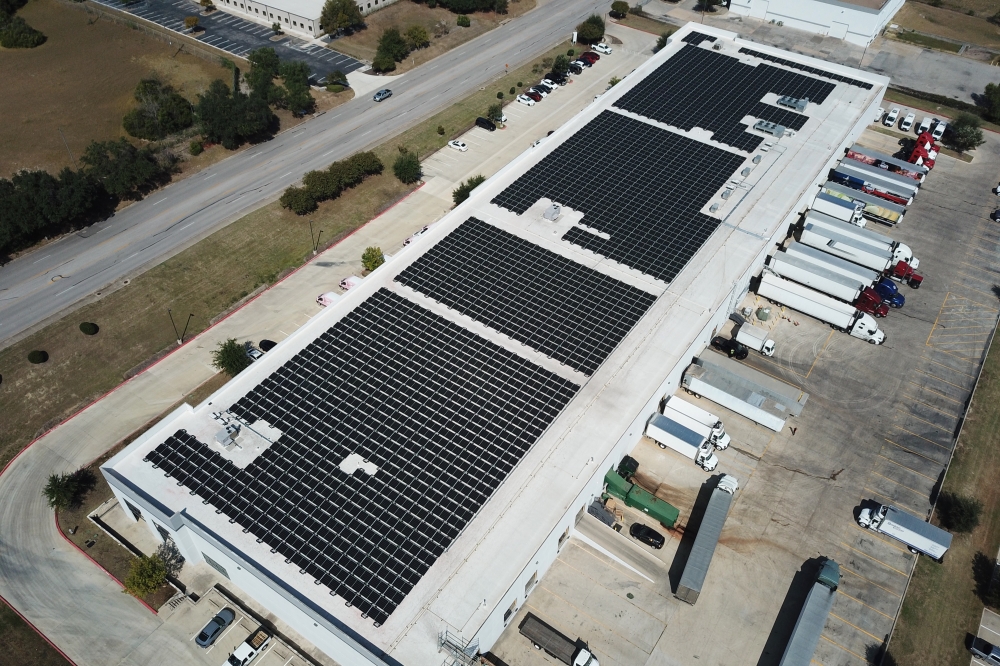
Lastly, the addition of new solar installations on city properties stems from council’s push to expand generation capacity on public sites proposed by Alter last year. It also wraps in AE’s Solar Standard Offer concept that incentivizes landowners to add solar features.
“We’re looking for any square footage we can to put solar power on there and generate additional renewable power, strengthen local generation and make Austin Energy a better, more reliable system,” Mayor Pro Tem Chito Vela said.
Big Sun will manage the city-owned solar, while PowerFin will manage third-party equipment on Austin’s land. Those projects would eventually be transferred to the city or decommissioned after the program. Both contracts are expected to produce at least $20 million in profits for the city over 25 years.
“This is a massive win for our community and for climate action,” Zach Baumer, Austin Climate Action and Resilience director, said in a statement. “By investing in solar across City facilities, we are not only reducing emissions—we are demonstrating what it looks like for a city to lead by example and invest in a cleaner, more resilient future.”
 Austin’s airport is one of several city facilities that already have solar generation in place. (Courtesy Austin Energy)Dozens of potential city properties and buildings were initially identified for the solar project. That list has been refined since last year, according to the climate and resilience office, and now includes about 100 potential sites.
The project has advanced ahead of a key deadline with federal solar tax credits under the Inflation Reduction Act are expiring soon. Qualifying solar construction must begin by July 4 or be operational by the end of 2027, according to the city, and phased installation will begin soon.
“These three historic investments represent Austin’s commitment to providing reliable, affordable, and environmentally responsible electricity to our community,” council member Mike Siegel said in a statement. “Each item is a path-breaking ‘first:’ our first solar power array on a City landfill; our first commitment to use solar on City facilities to power 1000s of homes; our first deal to leverage “distributed” battery storage across our community.”
What else?
A separate resolution from Alter approved April 23 calls to support further residential solar additions around Austin. City staff are directed to propose a new incentive program that could benefit AE’s customers and power resiliency by later this year.