
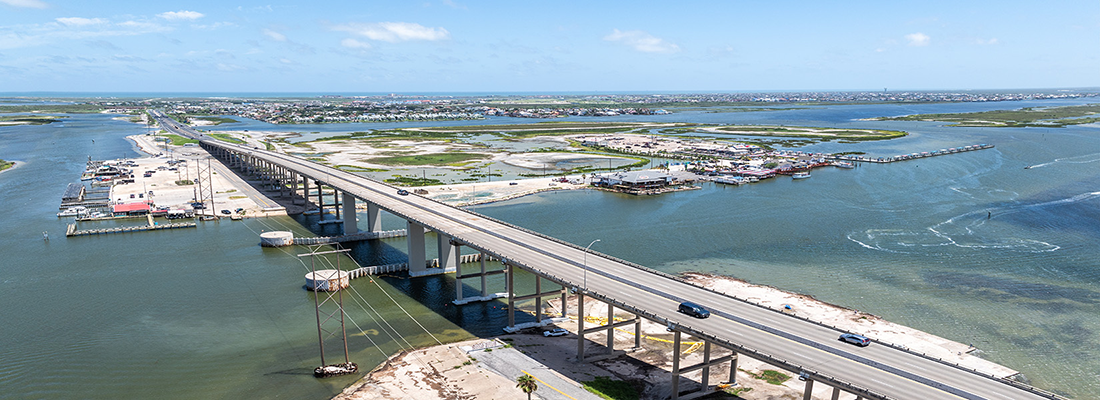
The Texas Department of Transportation (TxDOT) confirmed in its April 2026 project newsletter that two possible routes for a new crossing from Corpus Christi to North Padre Island are moving forward, part of a long-discussed effort to improve access to the island and reduce congestion.
TxDOT said the project would create a new crossing over the Laguna Madre, connecting the mainland to North Padre Island through what’s now being called the Regional Parkway – North Padre Island Project.
Right now, two “reasonable alternatives” remain under consideration after years of study. TxDOT defines a reasonable alternative as one that is “technically and economically feasible, meets the purpose and need for the proposed project, and meets the overall transportation goals.”
“The Green and Orange alternatives passed the preliminary screening process, were found to be reasonable, and are being advanced,” TxDOT further explained in its newsletter.
TxDOT began formally studying the project in 2024, per the agency’s website, holding a scoping meeting in June of that year before launching a full environmental review process later in September.
By 2025, engineers and planners had narrowed down the possible routes based on environmental concerns, engineering challenges and public input. Some options didn’t make the cut.
One proposed route along Yorktown Boulevard was removed after officials said it would have displaced homes, businesses and even community infrastructure like churches and a fire station. Other alternatives were scrapped due to potential impacts on the historic King Ranch and environmentally sensitive areas along the Laguna Madre and North Padre Island.
Now, the focus shifts to refining what’s left. That includes figuring out how the bridge would connect to the island, how it would affect surrounding communities and whether the project can move forward without unacceptable costs or environmental consequences.
“Refining alternatives means adjusting the design, alignment or location of the route alternatives as more detailed engineering, environmental and community information becomes available,” TxDOT said.
There’s also the possibility that nothing gets built at all. TxDOT noted that every option will continue to be compared against a “No Build” alternative—essentially leaving things as they are today.
“Although a ‘No Build’ alternative does not meet the project’s purpose and need, the ‘No Build alternative’ may be selected if a build alternative has unacceptable costs or environmental consequences,” the agency said.
For now, the project remains in the study phase, with more public input and analysis expected before any final decision is made on whether the bridge will be built at all.