
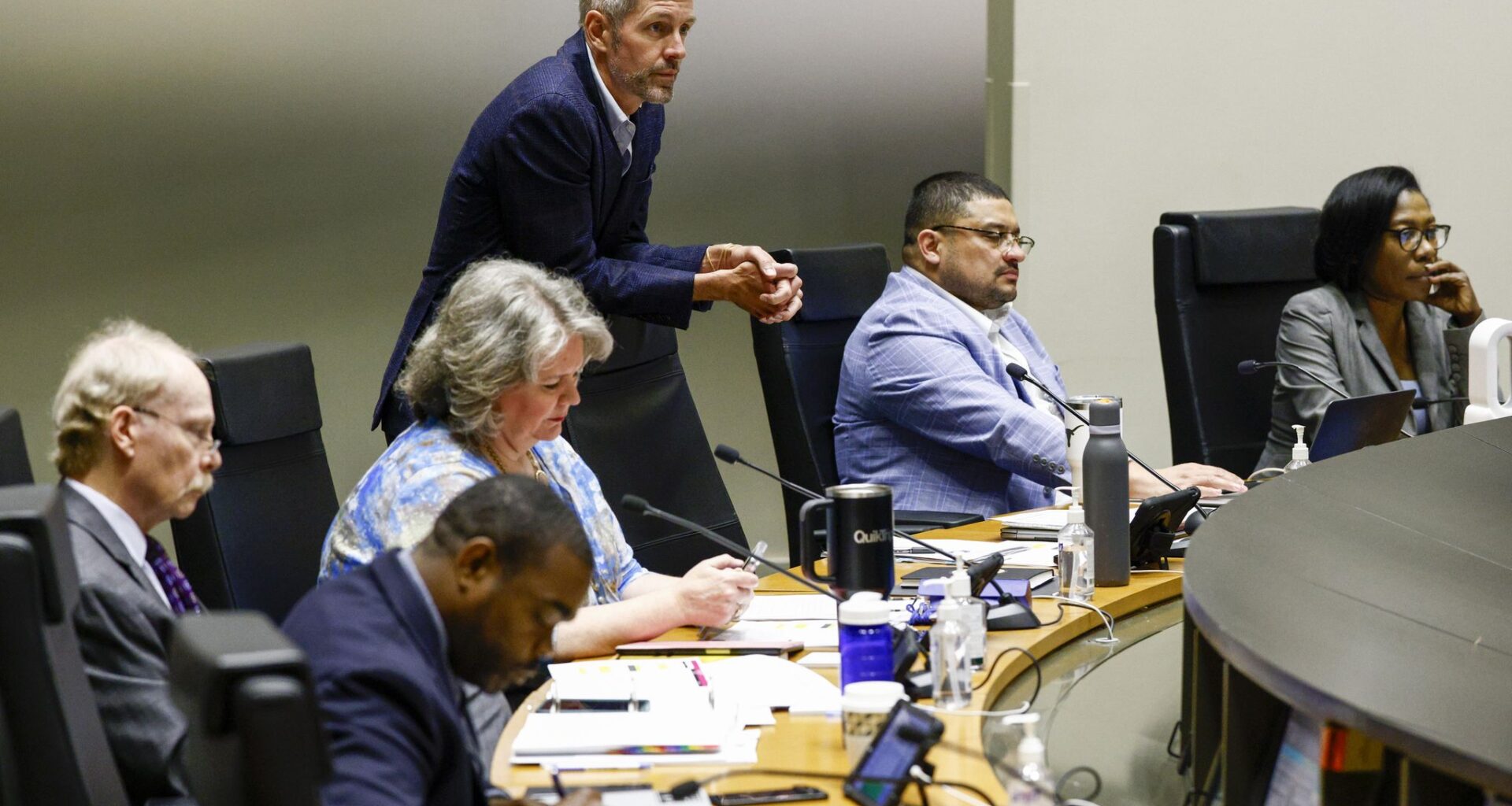
Re: “Council to vote on housing proposal — Advocates call revised location policy for low-income homes a potential lost opportunity,” Wednesday Letters.
The debate over Dallas’ affordable housing location policy reflects a real tension that deserves more structured analysis than it has received.
Concerns about the concentration of poverty are valid and long-standing. At the same time, the financial reality of producing affordable housing is often underappreciated.
Projects serving lower-income households depend on complex capital structures — tax credits, exemptions and public-private partnerships — that are highly sensitive to land costs and feasibility. In higher-cost areas, many projects simply do not pencil without additional subsidy.
The result is a fundamental trade-off between increasing overall supply and improving geographic distribution. Both are important, but they are not always aligned in the short term.
Policies that emphasize location without accounting for feasibility risk reducing production. Conversely, focusing solely on output can reinforce existing patterns.
The path forward is not binary. It requires a framework that acknowledges these constraints and sequences both goals over time.
Clear thinking about incentives and trade-offs will matter more than any single policy shift.
Board secretary, Dallas Housing Finance Corporation
We just came back from a visit to our sophomore grandson at Texas A&M University at College Station. It is unbelievable that he is not allowed to study Plato’s entire writings, but for his culture elective for next year, he can take “The History of Country Western Music.” Really?
As I recall, that music is often about drinking, drugs, womanizing and pickup trucks. He can learn about some of that just watching our state legislators. Maybe he should transfer to Southern Methodist University with Prof. Martin Peterson, who specializes in ethics and philosophy.
Virginia Jentsch, Arlington
Endorsing a political candidate in a tax-exempt church service is against the law in the United States, specifically per the Johnson Amendment of 1954. To report a church or tax-exempt organization for prohibited political campaign activity, file IRS Form 13909, Tax-Exempt Organization Complaint (Referral). This form, often referred to as a “church violation form,” allows the IRS to investigate potential violations of 501(c)(3) rules.
Support America. Enforce its laws.
Herbie Huckstetter, Oak Point
Oil and water don’t mix
The Trump administration has been sued on the 16th anniversary of BP’s Deepwater Horizon oil rig that sent millions of gallons of oil spewing across the Gulf waters and onto our coastline for miles.
And yet, a new project has been approved lacking full information that BP can conduct safe deep-water drilling. Has no one learned that oil and water don’t mix?
Given alternative energy production using wind and solar, let’s protect the water for which there is no alternative.
Just wondering, if Gov. Greg Abbott can unilaterally withhold lawfully approved funds from Texas cities (Houston, Austin, Dallas) whenever the lawfully elected leadership of these cities won’t submit to his every command, why don’t these cities just unilaterally refuse to submit sales tax revenue collected within these cities to Abbott’s state government?
I imagine the loss of revenue from these Texas cities would quickly convince him to respect the citizens of these cities. Even Tim Dunn and Farris Wilks couldn’t cover that.
This is about a $22,000 gamble on my life. Last year, the CEO of a major health insurance company earned over $21 million. This year, his company made a decision about my health care that amounted to a gamble on my life, for $22,000.
I retired in 2019 as an ExxonMobil lawyer and relied on the health coverage administered by a major insurer. What began as a routine knee issue led to a deeper concern. Pre-surgical testing revealed an abnormal EKG, then stress tests suggested possible heart blockages.
My cardiologist recommended a cardiac catheterization — the definitive test. My insurance denied it, saying I lacked sufficient symptoms. A test to detect life-threatening disease was denied because I was not yet sick enough.
I appealed, and the denial was reversed. The test revealed that I need quadruple bypass surgery. Three arteries were 85% to 90% blocked. Without that test, I might not have known until it was too late.
I was more fortunate than many people. Many coverage decisions are made in three minutes. Too often, cost savings outweigh patient safety. How many people never make it through the appeals process?
This is about humanity. No one’s life should be treated as a financial gamble.
Lonnie L. Johnson, Spring
No to the Fix Our Forests Act
Re: “Pass the Fix Our Forests Act,” by Andrea Christgau, Tuesday Letters.
While supporters of the Fix Our Forests Act claim it will reduce wildfire risk, many destructive fires in recent years haven’t started in forests at all. They’ve ignited in grasslands and shrublands, as seen in the Los Angeles and recent Oklahoma fires.
In these incidents, wind-driven flames move rapidly through dry grasses and shrubs, not dense timber. Logging remote backcountry forests does nothing to stop such events or protect homes and communities.
At the same time, fuel-reduction projects already underway often lack meaningful environmental oversight. Reports from conservation groups describe clear-cut operations, removal of large fire-resistant trees and broad disturbances that can make forests less resilient. Expanding these practices without safeguards risks degrading ecosystems already under stress.
Rather than doubling down on unregulated logging, we should focus on proven community-protection strategies: hardening homes, managing vegetation around structures and addressing grassland fuels that ignite major fires.
The Fix Our Forests Act moves us in the wrong direction, and lawmakers should reject it.
Jennifer Normoyle, Hillsborough, Calif.
Have thoughts about this? Send a letter to the editor using our letters form or email letters@dallasnews.com. Letters should be no more than 200 words and include the first and last name of the writer and city of residence.