
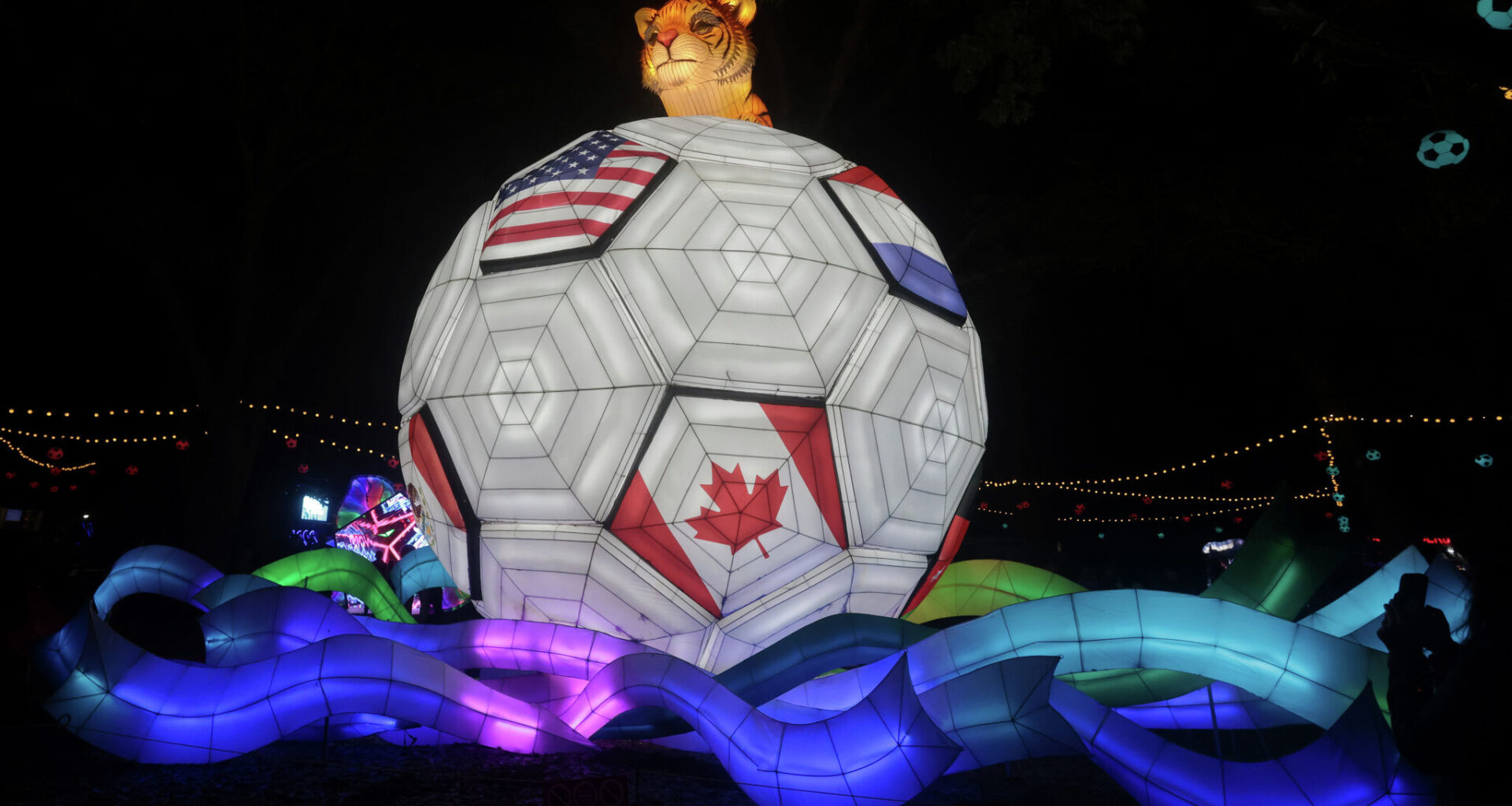
In a few weeks, nine FIFA World Cup games will take place in the Dallas-Fort Worth area. The tournament kicks off in Arlington on June 14, when Japan takes on the Netherlands at AT&T Stadium, and a crucial semifinal follows on July 14, giving our city a full month in the global spotlight.
For many, this is a literal once-in-a-generation event. The last time the United States hosted the men’s World Cup was in 1994. An entire generation of Texans has grown up since then, and it will likely be decades before a tournament of this magnitude returns to our backyard. This isn’t just an annual championship or a passing concert tour; it is a rare global convergence happening right on our doorstep. We cannot let it pass by without leveraging it for the good of our communities.
You may have already noticed the growing buzz: advertisements on DART rails, signage visible at AT&T Stadium from Interstate 30, restaurants promoting watch parties and flags from different countries outside of homes or on cars as neighbors declare their allegiance.
The excitement is everywhere. We are gearing up to watch alongside more than 5 billion fans worldwide, but for many of us, the people we know least are the ones living closest to us. We’re living in an uncomfortable reality: We are more connected to the world than ever and more disconnected from one another. According to a 2025 Pew Research Center survey, only 26% of Americans say they know all or most of their neighbors, and 12% do not know a single one. The American Psychological Association’s 2025 Stress in America survey found that 54% of U.S. adults feel isolated. That same survey revealed an overwhelming 92% of adults recognize relationships as a key source of meaning in their lives. We know connection matters. We are just not very good at making it happen.
Sport, however, provides an easy opportunity. Sport has always had a unique power to cut through division and remind us of what we share. When the U.S. men’s hockey team defeated the Soviet Union at the 1980 Olympics, the victory briefly united a nation gripped by inflation, the Iran hostage crisis and deep uncertainty. More recently, the World Cup run of the 2023 U.S. Women’s National Soccer Team drew millions of viewers from every corner of the country, binding strangers together around a common cause. Sport gives us permission to care about something together.
The Dallas-Fort Worth area is one of the most diverse in America, home to many different cultures, ethnic communities, immigrant families and international transplants. When the world’s biggest tournament comes to a region that already looks like the world, the tournament isn’t just another sporting event held here. The matches, fanfare, joy of a win and sadness of a loss all represent a once-in-a-lifetime opportunity to connect with our neighbors.
The opportunity, however, comes with a challenge. Dallas-Fort Worth is sprawling, covering more than 9,200 square miles, and the people who make it so culturally rich are rarely in the same room together. In our fast-paced, modern routines, it is far too easy to pull into our driveways, close our doors and never actually learn the names of the people living just across the street or down the hall. We might exchange a quick wave from a distance, but how often do we actually share a table or a meaningful conversation? Something as simple, yet as globally unifying, as a soccer match allows people to come together in a way that transcends languages, backgrounds, ZIP codes or school districts. It gives us the perfect, low-pressure excuse to finally cross the street and knock on a door.
But these interactions don’t happen at random. They happen when a city decides to be intentional.
One effort aiming to do this is Victory Beyond the Cup, an initiative of Cru, a global faith-based organization. Rather than just watching the games in isolation, we want to help residents use this global moment to forge genuine connections. The initiative is built to equip everyday people with the confidence to engage with friends, families and, of course, neighbors.
We’ve tried to remove the hesitation of hosting by providing free watch party guides in multiple languages. These kits include simple things like recipe cards from various countries, conversation starters and practical tips for bringing people together. We hope to allow everyday residents, as well as community leaders, to open their doors and welcome the world in.
A match may only last 90 minutes, but a friendship built over a shared experience can last a lifetime.
Invite your neighbors over for a match and discover what happens when Dallas-Fort Worth opens its doors.
Heather Reddy is executive director of Victory Beyond the Cup, an initiative of Cru, a global faith-based organization.
Have thoughts about this? Send a letter to the editor using our letters form or email letters@dallasnews.com. Letters should be no more than 200 words and include the first and last name of the writer and city of residence.