
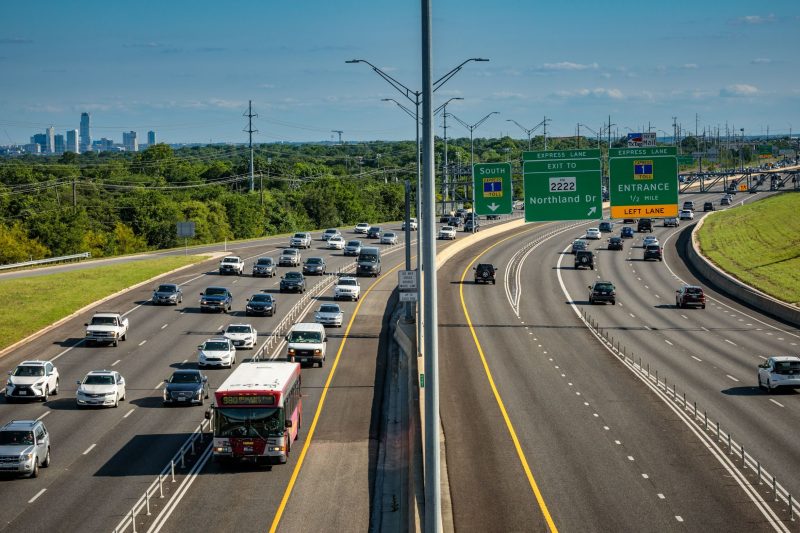
Public comments on plans to widen Austin’s MoPac Expressway should not be publicly released, according to the local highway entity promoting that road expansion.
The Central Texas Regional Mobility Authority argues that, for now, the public comments are “confidential by law” and fall under protected, deliberative “interagency” communications — a stance that public information experts say pushes government secrecy to Orwellian extremes by keeping the public’s own input out of public view.
 John Bridges
“It does seem silly to argue that ‘public’ comments are suddenly no longer public once submitted to the agency,” John Bridges, a journalism lecturer at the University of Texas and former executive editor of the Austin American-Statesman wrote Austin Free Press. “The agency certainly could make these comments available but is choosing not to. Indeed, it’s spending public money to hire an outside lawyer to try to keep public comments from the very public that made them.”
CTRMA maintains that it will release the public comments at the appropriate time down the road: “At the conclusion of the public comment period, as is the typical and required practice, the Mobility Authority will review and respond to all submissions and publish for public access,” CTRMA spokesperson Jori Liu wrote to Austin Free Press. “This practice follows (National Environmental Policy Act) and TxDOT requirements established to ensure fairness, transparency, and integrity in the decision-making process.”
 Bill Bunch
The dispute regarding public information began March 25, when Bill Bunch of the Save Our Springs Alliance requested that CTRMA turn over all comments submitted during the MoPac South public input process, including those sent by email, voicemail, online forms, and at an in-person meeting at Bowie High School.
“We are just asking for what is clearly public information: public comments, filed by members of the public, in an official public comment process,” Bunch said. “It’s beyond absurd that their attorneys are arguing that these public comments are somehow internal information confidential to the agency.”
Instead of releasing the information, CTRMA has sought an attorney general opinion to keep the public comments secret for now. The Austin Free Press also has requested the information from the mobility agency.
 Brian O’Reilly
In a letter to the Texas Attorney General, who oversees the Texas Public Information Act, Troutman Pepper Locke attorney Brian O’Reilly argued that CTRMA has a right to withhold the public comments until after:
The public comment period on the MoPac project’s draft Environmental Assessment ends on May 3,CTRMA issues its final Environmental Assessment; andTxDOT issues its final environmental finding on the project.
O’Reilly’s letter cites two legal exceptions to public disclosure. The first of those (§552.101) exempts information “considered to be confidential by law.”
“Until the (Environmental Assessment) comment period closes, submissions received by the CTRMA and TxDOT are in-process working materials,” O’Reilly wrote.
If “comment submissions are made public before the close of the comment period,” he added, “outside actors may selectively highlight, publicize, or organize campaigns around particular comments to pressure the CTRMA and TxDOT to assign those comments disproportionate weight. This can create an appearance, or reality, of undue influence on the CTRMA’s decision-making.”
CTRMA’s other argument cites an exception (§552.111) that exempts from disclosure certain memos or letters that reveal an agency’s deliberative process.
The requested public-comment “records are preliminary drafts because they are being gathered and reviewed before TxDOT makes its environmental decision and before the (Environmental Assessment) is finalized,” O’Reilly wrote.
“If all comments submitted during an open, ongoing comment period must be disclosed on a rolling basis upon request, the CTRMA and TxDOT would lose the ability to complete their internal evaluation of the full body of comments before those comments are publicly circulated and potentially used to pressure or mischaracterize the agencies’ deliberations.”
Public information experts take issue with those arguments.
 Joseph R. Larsen
“I’ve never seen an argument like this… It’s absurd,” said Joseph R. Larsen, an attorney with Houston-based firm Gregor, Wynne, Arney. Withholding public comments “cuts against the very idea of public involvement,” said Larsen, who sits on the board of the Freedom of Information Foundation of Texas along with Bridges. “The whole idea of transparency under the First Amendment is not only the right to speak, but it’s the right to receive information.”
Public comments “are generally not regarded as confidential under the ‘agency memorandum’ or ‘deliberative process exception’ of the Texas Public Information Act,” Austin attorney Bill Aleshire told Austin Free Press in an email.
“The deliberative process privilege protects pre-decisional, deliberative communications within an agency, but public comments submitted from outside the agency do not fall within this narrow exception because they are not internal agency communications.”
CTRMA officials maintain their position is legal and protects the integrity of the public comment process.
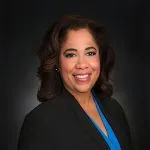 Nikelle Meade
“Our goal is to ensure that everyone is heard regarding this project (and all of our projects), and we want each person to feel open and free to express exactly what they want to,” CTRMA Vice Chair Nikelle Meade wrote Austin Free Press.
“We do not want to create a situation where some members of the community either berate others or criticize their comments or where the comments made by others influence what a person may otherwise want to submit,” added Meade, an attorney at Mayor Kirk Watson’s former firm: Husch Blackwell.
The Office of the Attorney General has 90 days to respond to CTRMA’s request to withhold the public comments.
Andrew Wheat is the Data, Information and Enterprise Editor of the Austin Free Press.
Shelby Ligon is the editorial manager for Austin Free Press.
Disclosure: Bill Bunch sits on the advisory board of the Austin Free Press.