
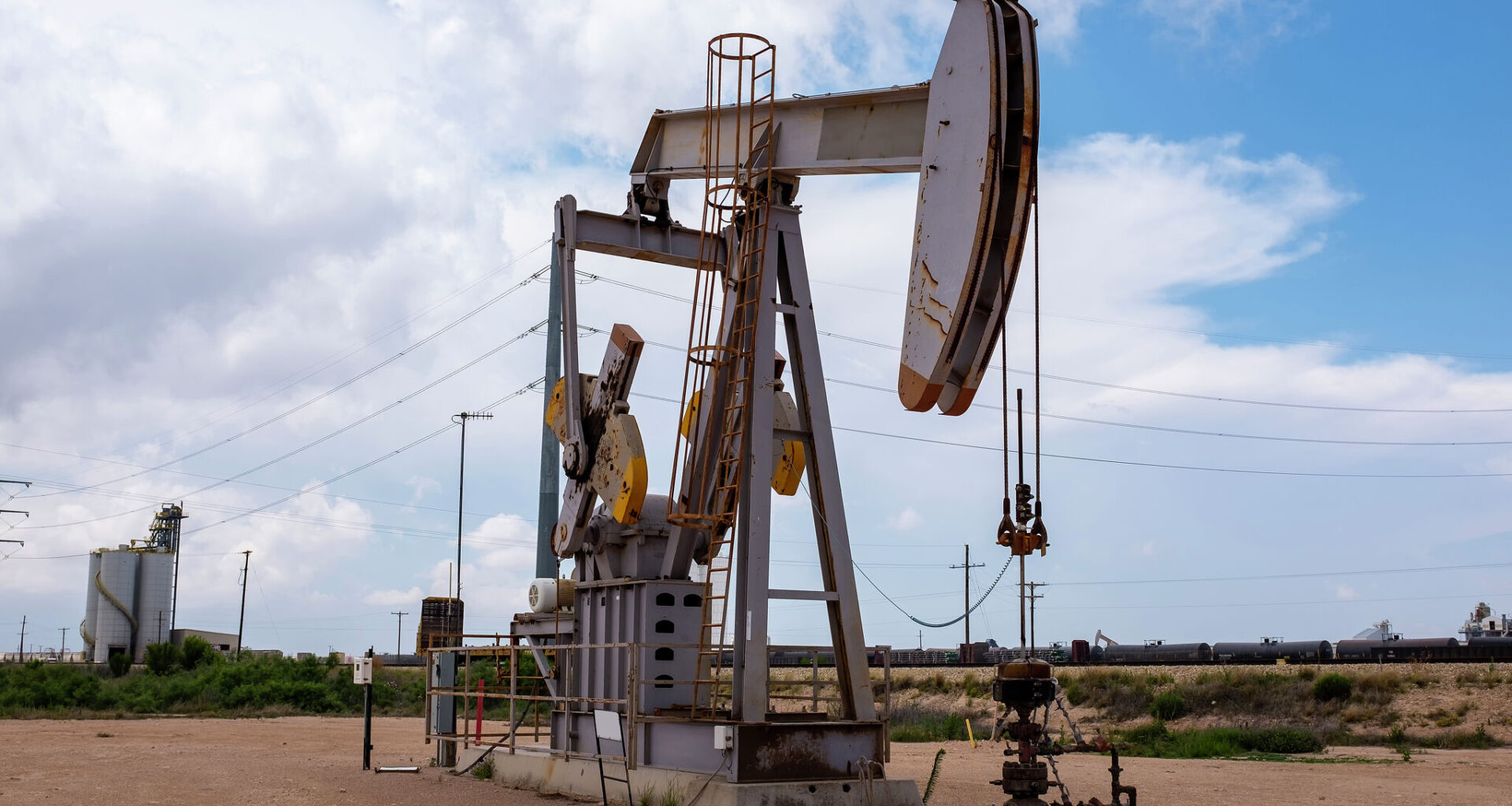
Despite a ceasefire temporarily halting conflict in the U.S.-Iran war, folks back home are still feeling the pinch in their wallets. Texans alone are seeing gas prices inch closer to the $4/gallon mark, with diesel levels already surpassing that. Sadly, if there was ever a time to get a job in the oil industry, this might be it.
The Texas Tribune reports that Texas oil companies helped stabilize the industry during the war and prevented prices from soaring even higher. The solution: Massive output with fewer wells. Ten years ago, oil companies drilled 9.2 million barrels of oil from 1,543 rigs; in 2025, they produced 13 million barrels from 582 rigs, according to Texas Oil and Gas Association President Todd Staples. Of that 13 million barrels, almost half came from the Permian Basin in West Texas.
“Without the millions of barrels produced a day in the Permian Basin, there’s no question we’d be in much more volatile times,” Ben Shepperd, president of Permian Basin Petroleum Association, the largest regional trade group in the country, said to the Texas Tribune. “The strong production coming out of the Permian Basin, however, helps provide a stable source of energy for the United States and our allies, which can reduce volatility when conflicts arise in other parts of the world.”
So, while Texans are losing money at the pumps, oil workers are pulling double duty and could be in for higher paydays. With all that said, how much exactly can you make working in Texas’ oil industry?
In Texas alone, roughnecks (entry-level) average $43,969, while technicians (mid-level) and petroleum engineers (senior-level) can earn $50,873 and $74,556, respectively. Those numbers spike even higher for offshore rigs, paying $60,000 for roustabouts (entry-level), $100,000 for drillers (mid-level) and over $150,000 for supervisors (senior-level). Oil workers with college degrees can also start their jobs at six-figure salaries, according to ALB.
As for why oil workers earn so much, a lot of it has to do with sacrificing the traditional eight-hour workday. Oil workers can expect 12-hour shifts, 14-day rotations and months away from home on top of dealing with hazardous conditions in remote locations.