
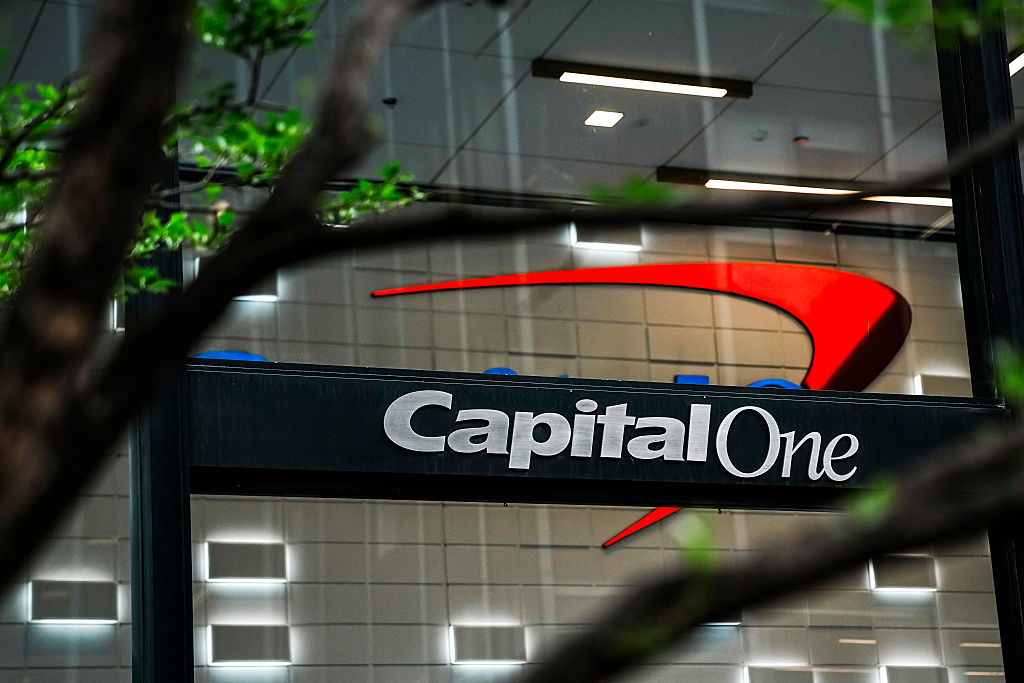
Capital One agrees to pay $425 million in 2026 to settle a lawsuit alleging it used deceptive practices regarding its 360 Savings credit card account.
VIEW press/Corbis via Getty Images
A major credit card company has agreed to a $425 million payout to settle grievances regarding its savings accounts. Now, users may be eligible for a share of those funds.

The United States District Court for the Eastern District of Virginia approved the settlement on Monday, April 20, clearing the way for money to be issued. Unlike many other lawsuits, impacted residents do not need to file a claim to receive their payments.
Article continues below this ad
Here’s what cardholders should know, according to the settlement website.
Why is Capital One paying a settlement?
Capital One is involved in the settlement because of a class action lawsuit alleging issues with its 360 Savings (now rebranded as 360 Performance Savings) accounts.
The lawsuit alleges that Capital One did not raise interest rates on its 360 Savings account to meet or stay consistent with the higher rates it was offering on the 360 Performance Savings account, even though the products are similar. The 360 Performance Savings rolled out in mid-September 2019, according to the complaint.
Article continues below this ad
Additionally, the lawsuit claims Capital One “deceptively marketed” the 360 Savings account.
“By removing 360 Savings from its website entirely, Capital One concealed that the new 360 Performance Savings was, in fact, a different account and not just another name for the 360 Savings account, and that 360 Performance Savings paid a higher rate of interest than the 360 Savings account,” the complaint states.
Article continues below this ad
Capital One denied any wrongdoing.
Who is eligible for the $425M Capital One settlement?
According to the settlement website, you are eligible if you used to or still hold a Capital One 260 Savings account from September 18, 2019, through June 16, 2025. The payment will be issued to the primary account holder listed on the account, though joint and co-holders are also included in the Class.
How do I know if I qualify for the Capital One settlement?
You can check if you had an account during the Class Period by logging into your Capital One account via the website and looking at when the account was opened. Additionally, you can check your email or old mail for bank statements, which are required to be sent four times a year, per Capital One.
Article continues below this ad
According to the settlement website, those who are eligible were already notified because of a past proposed settlement. That settlement was not approved because the April 20 one secured more money for the Settlement Class. Most times, folks are notified of their eligibility for a settlement through email or mail.
The Settlement Administrator will never ask for your Social Security Number and/or Employee Identification Number. Folks should visit the official settlement website, www.capitalone360savingsaccountlitigation.com, or call 1-888-832-2704 if they have additional questions.
How do I get my money from Capital One lawsuit?
You do not need to file a claim. However, folks had the option to notify the Court if they wanted to receive an electronic payment as opposed to a paper check by Monday, March 30.
Article continues below this ad
Payments will start being issued on or about Tuesday, July 21, according to the settlement website. If your payment is $5 or more and you didn’t opt for an electronic payment, it will be issued via paper mail to your last known address. If the amount is less than $5, you will only get it if you previously chose to receive it electronically, per the settlement website.
How much is everyone getting from Capital One settlement?
Each Class Member will get the “approximate amount” of additional interest that would have been earned on the account during the Class Period if their 360 Savings account had received the interest rate of the 360 Performance Savings product, per the settlement website.
Article continues below this ad
Some of the funds will first go toward administrative, attorney, and other lawsuit-associated costs.