
By Sheldon Munroe
Photography By Sheldon Munroe
Reporting Texas
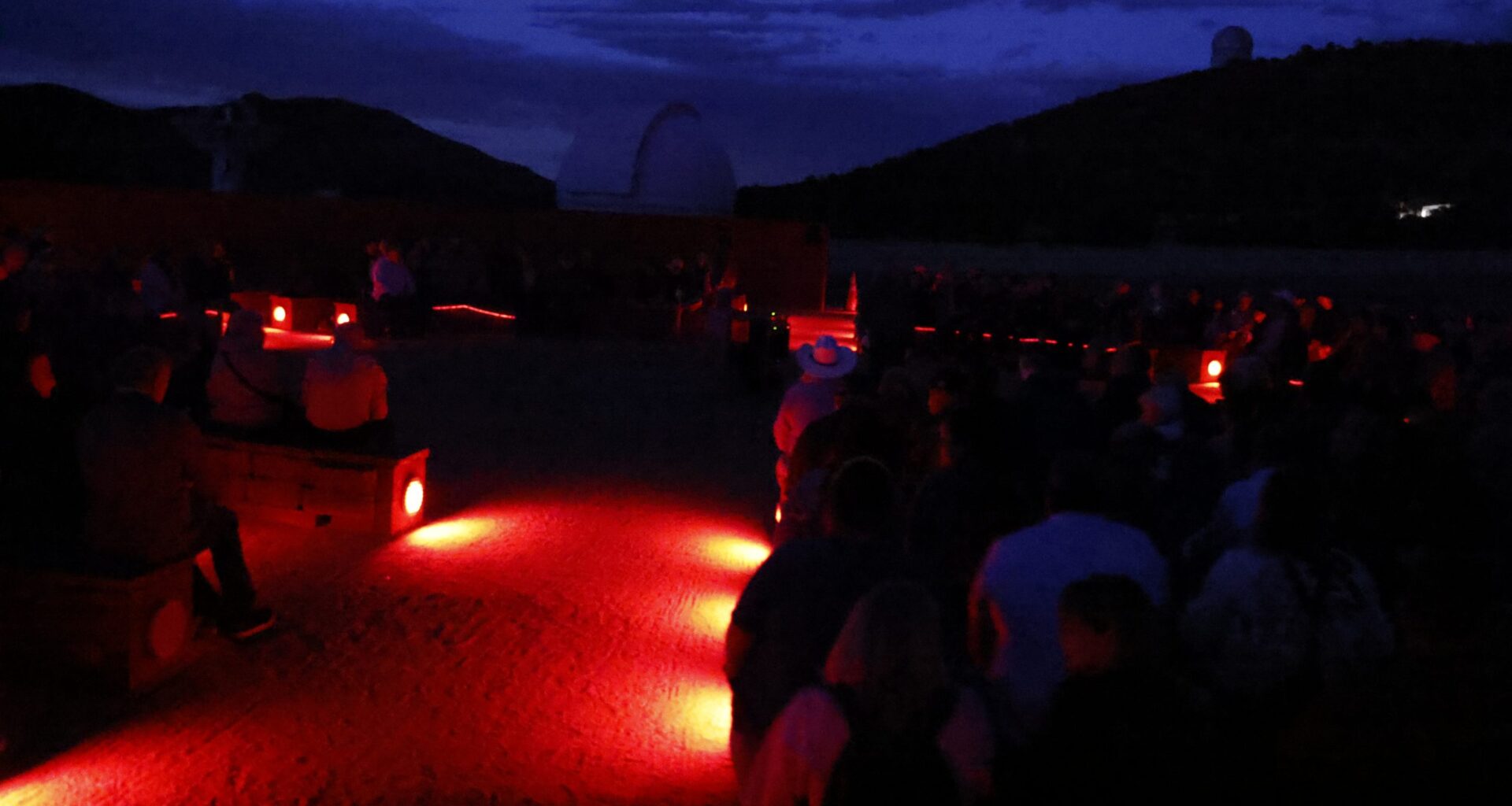
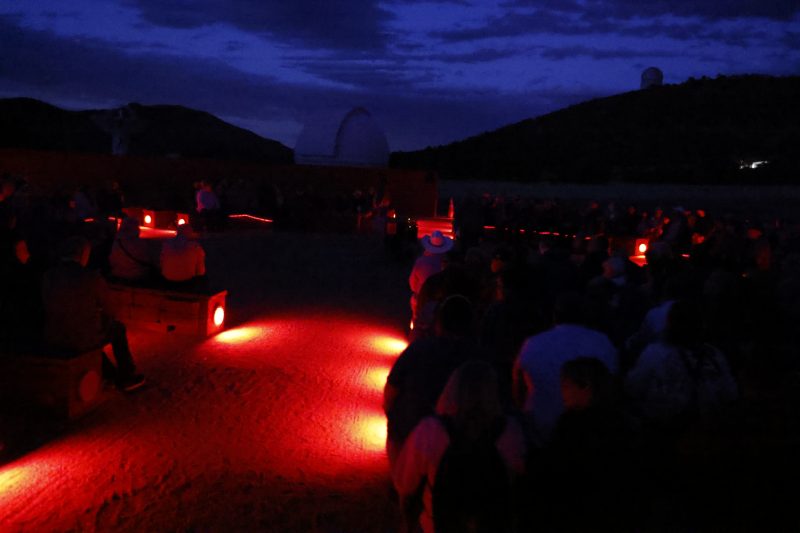 The stars truly aligned as more than 300 stargazers from across the country looked upward at McDonald Observatory to conclude the 2026 Dark Skies Festival under the open skies of West Texas.
Overcast skies had observatory staff prepare for virtual demonstrations, but then the sky emerged, evoking excited whispers and “awws” as more than 3,000 stars became visible to the naked eye. Several globular clusters, the Milky Way and very bright Jupiter drew particular excitement.
“We are here to appreciate the stars as well as the wildlife and human health,” observatory staffer Ryan Cantrell said.
Star enthusiasts from around the state and country made their way this month to the remote southwest corner of Texas for the event. “We planned our entire trip around this,” said James Hancock, who came with his family from Baton Rouge.
The Friday night observatory event capped a multiweek festival, which included community events, daytime educational activities and star parties. These events included telescope viewings and talks by astronomers and occurred in several West Texas towns, including Alpine, Terlingua, Fort Davis and Presidio.
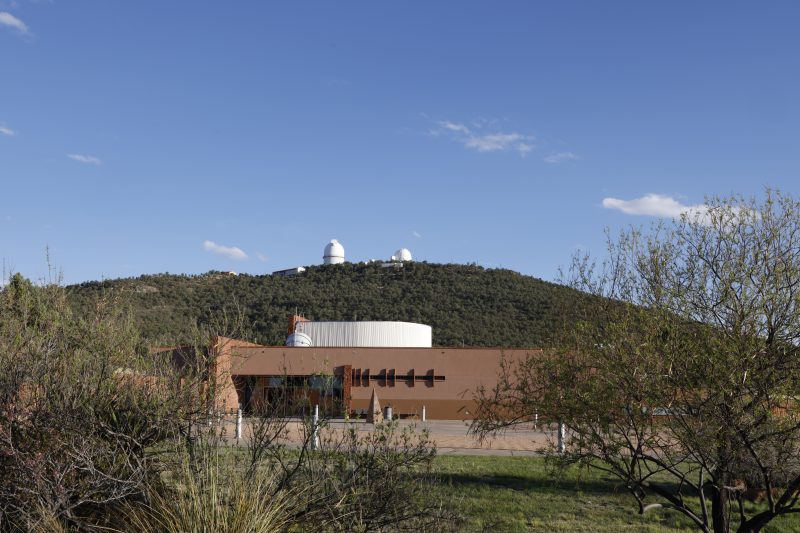
McDonald Observatory in the Davis Mountains of West Texas is a research unit of the University of Texas beneath some of the darkest night skies in the United States. Sheldon Munroe/Reporting Texas
The University of Texas at Austin, which runs McDonald Observatory, puts on the festival in partnership with local communities and businesses to showcase and celebrate the Big Bend region’s dark skies — some of the darkest in the world — and to spread awareness of the harms of light pollution.
The observatory partners with neighboring businesses, communities and industries across the greater Big Bend International Dark Sky Natural Reserve to help protect the natural dark night sky in the face of light pollution. Using low intensity, shielded and downward directed outdoor lighting ensures visitors can still see the Milky Way spread brightly across the night sky in the isolated rural landscapes. This is the largest place on Earth in which the dark sky is protected from light pollution.
The Dark Skies Festival coincides with the new moon phase, which is when the moon is positioned directly between the Earth and the sun. This phase occurs monthly, and with clear skies and low light pollution conditions that make for visibility of fainter deep-sky galaxies and stars that are otherwise not visible.
A 2026 study analyzing more than 1 million daily satellite images from 2014 to 2022 found artificial light at night is increasing roughly 2% worldwide each year.
“All astronomers want to keep the sky dark, but it goes so beyond that,” said Susie Soderquist, a representative of the Austin Astronomical Society at the April 17 event, with unwanted light causing damage “to your health, to your circadian rhythm, to the insects and the birds.” Despite this, the growing light emissions from the oil and gas industry in the regions surrounding the reserve, particularly the Permian Basin, have placed pressure on the protected area to ensure that light pollution does not impact their sky.
Many at the April 17th event sought to raise awareness of the impact of light pollution on the health of both humans and animals. Many species depend on it to regulate biological processes. Migratory animals rely on the visibility of stars to navigate and many species rely on the dark skies to hunt.
Events such as this are also helping to promote the thriving astrotourism industry in the region.
“Astro tourism is a real thing and it’s growing,” Cantrell said.
As tourism continues to grow, events like the Dark Skies Festival are drawing more visitors to West Texas, while organizers emphasize preserving the awe of the night sky for younger generations.
“Kids are our future and it is very important they understand this,” Cantrell said.
After a constellation tour, the event concluded, and many attendees continued to gaze upward even from the parking lots. One attendee, an attorney from Fort Worth, summarized the reason for making the nearly seven-hour drive simply: “I just love the stars.”
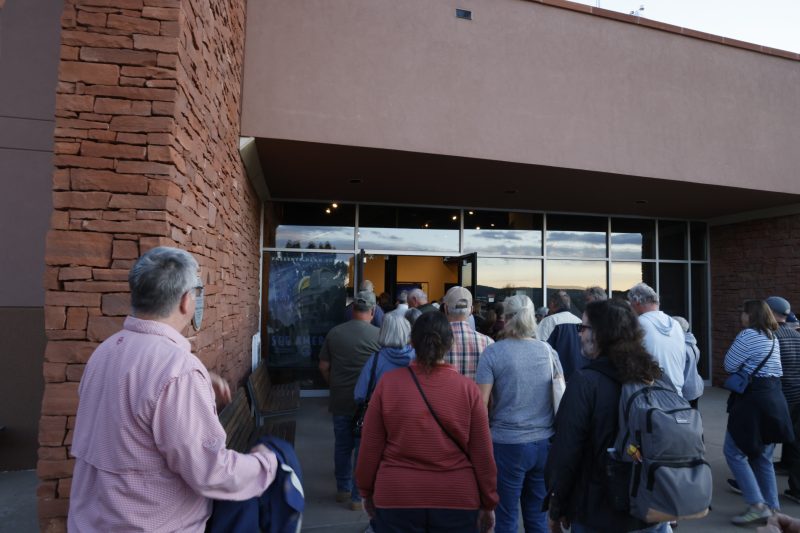
Stargazers enter McDonald Observatory for a star party to cap off the Big Bend region’s Dark Skies Festival. Sheldon Munroe/Reporting Texas