
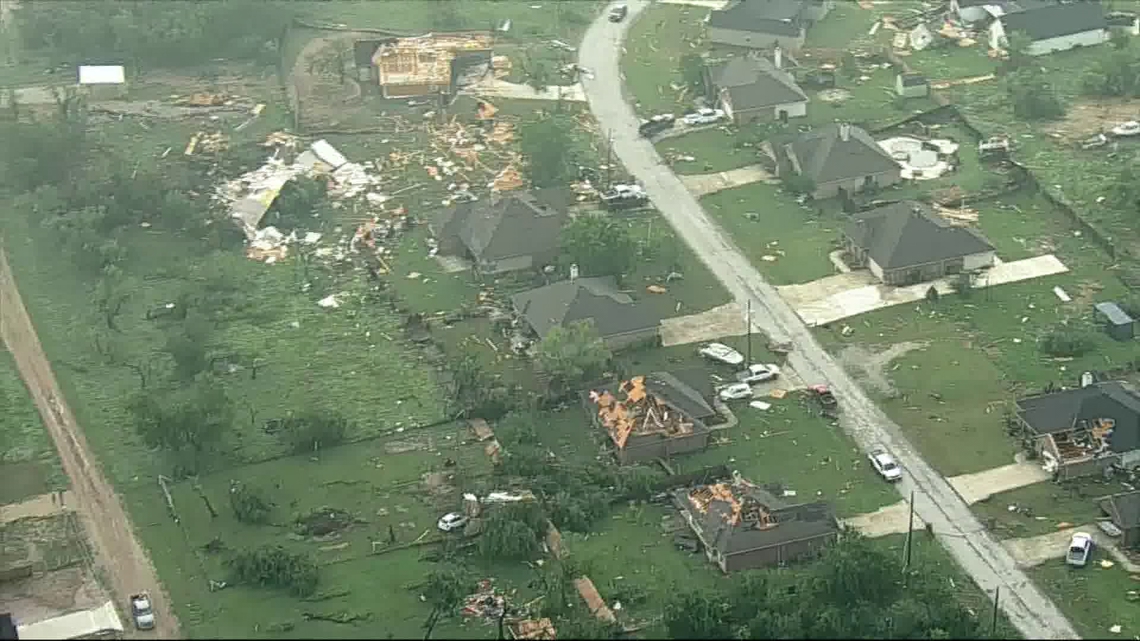
The National Weather Service has confirmed at least one tornado in North Texas following severe storms Saturday. Other damage sites were being assessed Sunday.
DALLAS — The National Weather Service confirmed that at least one tornado occurred Saturday in North Texas.
The agency’s storm survey team assessed the damage from Saturday’s severe storms and determined that an EF-2 tornado occurred in the Runaway Bay area in Wise County, with wind speeds reaching 135 miles per hour.
EF-2 tornados are categorized by “considerable damage,” which can tear roofs off stick-built homes, completely destroy mobile homes, and uproot or snap large trees.
RELATED: How the National Weather Service determines if a tornado occurred
The weather agency said other damage locations were still being assessed.
Two deaths has been tied to the storm, and multiple injuries have been reported, with more than 20 families displaced in the region, according to local authorities.
How is a tornado’s strength determined?
The Enhanced Fujita or EF Scale is the system meteorologists use to estimate tornado strength by examining the damage it leaves behind. In 2007, the enhanced scale scale replaced the original Fujita Scale developed by Dr. Ted Fujita in 1971. According to the National Weather Service, the new scale is more accurate in terms of how winds impact newer structures.
How the EF Scale Works
Measuring tornado winds at the ground level is notoriously difficult. Instead, meteorologists look at the damage, using on or more of 28 key indicators to determine how strong the tornado likely was when it hit.
EF ratings are not direct wind measurements
Following a tornado, teams from the National Weather Service survey different types of buildings and vegetation, then compare what they see to degrees of damage. There are eight degrees of damage, which range from minor to total destruction. Based on that analysis, meteorologists estimate the tornado’s three-second wind gusts, which represent high intensity bursts of wind.
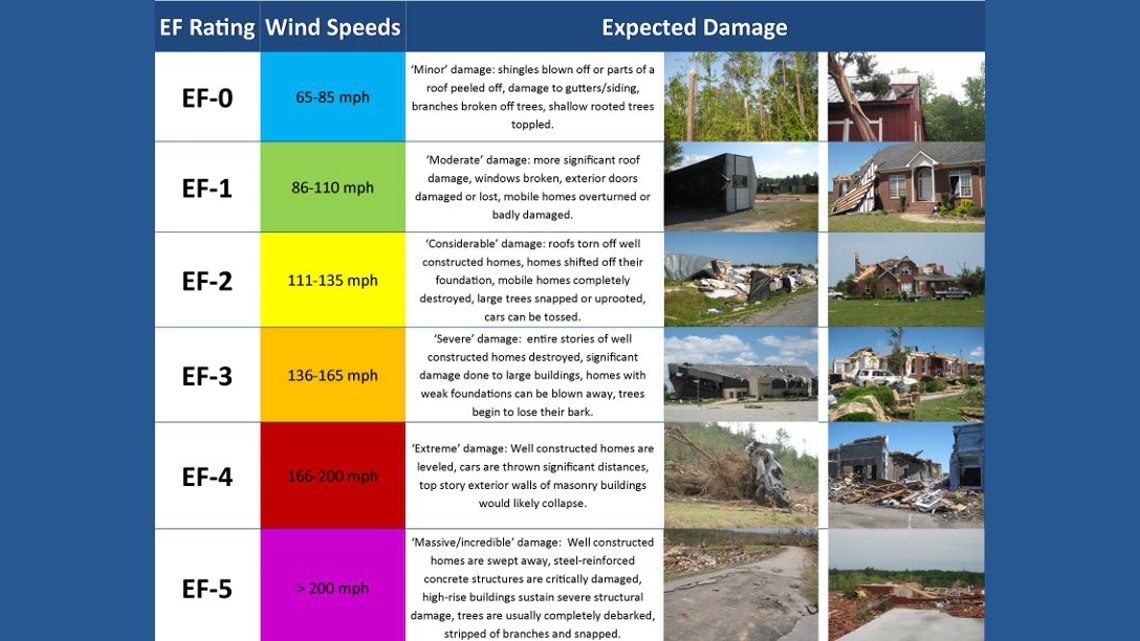
Tornadoes rated EF4–EF5 are considered violent
The EF Scale ranks tornadoes from EF0 to EF5, with higher numbers indicating stronger winds and more destructive damage.
EF-0 (65–85 mph): Minor damage, such as broken branches or small roof damage.EF-1 (86–110 mph): Moderate damage, including peeled roofs and overturned mobile homes.EF-2 (111–135 mph): Significant damage, with roofs torn off well-built homes and large trees snapped.EF-3 (136–165 mph): Severe damage, including destroyed walls and overturned trains or vehicles.EF-4 (166–200 mph): Devastating damage, with well-constructed homes leveled.EF-5 (200+ mph): Incredible damage, where strong buildings can be swept completely off their foundations.
Ratings matter
If you see reports of a tornado shortly after a storm, the EF rating may not be available immediately. That’s because teams must conduct a damage survey, sometimes covering miles of destruction. They look at multiple structures along the path before assigning a final rating.
Meteorologists use surveys to better understand tornadic behavior, which can help improve future forecasts and warnings. The information is often shared in public safety reports and insurance claims and the reports can even impact building codes. Ultimately, the ratings are intended to better prepare the public for future storms.