
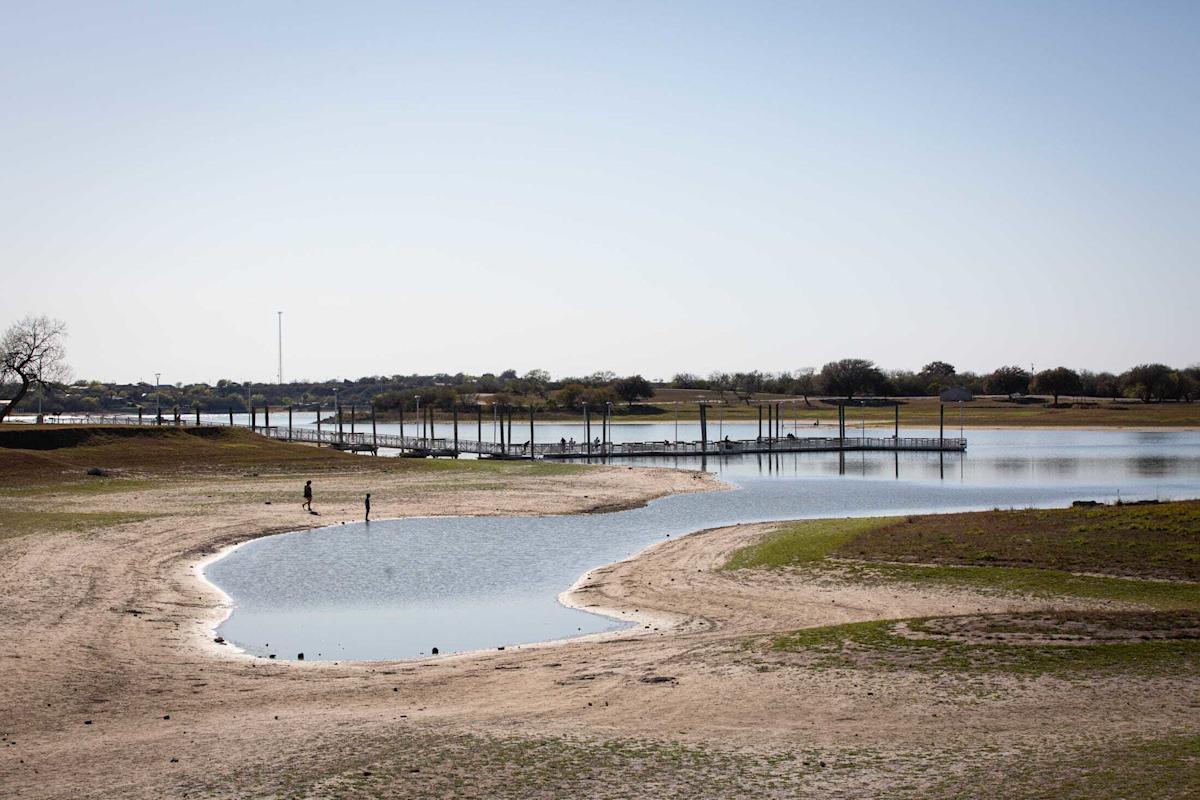
If you took a peek at Corpus Christi in southern Texas, you’d find a water crisis that’s growing worse by the day.
The city relies on the Choke Canyon Reservoir and Lake Corpus Christi for its drinking water supply, which right now have a combined storage capacity of only 7.8% as of April 20. As a result, Corpus Christi is drawing most of its water from Lake Texana, 100 miles to its northeast, which is at 55% capacity and dropping.
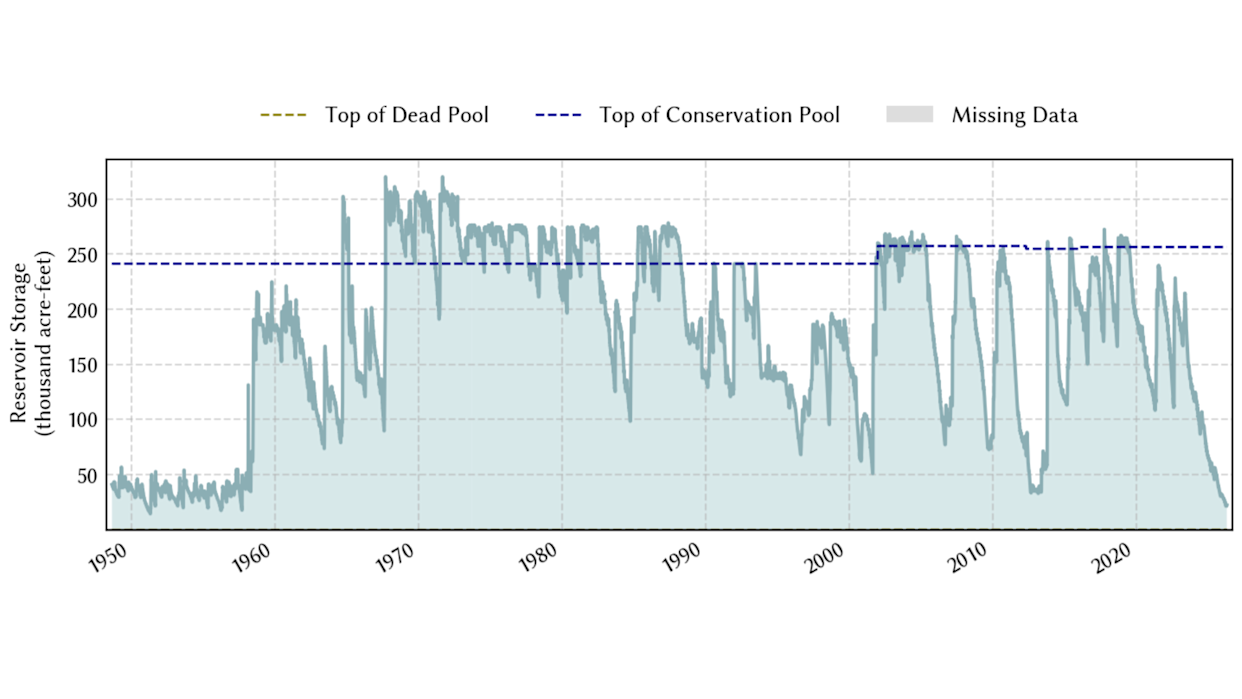
Water Data for Texas
The city is under Stage 3 drought restrictions, which limit or prohibit most outdoor water usage, and could be under a water emergency as early as May. This occurs when the city is 180 days from running out of water completely.
If it sounds dire, it is.
“I think they’re facing a genuine water supply problem,” said Sara Hughes, a senior policy researcher studying water at the RAND Corporation.
It’s not just Corpus Christi. Nearly 80% of Texas is experiencing drought. Nearly 25% of Texas is in extreme drought conditions, and most of that is in the southern part of the state.
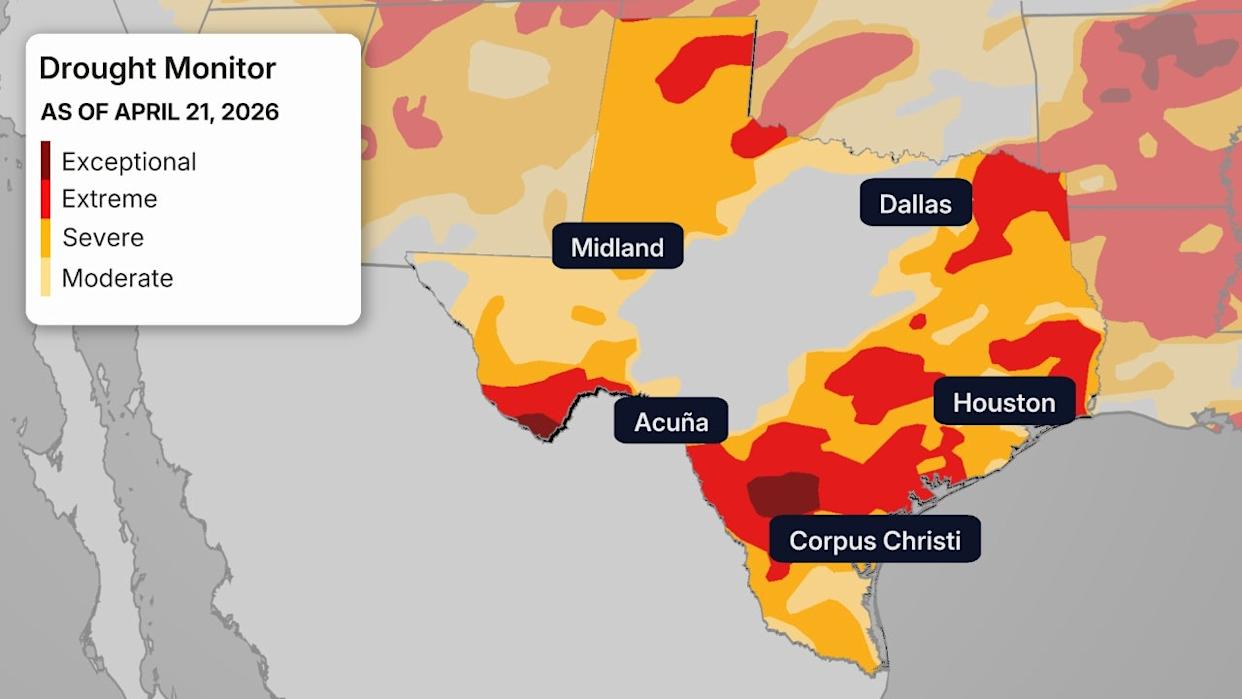
Scientists worry that Corpus could be a warning sign, as communities all over the U.S. begin fighting a little harder for water.
“It can be easy sometimes to stall and kick the can down the road on some of these questions, like ‘How much more water should we be able to pump out of this aquifer? Can we get the funding allocated for this big new project that we need?'” explained Hughes. “Those things can be easy to put off, but then when the situation does become more serious, like it is, the upside is that it can kind of force the issue and say, ‘OK, now we really need to figure this out.'”
Much of the water across South Texas goes to chemical plants and refineries, as well as a plastics plant. And while data centers and fracking get a lot of attention and do require millions of gallons of water, many other industries do the same.
The combination of industries as a whole, as well as human consumption and climate change, is putting more communities into a similar boat.
“I think that now is the time for probably any community to be proactive about planning for its water supply future,” warned Hughes. “You don’t want to have to figure it out while you’re facing serious shortage problems. You can make much better choices.”
A Familiar Story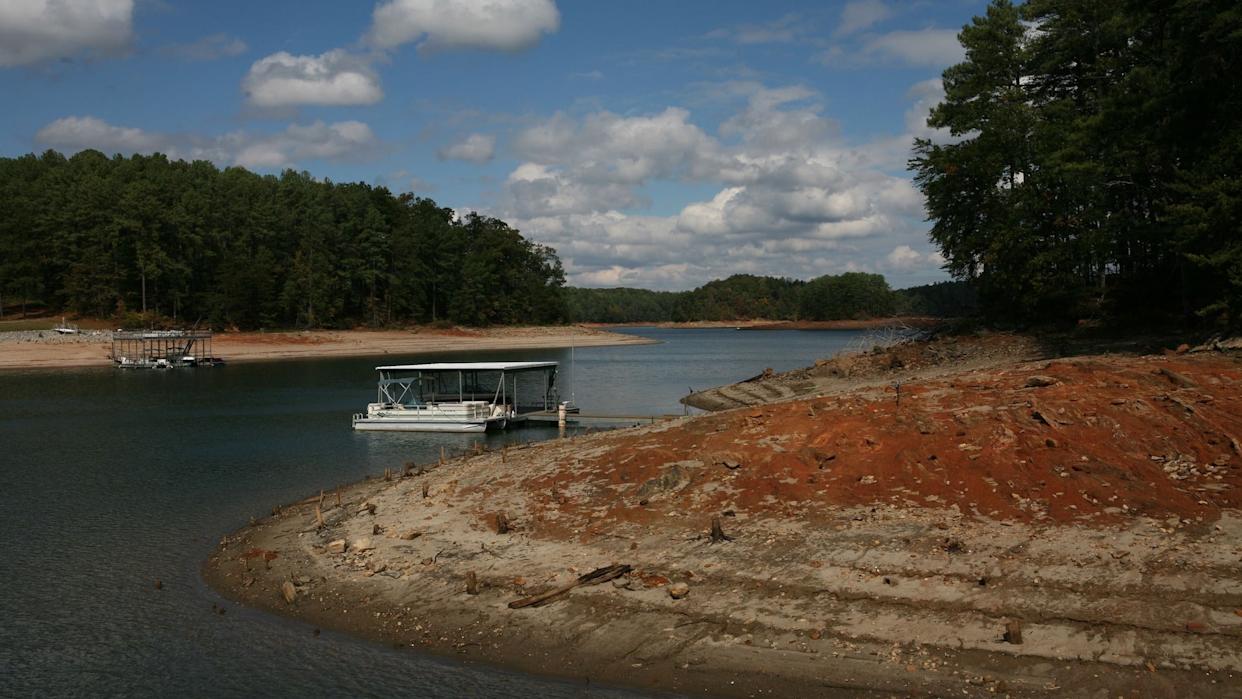
Getty Images
This isn’t the first time a U.S. city has been on the verge of running out of water. Some other examples:
Atlanta (2007): Parts of North Georgia, including Atlanta, were faced with a water emergency during a severe drought from 2007 to 2009. At the peak, officials estimated that Atlanta had roughly a 3-day supply of raw water left in Lake Lanier after it dropped to record-low levels. However, following the water crisis, the Atlanta quarry reservoir project was developed, which increased the city’s emergency supply from just a few days to up to 90.
Las Vegas, New Mexico (2022): After massive wildfires contaminated its primary reservoir with ash and debris, the water was left untreatable. This left the city of 13,000 people with less than a 50-day supply of water.
East Porterville, California (2015): During California’s multi-year megadrought, 1,000 private wells dried up in the town of East Porterville, leaving thousands of residents without running water for months. They relied on 2,500-gallon plastic tanks and bottled water deliveries for drinking and bathing.
Hughes’ research has focused on this very topic. She studied how several cities that were only left with several days of drinking water got into this predicament.
She hopes that more government officials will put more effort into protecting their cities from water shortages.
“I get that this is challenging and very difficult to put energy into it when it’s not the issue of the day, but it really pays off,” said Hughes.
Jennifer Gray is a weather and climate writer for weather.com. She has been covering some of the world’s biggest weather and climate stories for the last two decades.