
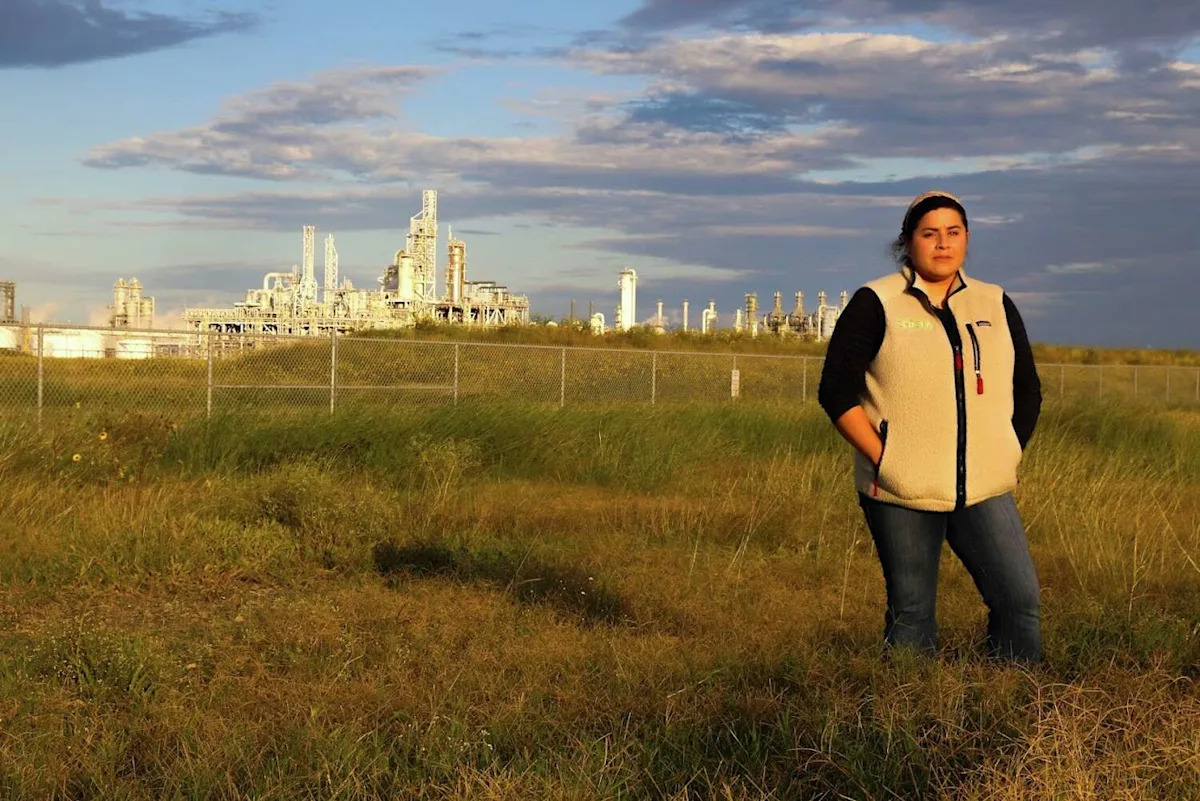
If Corpus Christi becomes the first modern American city to run out of water, it would take many surrounding communities with it.
That’s why six cities and towns in the Coastal Bend region of Texas have issued disaster declarations in the last two weeks.
National attention has been fastened on Corpus Christi, a city of 317,000, as it grapples with an acute and potentially disastrous water shortage. But Corpus doesn’t just provide water to its own industries and residents. It supplies a seven-county region, including 20 other municipalities.
“Everyone is like, ‘What the heck is going on and what do we do?”’ said Elida Castillo, mayor of Taft (population 2,800), which issued a disaster declaration on April 21. “I’m just trying to figure out what we could do.”
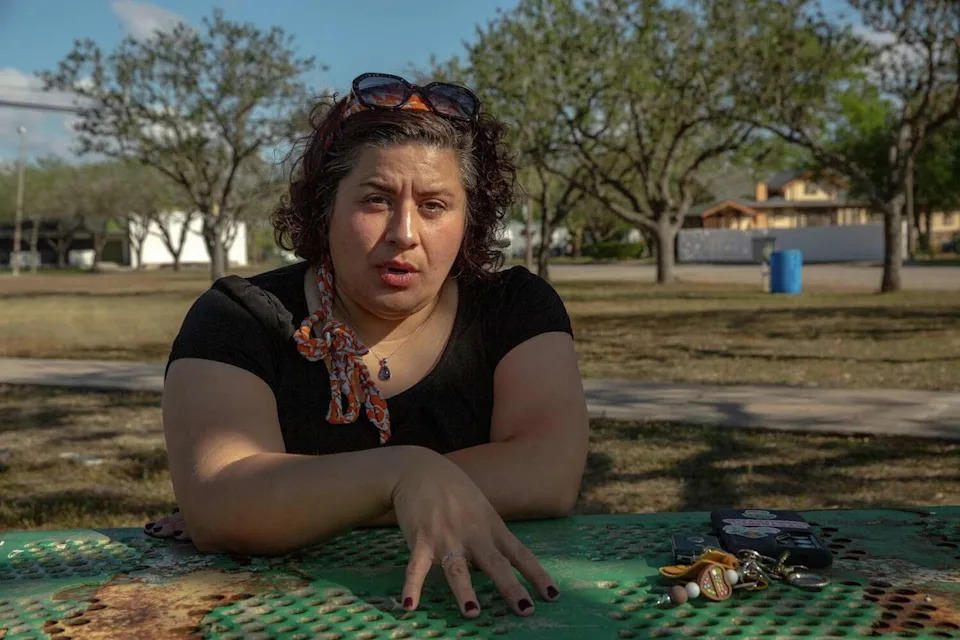
Elida Castillo is the mayor of the Coastal Bend town of Taft, which issued a disaster declaration April 21 to call attention to a looming water crisis. “Everyone is like, ‘What the heck is going on and what do we do?'” she says. (Dylan Baddour/Inside Climate News)
Ingleside and Aransas Pass, with a combined 19,000 residents, issued their own declarations a day later. The towns of Three Rivers, Orange Grove and Alice had done the same a week earlier.
“There should be some type of legislation that will assist us now, rather than in the future,” said Ingleside City Manager Brenton Lewis. “All these small cities that have declared disasters are looking at alternate water supplies.”
About this story
This report is published in partnership with Inside Climate News, a nonprofit, non-partisan news organization that covers climate, energy and the environment.
Dylan Baddour is an Austin-based reporter for ICN covering the energy sector and environmental justice. Neena Satija is an investigative journalist for National Public Radio’s Texas Newsroom. Emily Salazar is director of digital content at KEDT in Corpus Christi.
The city of Alice, with a population of 17,000, declared a disaster on April 14. “Regional water demand is exceeding available supply,” the declaration states. “Continued drought conditions threaten public health, safety and welfare, as well as essential public services.”
Alice expects to fare better than other communities. In July, it held a ribbon-cutting for a groundwater desalination plant. The facility, which was a decade in the making, is owned and operated by an investor-backed water treatment company called Seven Seas. The plant extracts brackish water from below ground and forces it through membranes that filter out salt, minerals and other impurities, a process called reverse osmosis.
“They have a profit margin,” Alice City Manager Michael Esparza said of the company. “We are paying a private company to do something for us. It’s no different than we do with a lot of things, although this one is pretty big because it’s our water.”
Fifty miles away, the city of Beeville declared a disaster in October and issued $35 million in municipal debt, about $2,600 per resident, to fund its own emergency groundwater desalination project.
Most local governments are reluctant or unable to shoulder the expense of reverse osmosis, the most common method for desalinating salt water, said Kasy Stinson, a project developer for Seven Seas based in Austin.
“I don’t know that the reality of the dire straits has really landed with everybody,” said Stinson, who worked for a decade in the drinking water division of the Texas Commission on Environmental Quality.
Castillo sees the situation the same way. She’s watched the crisis build for years. Last year, she traveled repeatedly to Austin to meet with state lawmakers as they crafted ambitious legislation meant to head off water deficits projected across Texas.
But the $20 billion plan put forth by lawmakers for a Texas Water Fund looks meager compared to the latest estimate of the state’s long-term water needs: $174 billion, according to the Texas Water Development Board.
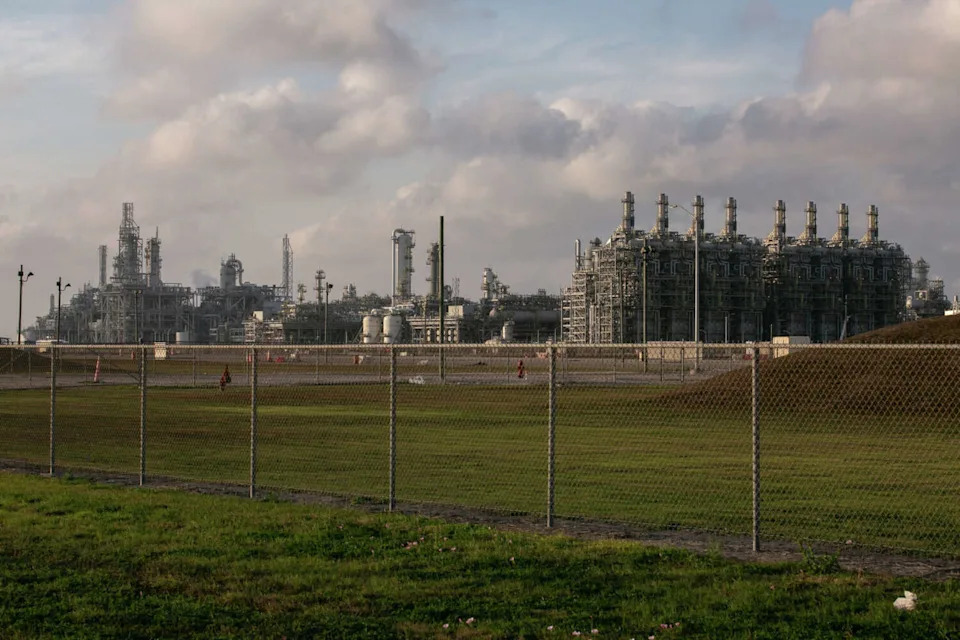
Gulf Coast Growth Ventures, a giant plastics production facility operated by ExxonMobil and Saudi Arabia Basic Industries Corp., uses more water than all 317,000 residents of Corpus Christi. (Dylan Baddour/Inside Climate News)
Castillo thinks lawmakers focused too much on developing new water sources and not enough on conserving existing supplies. She cited Gulf Coast Growth Ventures, a giant plastics plant operated by ExxonMobil and Saudi Arabia Basic Industries Corp. The facility, located north of Corpus Christi and five miles from Taft, began operation in 2022 and uses more water than all the residents of Corpus Christi combined.
Last week, Corpus Christi leaders announced plans to impose a mandatory 25% cut in water use, starting in September, on the plastics plant and 14 other large industrial users, including Occidental Chemical, Valero, Flint Hills and Lyondell Bassel.
Castillo thinks emergency cuts should be instituted immediately.
“They’re not taking this as seriously as they should be,” she said of Corpus Christi officials. “There needs to be more pressure put on (Gov.) Greg Abbott.”
Abbott, a champion of business-friendly policies in Texas, waived regulations in March to expedite Corpus Christi’s emergency groundwater projects and pledged state investment to develop new water supplies. In 2024, the state committed $750 million in low-interest loans for a long-planned seawater desalination plant in Corpus Christi. But city officials canceled the project last year after the cost ballooned from initial estimates of $160 million to $1.2 billion. Officials now hope to revive the project.
Despite the crisis, Abbott has not made public calls for companies to reduce water use.
“The Coastal Bend is an important economic driver not only for Texas but also the nation,” the governor’s press secretary, Andrew Mahaleris, said in a statement. “Gov. Abbott will utilize all necessary tools to ensure the Corpus Christi area has a safe, reliable water supply.”
Corpus Christi is scrambling to develop a portfolio of groundwater projects, but city leaders anticipate that emergency reductions in water consumption will be necessary in September. Schools, hospitals, chemical plants, cities and towns are all drilling their own emergency water wells.
When Corpus Christi City Manager Peter Zanoni appeared on NBC News on April 24, a reporter asked why the city has not required its large industrial customers to reduce water use right away.
“We don’t want to wreck our economy,” Zanoni said. “It is a race against time.”
Amy Hardberger, director of the Center for Water Law and Policy at Texas Tech University School of Law in Lubbock and a former board member of the San Antonio Water System, said most Americans can’t wrap their minds around the prospect of empty reservoirs.
“It’s not my goal for other people to be panicked,” she said. “But many of us are very scared.”
This article originally published at Corpus Christi water crisis threatens small cities and towns across Coastal Bend.