
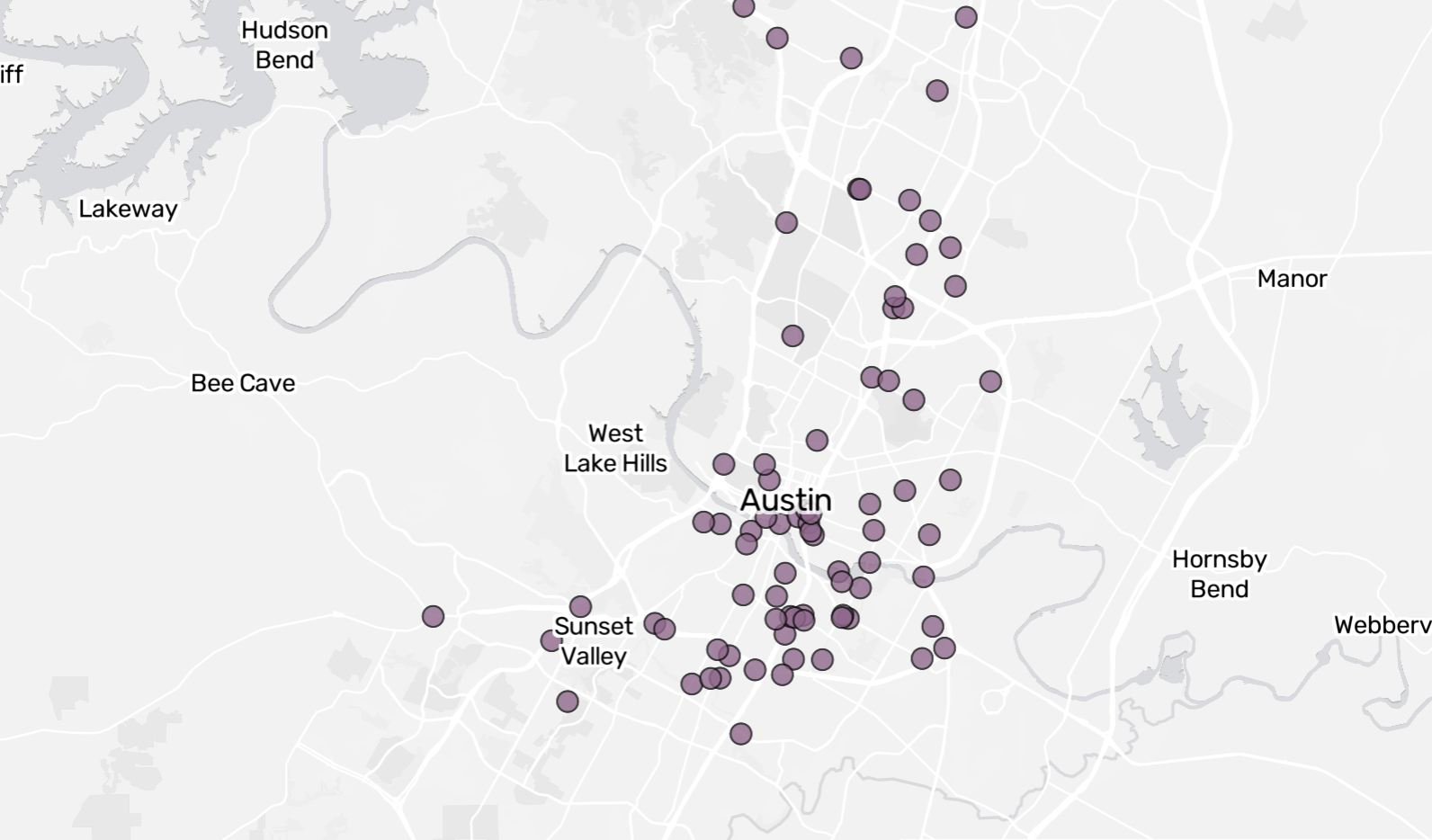
A new map obtained by the American-Statesman reveals where dozens of homeless encampment sweeps are planned beginning in May, offering the clearest picture yet of how the city will carry out an expanded crackdown on public camping.
The plan, first reported by the Statesman earlier this month, will lean more heavily on enforcement-driven cleanups in response to voluminous 311 complaints, marking a shift toward more frequent and targeted sweeps of encampments across the city. Advocates say the new strategy could harm vulnerable residents living in encampments by causing them to lose personal belongings and vital documents that are sometimes disposed of during sweeps.
The map does not show the precise locations of each encampment but that’s by design, said Homeless Strategy Officer David Gray.
The city opted to show approximate locations to protect encampment residents while still giving members of the public and homeless outreach organizations an idea of where sweeps are expected, he said.
“Part of why we’re sharing the list with stakeholders and others is to be transparent with where we intend to do this work and so that we can work more cooperatively with community partners on how to do this work,” Gray told the Statesman in an interview.
The Statesman recreated the city’s map to make it searchable.
Most of the encampments are located in Central Austin, according to the map, aligning with where people experiencing homelessness often stay to access food and services. But cleanup crews, which will consist of two Austin police officers and support from a range of city departments, will hit locations as far south as the Southpark Meadows greenbelt and as far north as an underpass near U.S. 183 and Texas 45.
The map also highlights encampments in green spaces, waterways and fire-prone areas — locations the city has identified as priorities for enforcement.
Gray said the goal is to move people out of encampments before cleanup operations begin in mid-May, when the city is expected to start clearing sites identified on the map.
City teams have begun outreach efforts at the preliminary list of encampments to offer temporary shelter, help reunite people with family and connect them to permanent housing, when possible.
Gray said outreach teams will be able to postpone scheduled cleanups if a person in an encampment is interested in shelter but no beds are currently available. In those cases, cleanups will be delayed until after the person is moved into a shelter.
After encampments have been cleared, Gray said crews will return to the sites multiple times a week to ensure compliance.