
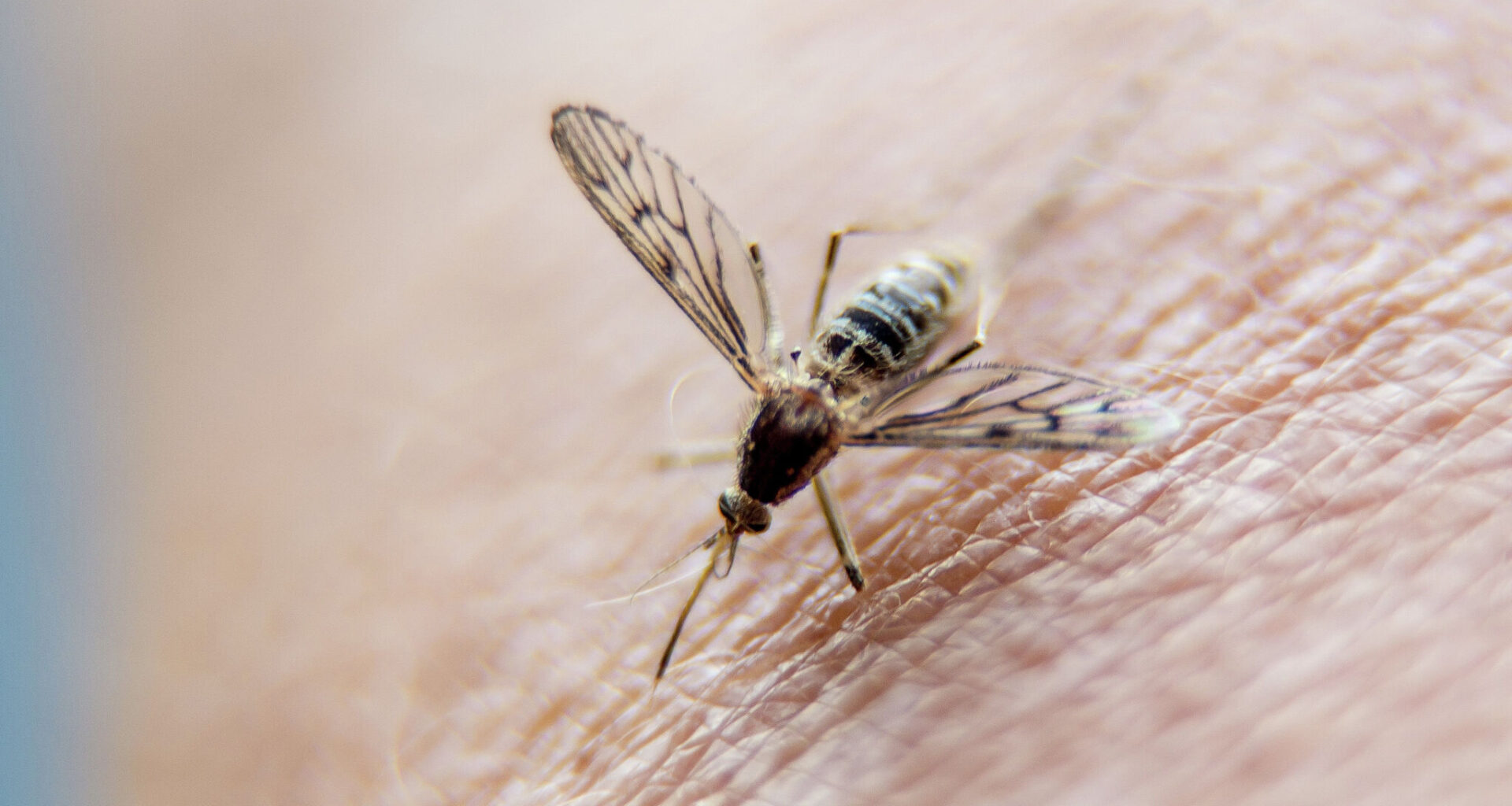
Unseasonable weather patterns are to blame for a surge in mosquitoes in Southern California.
PHILIPPE HUGUEN/AFP/TNS
The recent stretch of unseasonably warm, humid weather across Central Texas has created prime conditions for mosquitoes, turning evenings outdoors into a battle in many backyards.

“There are over 80 species of mosquitoes in Texas, and they can be found year-round,” said Wizzie Brown, Entomologist and Senior Extension Program Specialist at Texas A&M University.
Article continues below this ad
Brown said mosquitoes thrive in temperatures between 80 and 95 degrees and when we see heavy rainfall that can lead to the mosquito population surging one to two weeks later, as standing water collects in puddles and containers, creating ideal breeding grounds.
High humidity also plays a vital role in their survival by preventing dehydration.
A mosquito sucks blood from an arm in Austin, Texas, on Sunday, May 27, 2018.
Nick Wagner/AMERICAN-STATESMAN
Although this kind of weather allows mosquitoes to thrive, reproduce quickly, and remain highly active, some types of weather can also limit the mosquito population. The bugs don’t like it when temperatures rise above 100 degrees and water sources dry up. If it’s too breezy, the mosquitoes can’t fly to mate or find a host. Also, when the temperatures dip below 50 degrees, the mosquitoes will stop flying.
Article continues below this ad
Climate change is reshaping the mosquito life cycle, with longer, warmer, and wetter weather extending breeding seasons and raising the risk of mosquito-borne diseases. According to Climate Central, a nonprofit climate research group.
Climate Central analyzed weather trends across 250 locations, and 143 of those areas experienced an increase of about 16 mosquito-active days per year on average. Texas cities, however, stand out as exceptions, with Austin specifically seeing about 29 fewer mosquito days because of a rise in triple-digit temperatures since the 1990s.
Due to the increase in triple-digit heat over the past few decades, the number of mosquito-friendly days in Central Texas has decreased.
Climate Central
Despite our complaints of late, Brown does seem to think that the mosquitoes are about the same this year as they have been in the past.
Article continues below this ad
Mosquito-borne disease
So far, the only Texas county that has tested positive for the West Nile virus is Harris County, with 10 mosquito pools confirmed as of April 18 in a report from the Texas Department of Health and Human Services. Last year, Travis and Hays counties had positive West Nile cases in humans, while Travis, Hays, and Williamson counties had positive mosquito pools.
This year, there have been three cases of dengue fever, one in Tarrant, one in Bexar and one in Hidalgo County.
What are the symptoms of dengue and West Nile virus?
Dengue fever usually causes flu-like symptoms that start 4 to 10 days after a bite from an infected mosquito. These can include a high fever, headache, muscle, bone or joint pain, pain behind the eyes, swollen glands, rash, and nausea or vomiting. Most people recover within about a week, but some can develop severe and dangerous symptoms like internal bleeding, bleeding from the gums or nose, blood in urine or stool, trouble breathing, severe stomach pain, extreme fatigue, and organ failure.
Article continues below this ad
Hadis Hosseinzadehnaseri, a vector research and laboratory coordinator at Municipal Mosquito, separates mosquitos and other insects collected from traps at their laboratories in Garland.
Ben Torres/Dallas Morning News
West Nile virus is also spread through mosquito bites. About 80% of people have no symptoms. When symptoms do appear, they are usually mild and may include fever, headache, body and joint aches, swollen lymph nodes, vomiting, diarrhea, or a rash. It can be confirmed with a blood test or spinal fluid test.
How can you protect yourself?
Article continues below this ad
Drain standing water. Empty buckets, toys, tires, pools, plant pots, and clogged gutters. Mosquitoes breed in standing water and need as little as one teaspoon to lay their eggs.
Dusk and dawn. The mosquitoes that spread West Nile virus and dengue fever are most active in late afternoon, dusk, and dawn.
Dress: Wear light-colored, loose-fitting clothing and long pants and long sleeves when you are outside. Clothing is available with built-in mosquito protection.
DEET: Apply insect repellant that has DEET in it. Use it on both skin and clothing.