
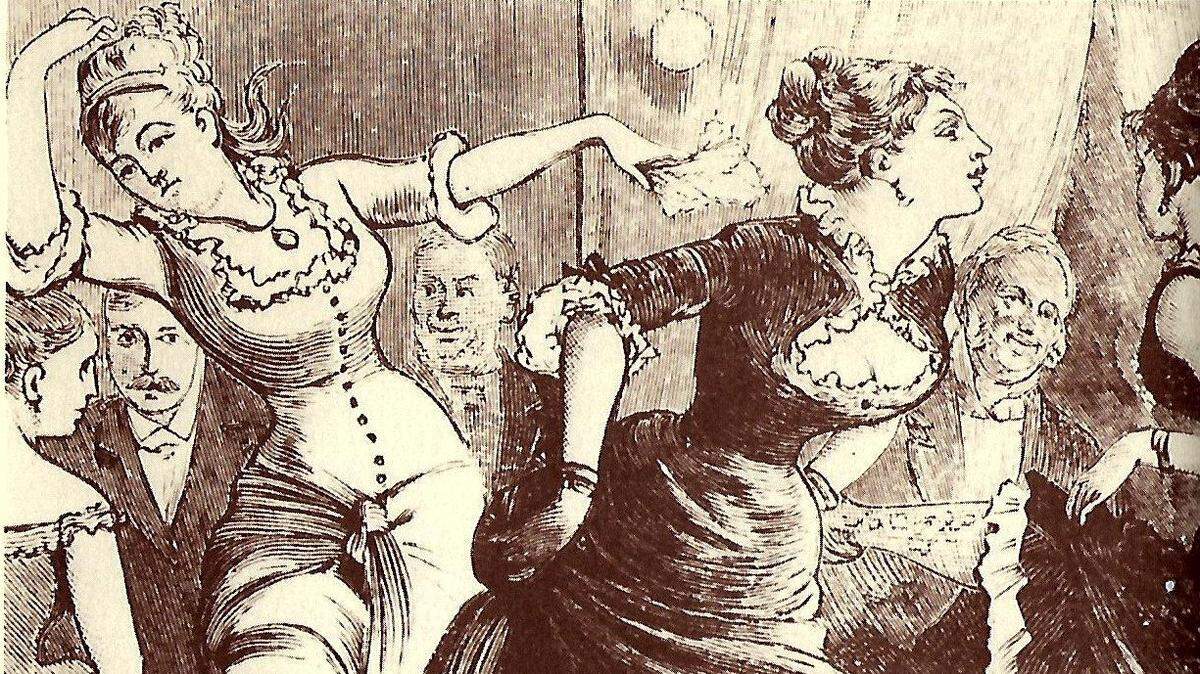
This historical sketch shows the kind of activity someone may have witnessed in Hell’s Half Acre in Fort Worth.
Courtesy Richard Selcer
As thousands of soccer fans flock to downtown Fort Worth during the 2026 World Cup this summer, they’ll walk over ground that was once one of the Old West’s most notorious red-light districts.
Hell’s Half Acre defined Fort Worth’s wild reputation from the 1870s until the early 1900s. Today, there’s barely any trace that it ever existed, and very few surviving photos. (It wasn’t exactly a place that people wanted to see or be seen in photographs.)
Here are a few facts about Hell’s Half Acre, compiled from Star-Telegram stories and columns by Richard Selcer, Tiffani Jackson and others.
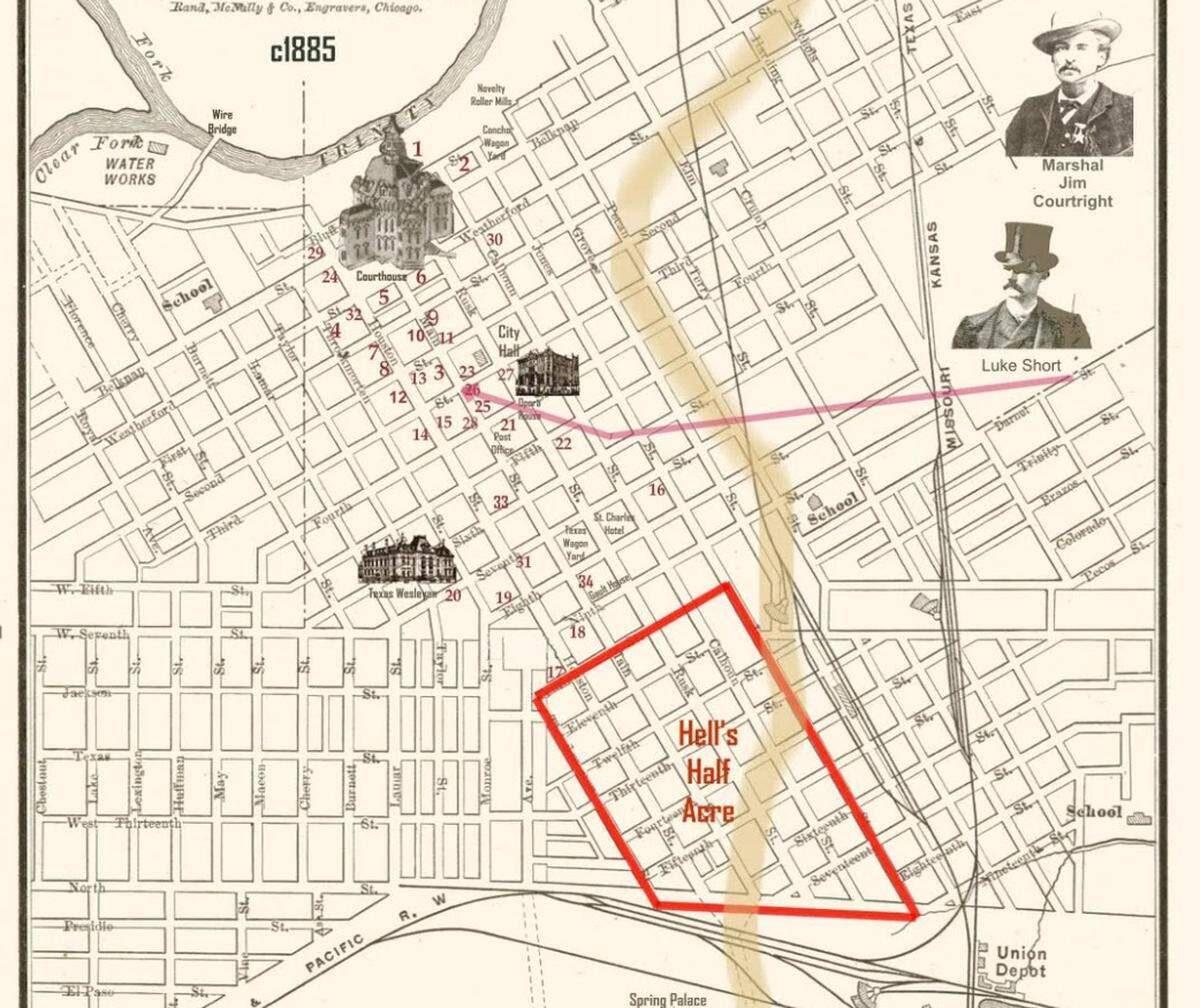 An 1885 map showing Hell’s Half Acre red-light district in Fort Worth.
• Where it was: Hell’s Half Acre was generally bounded by Throckmorton, Jones and Lancaster streets, from 9th to 15th. The Fort Worth Convention Center and Water Gardens now sit on top of the old district.
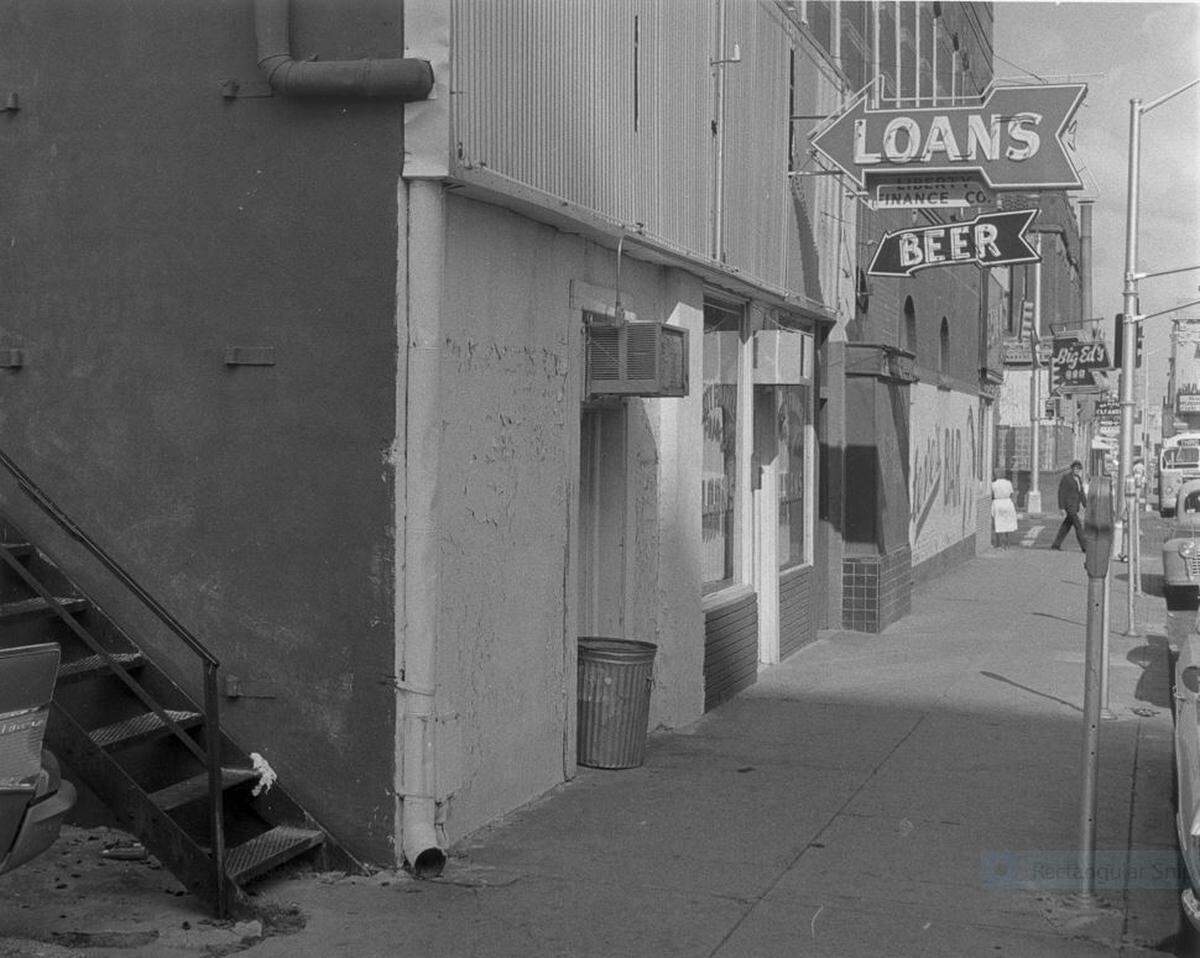 The last remaining buildings that once were part of Hell’s Half Acre were demolished in the late 1960s. Star-Telegram Collection, University of Texas Arlington Library
• What happened here: The Acre was packed with saloons, bordellos, dance halls and gambling dens catering to cowboys, railroad workers and businessmen. Prostitutes charged $5 to $10 at parlor houses, $1 at brothels and 25 cents at one-room “cribs.” Read more here.
.JPG "dfw cover tours 1121 123 (1).JPG") A view of Hell’s Half Acre on 11th Street near the present day Fort Worth Convention Center. Star-Telegram
• A cash cow city leaders tolerated: Fort Worth had a love-hate relationship with the Acre because illegal money flowed into the local economy. Houses could be rented for $15 a week and converted into bars, bordellos and gambling dens, with liquor licenses and health certificates optional.
• Famous outlaws passed through: Butch Cassidy, the Sundance Kid, Sam Bass and Eugene Bunch are known to have spent time in the Acre. Gamblers Bat Masterson, Wyatt Earp and Luke Short also visited.
• The legendary gunfight: Luke Short killed city marshal Jim Courtright outside the White Elephant Saloon in a dispute over extortion money — though historian Richard Selcer notes the upscale White Elephant wasn’t actually inside the Acre.
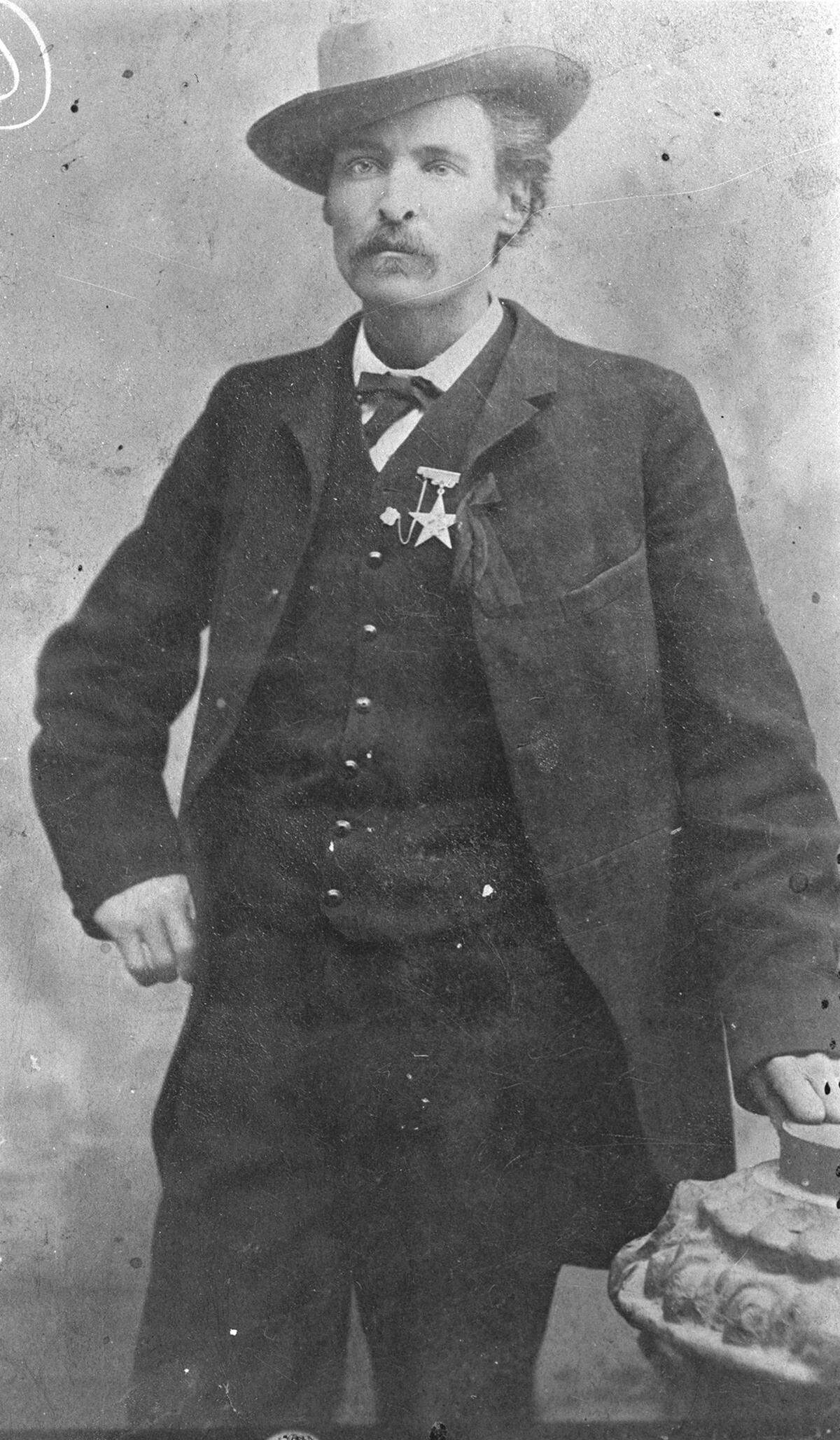 Longhair Jim Courtright was a three-term marshal in Fort Worth from 1876-1879. Fort Worth Star-Telegram File
• A church on the edge: St. Patrick Cathedral bordered the district. Legend has it the priest stood on the steps Sunday mornings inviting people heading home from a night in the Acre to come to Mass.
• How it ended: Preacher J. Frank Norris declared war on the Acre in 1911, but it took the U.S. Army’s arrival at Camp Bowie during World War I to shut it down. The Army drove businesses out through evictions and mass arrests between 1919 and 1920.
Read more stories about Fort Worth history.
MORE: Check out Star-Telegram archive photos in our collection here, including:
Fort Worth as it looked in 1988Photos of Ridgmar Mall during its heydayDolly Parton’s 1977 concert in Fort Worth’s Panther HallFort Worth’s long-gone grocery storesFort Worth in 1990: Archive photos100 years of Boy Scouts in Fort Worth/North TexasFort Worth’s Forest Park Zoo in the 1940s-50sLong-lost restaurants of Fort WorthHollywood movie stars in Fort WorthPaschal High School in the 1950sElvis Presley in Fort WorthPresident Jimmy Carter’s visit to Fort Worth in 1978Historic photos of Fort Worth Stock Show parade1972 demolition of 18-story Worth HotelLeonards Department Store in 1940s-50sFort Worth housewives in 1952 prepare for ThanksgivingWeatherford, Texas, from 1870s to 1950sPresident Kennedy in Fort Worth, the day he diedBilly Bob’s Texas, 1981 grand opening1939 opening of West Lancaster bridge in Fort WorthKeller, Texas, during the 1920s-1950sGreater Fort Worth International Airport, 1953 openingFort Worth Stock Show, 1930s to 1950sQueen Elizabeth visits Texas in 1991Fort Worth snowfalls, from 1880s to 1950sLabor Day in Fort Worth over the decadesSept. 11, 2001, in Fort Worth and DFW airportChurches in the Fort Worth region, back to the 1800s
The summary points above were compiled with the help of AI tools and edited by journalists. The source reporting referenced above was written and edited entirely by journalists.
This story was originally published April 30, 2026 at 1:47 PM.

Fort Worth Star-Telegram
Matt Leclercq is senior managing editor at the Fort Worth Star-Telegram. He previously was an editor at USA Today in Washington, national news editor at Gatehouse Media in Austin, and executive editor of The Fayetteville (NC) Observer. He’s a New Orleans native.