
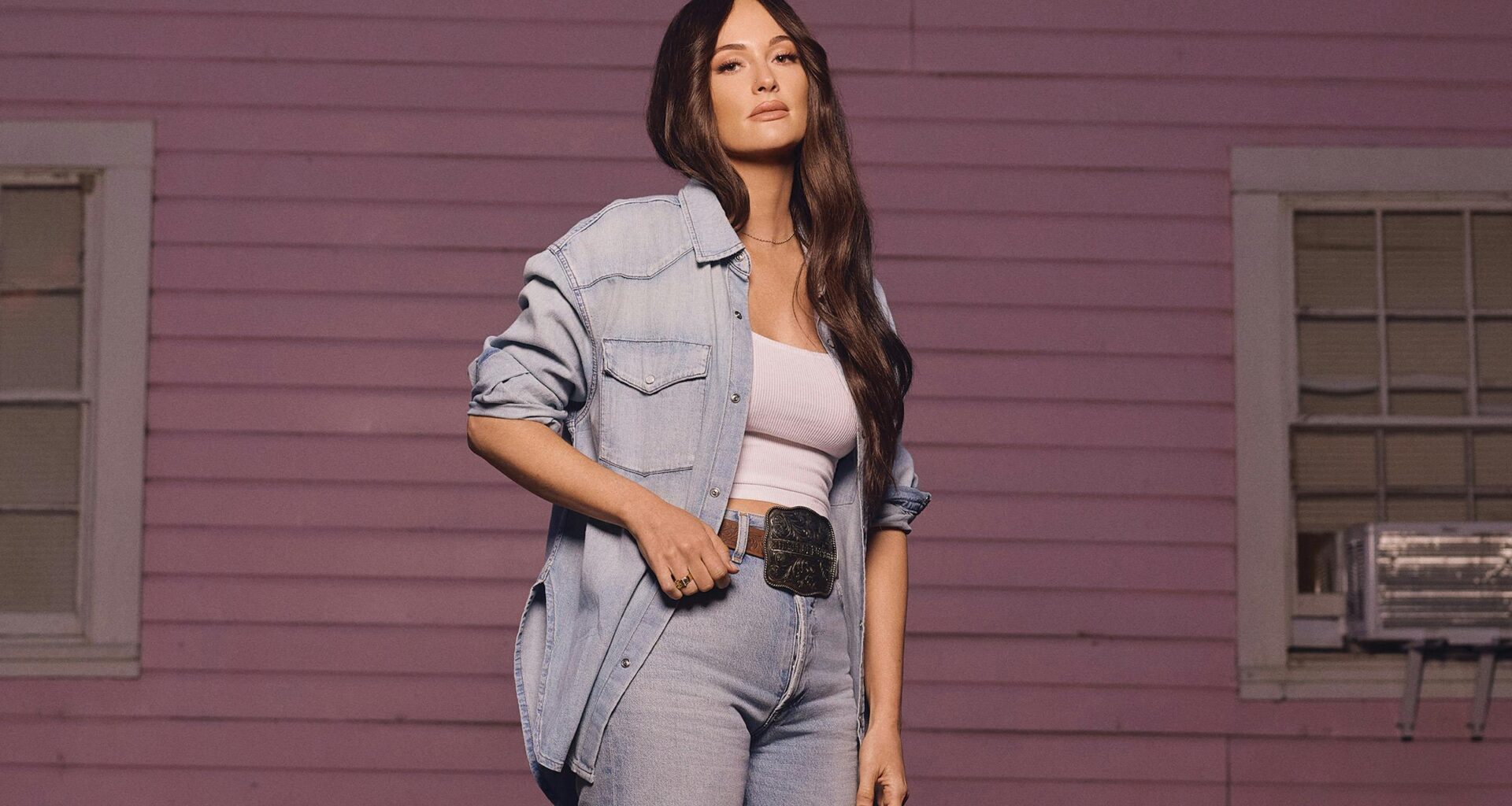
Well, that’s unusual,” said the music supervisor. It was a late morning on a Tuesday in early February, and we were standing outside BLT Studios, a rentable soundstage in the middle of Hollywood. The nondescript building’s drab cinder block exterior paired perfectly with the overcast sky. The only notable detail was a growing line of sharply dressed industry types waiting to hear songs from Kacey Musgraves’s forthcoming sixth studio album, Middle of Nowhere, at a listening session cohosted by her record label, Lost Highway. The music supervisor, Ann Kline, told me it was a pretty common event for someone in her line of work. Nothing out of the ordinary—until we walked through the studio’s front gate and into a parking lot, where we came face-to-face with a roughly 1,800-pound red Longhorn named Thunder.
The steer didn’t seem particularly happy to be there, but the Angelenos were delighted. As guests moved from the street to the 5,500-square-foot soundstage where the session was to take place, they stopped to ogle the animal, whose horns span eight feet from tip to tip. “This is so funny,” said one attendee as she held up her phone to snap a picture. Another called it “thrilling.” Either way, Thunder’s presence made the messaging pretty clear. When we stepped through that gate, we were no longer in Tinseltown. This was Texas.
The scene setting continued inside. The cavernous room was mostly dark, despite the stage lights pointed at the wall. There were speakers, rows of seats, and a single empty chair at the front of the room. To the side was a DJ table draped in red, white, and blue bunting that resembled a rodeo fan. There were snacks in the back—popcorn, pretzels, potato chips, chocolate chip cookies individually baked in mini cast-iron skillets—and a selection of drinks: Lone Star beer, Dr Pepper, and mocktails with names like Coyote Piss and Rattlesnake Bite. The music was also spot-on. We heard country classics from George Strait and Marty Robbins, tejano standards from Selena and Little Joe, and a song by the Texas Tornados, the supergroup founded by the late Flaco Jiménez, Doug Sahm, and Augie Meyers that had its feet firmly planted in both genres. Guests took their seats in the rows of white folding chairs and portable aluminum bleachers that made the space feel less like a soundstage and more like a county fair. There were even a few bales of hay.
Projected on one wall was Middle of Nowhere’s cover art. It featured Musgraves standing in front of a blank wall, her long, pin-straight dark hair tucked underneath a taupe felt Stetson. She wore light-wash, boot-cut vintage Levi’s and a plain white tank top, and her left hand rested on a brown leather belt with an appropriately large silver buckle. Her gaze was over her right shoulder, off into the distance and away from the spotted steer standing a few feet behind her.
“People are probably gonna say this is AI, but it’s not,” Musgraves told the crowd after she was introduced. The Longhorn-Hereford mix was as real as Thunder was, and Musgraves and her photographer sister, Kelly Sutton, had spent an afternoon hauling him around downtown Dallas—with neither plans nor permits—until they got the perfect shot in Deep Ellum.
Of course the steer was real. Musgraves has, after all, built her career upon the principle of authenticity. Marked as a “different” kind of Nashville star because she sang about weed and expressed her support for the LGBTQ community in lyrics and interviews, she shook the country music scene with a 2013 single that told her fans to “follow your arrow wherever it points.” She took her own advice for the next thirteen years, and it paid off: over 6.8 billion streams, nearly 3 million Instagram followers, four world tours, six CMA awards, and eight Grammys, including Album of the Year for 2018’s Golden Hour, her masterpiece of pop- and disco-influenced country. An ode to her then-husband, Ruston Kelly, and the phenomenon of love itself, it was a crossover hit for the singer from Golden and was embraced by a more diverse version of Nashville fandom.
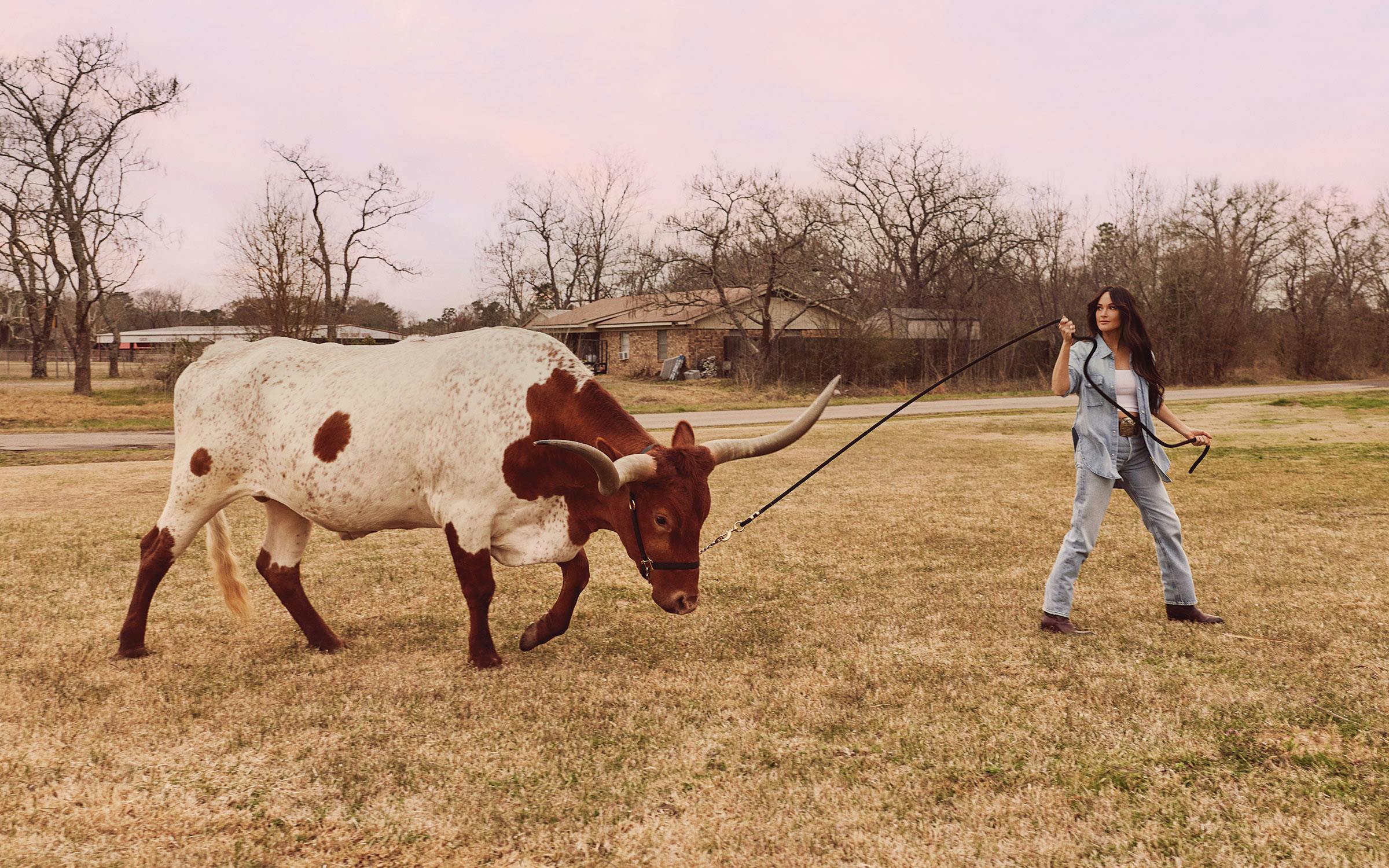 Musgraves leading a 1,900-pound Longhorn named Tex by leash through the town she says has “more cows than people.”Photograph by Ramona Rosales
But when you famously push a genre beyond its historically agreed-upon
boundaries, a narrative forms that you’ve abandoned it. It didn’t help that Musgraves leaned harder into her pop influences on 2021’s Star-Crossed, which chronicled the end of her marriage. In 2024, when she released Deeper Well, it was clear that Musgraves had gone back to her singer-songwriter roots. The album had a whiff of Greenwich Village folk in the sixties. It was more acoustic than its predecessor, though it lacked the twang of Same Trailer Different Park and Pageant Material, her first two records. Deeper Well landed at number two on the Billboard 200, making it the most commercially successful debut of her career. She scored another Grammy when the album’s fourth single, “The Architect,” won Best Country Song. Momentum was on her side. She had the awards, the album sales, the creative satisfaction, and the respect. What was left?
It was while promoting that album that Musgraves began working on the songs she was now introducing in Hollywood. “I wrote these in the throes of Deeper Well,” she told us from her seat under the glow of stage lights, dressed again in jeans and a white tank, though this time she was wrapped in a retro navy cardigan with a cowboy print. “I was going through a really ridiculous breakup,” she added, referring to her post-divorce relationship with a Nashville writer and poet whom some fans hated, expressing their dislike in Instagram comments and Reddit threads and deriding him as “insecure” and “so cringey.” Craving stability and home, Musgraves headed to Golden, an East Texas hamlet that, according to the singer, “has more cows than people.”
One day she was walking downtown—“If you can even call it a downtown,” she told the L.A. crowd. She noticed a small sign with a message that cut straight to her core: “Golden Texas: Somewhere in the Middle of Nowhere.” Musgraves tapped the phrase into her phone, where she keeps a running list of tidbits she thinks would make good lyrics. It was a perfect description of where she found herself at the time, not just literally but also professionally and personally. She’d spent more than a decade pushing herself from one album, milestone, or relationship to another. “I needed to step back and reevaluate things,” Musgraves said, “to hang in the discomfort of an undefined time period between knowing what to do next.”
Middle of Nowhere is what emerged when Musgraves allowed herself to sit alone in a creative mindset she might once have passed right through. And now here she was, sharing it with a hundred or so people on a Hollywood soundstage. On tour, Musgraves can hold her own in front of tens of thousands of people, but this was a far more intimate display. As the title track played through the loudspeakers, she looked down at the floor, away from the crowd, and her voice cracked a bit when she spoke about the work. It was the first time she had shared these songs with strangers, and she didn’t look fully comfortable putting herself back under the spotlights.
But then “Dry Spell” came on, and it was immediately clear why she’d chosen it as the album’s first single. Upbeat and funny, it’s a song you could dance to at the honky-tonk and the gay bar. When the audience heard the lines “Lonely with a capital H / If you know what I mean / I’ve been sitting on a washing machine,” the room erupted in laughter. The quip felt like vintage Musgraves. But the statement was also something new. Her past three albums were about versions of Musgraves who were in—or freshly out of—a relationship. The narrator of “Dry Spell,” by contrast, is single and has been long enough that it’s become “officially a cry for help.” But not because she wants a relationship. “This album period coincided with me getting more comfortable being alone,” she said, “not as isolation, but as sovereignty.”
Middle of Nowhere’s steel guitar, waltzy two-stepping rhythms, lyrics about cowboys and horses, and appearances by Willie and Miranda Lambert suggest that when Musgraves is just being herself—really, really just herself—we’re reminded that she’s really, really Texan.
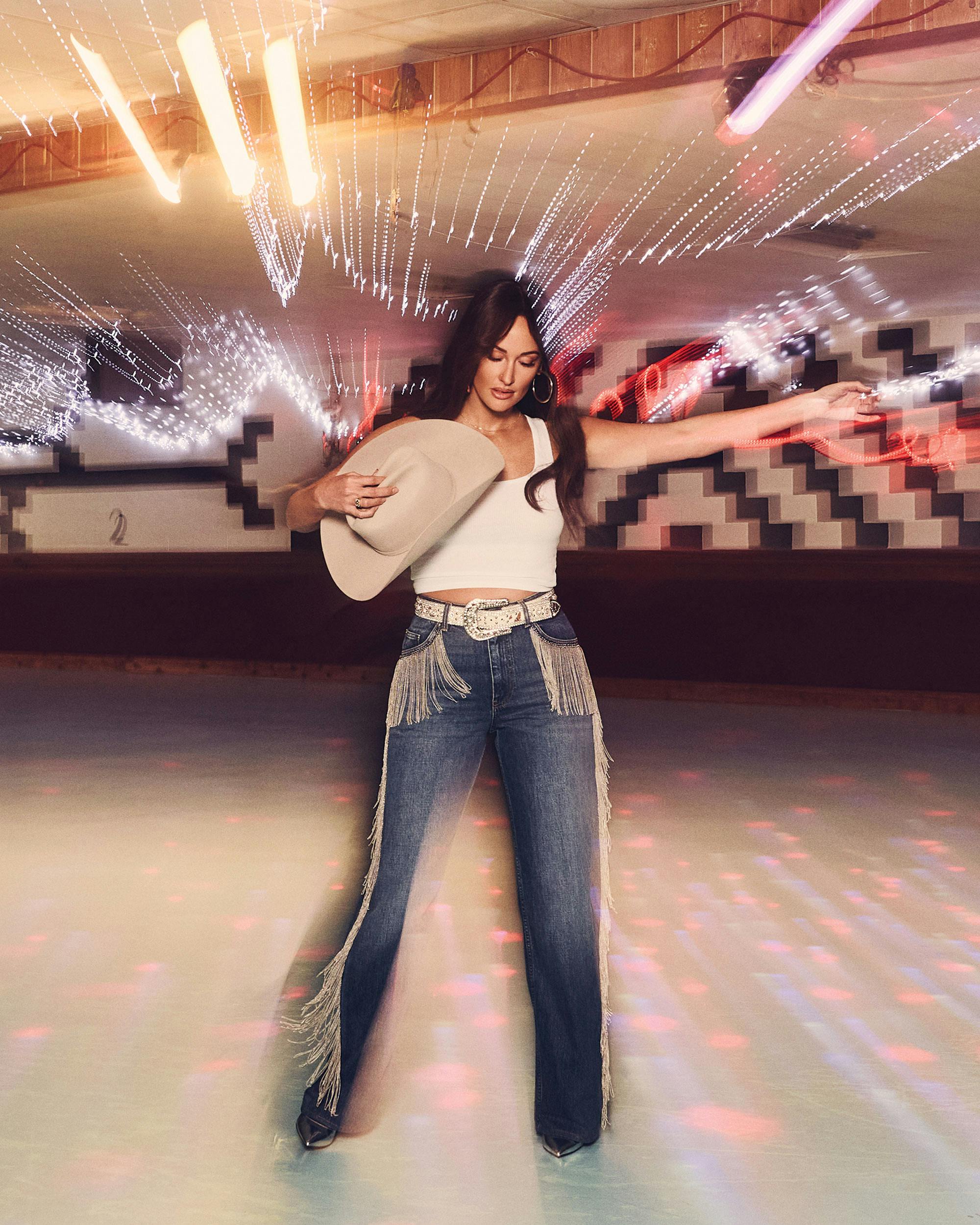 Musgraves at the Let’s Roll Skating Rink, which was decorated for Valentine’s Day, near downtown Golden. Photograph by Ramona Rosales
Musgraves, whose handle on Instagram is @spaceykacey, is famously good at social media and fluent in the rhythm and vocabulary of online communication. It was in the digital realm that she first encountered the subculture around liminal space. Simply defined, a liminal space is a place that exists as a pathway between two others. Like a staircase or a sidewalk or that odd zone between being asleep and awake, it’s transitional by nature. But online it’s much more—an aesthetic, a state of mind, a hashtag, a subreddit with nearly 170,000 weekly visitors, a plethora of Instagram and TikTok accounts that share images of vacant classrooms and other locations that seem to embody the feeling of being stuck between what was (geometry class) and what’s next (social studies).
“Think of a long, empty hallway in a movie theater that has one Coke machine in it,” Musgraves told me when describing an idea that fascinated her. “There’s something unnerving about it but also comforting because it’s spaces that you’re familiar with. It might be the corner of your grandparents’ garage, the empty gymnasium in your old high school, gas stations, airport terminals. It’s hard to explain.”
I understood what she meant, though. We were sitting on the porch of her childhood home, near Golden, Musgraves on the front steps, me in a chair that I felt like I could have lived in from the moment I sat down. She had just finished giving me a (very) quick tour of the eight-hundred-or-so-square-foot cabin, showing off the bedroom she had shared with her sister—complete with an early-aughts mini TV/VCR combo—and pointing out the dated, linoleum-filled kitchen and bathroom that she has thought about fixing up but can’t really bring herself to change.
Bunker Hill House, as the family calls the cabin that was built about a century ago, sits on nearly forty acres a stone’s throw from what constitutes Golden’s downtown. Musgraves’s great-great-grandparents on her mother’s side purchased the spread in the early twentieth century, back before the farm-to-market road it sits on was paved and given a speed limit. Musgraves bought it in 2014, after her maternal grandmother died in a fire that also destroyed the century-old farmhouse at the center of the property.
Musgraves painted Bunker Hill House pastel pink because it was her grandmother’s favorite color, but other than that, not much has changed on the property. There’s a period-specific log cabin replica still standing across the front field, built by Musgraves’s great-grandfather H. F. Benthul, a teacher and writer with a passion for historically accurate architecture. The property backs up to a small lake her family has fished in for generations, and it is still encircled by East Texas pine trees that are at least sixty years old. You can’t really hear cars passing on the road. It is the sort of rural hideaway most people speed right by, just another dirt driveway between one small downtown and another. Only those lucky enough to turn into it get to see how much inspiration there can be in sticking around.
“I don’t ever get scared here by myself,” Musgraves told me, unprompted. Some might be weirded out by the isolation. She finds it peaceful. And she doesn’t mind the loneliness that accompanies being alone; she craves it. “You’re never more lonely than the kind of lonely you feel when you’re in the wrong relationship,” she told me. “At this point in my life—I’m thirty-seven—I would rather just be alone than be in the wrong thing.”
The scenery that morning was sublime. It was chilly but sunny—a classic Texas winter day when you’ve got to bundle up at nine but know you’ll be sweating by three. Musgraves’s blue heeler, Pepper, ran freely, though Musgraves had to call her back repeatedly, fearing she’d chase after a woodland creature. Musgraves, who was barefoot and wearing vintage Carhartt work pants and a Realtree camo hoodie, was in the middle of a marathon workweek, though you wouldn’t have been able to tell from her relaxed demeanor. She’d flown in from Los Angeles the night before, after spending about 24 hours straight filming the music video for “Dry Spell,” an endeavor that had begun the day after the Hollywood listening party. Her hair and makeup team would soon arrive at the house, as would Texas Monthly’s photographer. After our hour-long interview, Musgraves’s schedule allowed for two hours for glam and another five for a photo shoot that would involve three outfit changes and at least four locations: Bunker Hill House; the Golden Sweet Potato Festival grounds, where the town holds its annual celebration; a roller rink called Let’s Roll (opened in 2003, it’s named after the last words of one of the passengers on United Airlines Flight 93); and the Whataburger in nearby Mineola, because Musgraves was determined to ride a horse through a drive-through and wouldn’t take “we don’t have time for that” as an answer. It would all have to be done by 7 p.m., when Musgraves would need to be at the Tyler airport to catch a flight out of town.
“Mentally and emotionally, you can also be in a liminal space,” Musgraves told me, stressing that she isn’t speaking strictly about the physical realm. “Too often I try to define where I’m at, who I’m with, what’s next, because it’s comforting to have that control. I learned to really relish the beauty of the unknown. I think when you are able to do that, it lets the next thing find you sooner.”
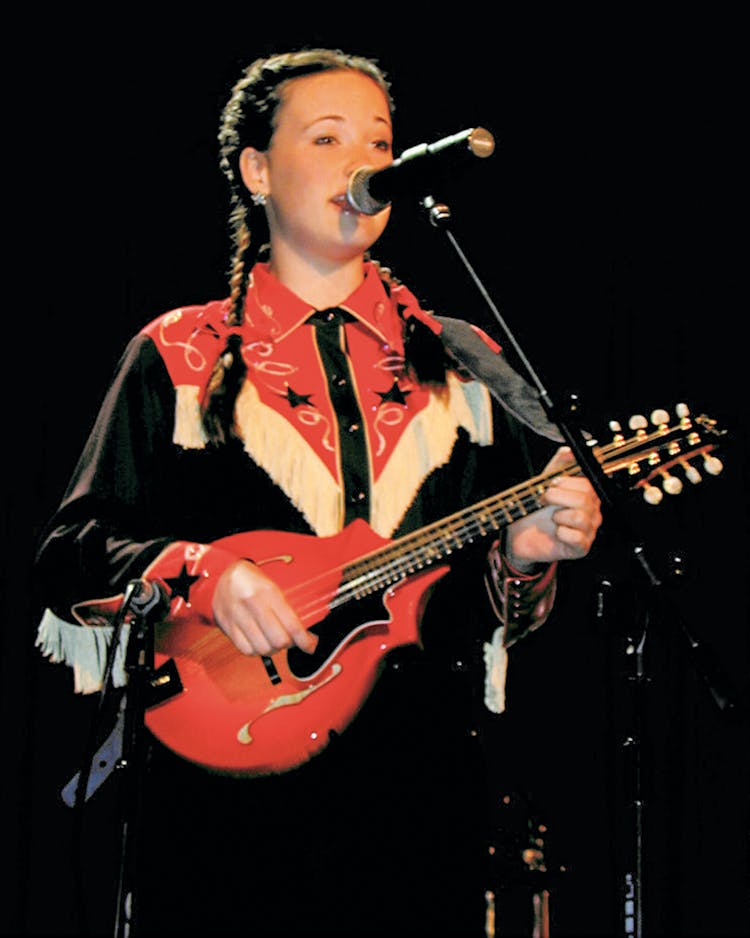 Yodeling champion Musgraves performing in Silver Dollar City in Branson, Missouri, at fourteen years old. Courtesy of Kacey Musgraves
 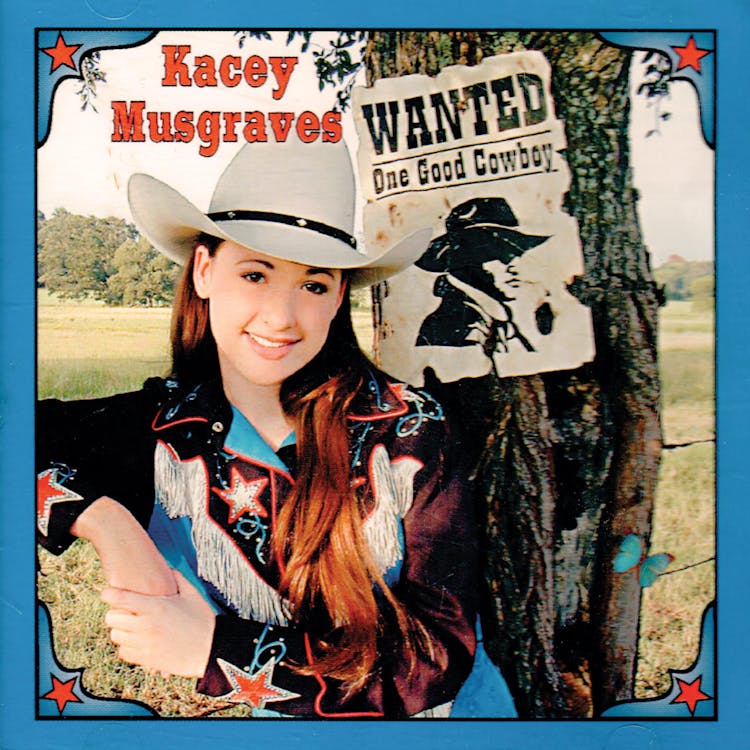 The cover of Wanted: One Good Cowboy, a 2003 album Musgraves recorded at Robin Hood Studios in Tyler. Courtesy of Kacey Musgraves
Left: Yodeling champion Musgraves performing in Silver Dollar City in Branson, Missouri, at fourteen years old. Courtesy of Kacey Musgraves
Top: The cover of Wanted: One Good Cowboy, a 2003 album Musgraves recorded at Robin Hood Studios in Tyler. Courtesy of Kacey Musgraves
The next thing, as it happens, reached out from her past. Musgraves’s career has always been country. “I grew up singing traditional country and western swing,” she told me. “It started on this porch, actually, when I got a little cassette karaoke machine with a mic and would put on shows.” Her entire family was massively supportive, happily driving Kacey to “every little opry in Texas” so she could perform. She wrote her first song before she was ten and had a regular gig at the Fort Worth Stockyards with a kids’ group called the Buckaroos. She branched out with another member of the band, Alina Tatum, to form the Texas Two Bits, and the duo ended up yodeling at George W. Bush’s first presidential inauguration when Kacey was twelve (she took her first-ever plane ride to get to Washington). She won several yodeling championships in her early teens and was even crowned “Yodeler of the Year” at the 2002 Academy of Western Artists’ Will Rogers Awards.
Most days after school, Kacey would explore her grandfather’s record collection, which she credits for inspiring her wide-ranging musical influences. She loved Willie and Waylon, Linda Ronstadt, Neil Young, John Prine, George Strait, Shania Twain, and bluegrass acts, such as Alison Krauss and Nickel Creek, and plenty of rock bands that embodied the dusty, hardscrabble energy at the heart of country music. A particularly meaningful album was the Byrds’ 1968 Sweetheart of the Rodeo, an early example of the country-rock subgenre. Her beloved country music was malleable, young Kacey realized. And the thought stuck with her. “I deeply love the bones of country music, and I feel like I’ve always had one foot planted there,” she told me. “I have always been inspired to bring other things to the genre versus me exiting.”
At the height of the Deeper Well album rollout, when she was just starting to dream up the songs that would become Middle of Nowhere, Musgraves and some friends spent a night two-stepping at an Austin bar called the White Horse. It reminded her how much she loved honky-tonks, and it inspired her to make a record that would fit in at a traditional Texas dance hall. Musgraves researched the history of the establishments—how the oldest date back to the German and Czech settlements of the nineteenth century, how people flocked to them in the thirties and forties, spurred by the rise of western swing acts like Bob Wills and His Texas Playboys.
“I had that in mind when I was making this record, picturing the couples out there shuffling around,” Musgraves told me. That’s not surprising, since the Texas two-step, born at the nexus of the polka and the waltz, is exactly the sort of genre hybrid that would be right up Musgraves’s alley. The western swing she grew up yodeling to was itself a blend of blues, jazz, and good old-fashioned fiddle playing. “This album has a lot to do with borders,” she told me, “the borders of where country music edges up against other things.”
She’s intrigued by the Southern border. “I’ve spent the past year in a small town in western Mexico,” she told me. She’s drawn to the tension between tropical jungle and desert dryness, but she also loves the pace—“There’s imperfection, things take time”—and the opportunity to see the U.S. through a different lens. “It’s put a lot of things into perspective for me,” she said.
A horse girl from the jump (as a kid she drew pictures of ponies that she would leave underneath her parents’ pillows to persuade them to buy her one), she seized the opportunity to connect to Mexico’s vaquero culture. She attended an annual festival in the Mexican countryside. “This little town was taken over by almost two thousand cowboys. You would see a cowboy on a horse with a toddler in one arm and a Modelo in the other hand,” she told me. Being around working vaqueros reminded her of all that the job required. “People can forget that it’s a real way of life.” Back in the states, Musgraves took horsemanship clinics where she learned not just how to be more in sync with her animal but also how to cut and work cattle, lessons that eventually spawned “Everybody Wants to Be a Cowboy,” Middle of Nowhere’s eighth track. “Cowboying looks damn good on everyone,” she told me. “But the real version of it is earned and a whole lot harder than it looks.”
Cowboys weren’t the only aspect of Mexican culture that got Musgraves’s creative wheels turning. “The more that I’ve gotten to know traditional Mexican and ranchera music, I see that there’s such a beautiful kinship between that and traditional country: the songs, the subject matter, even the instrumentation,” she told me in Golden as we sat beneath the Texas flag her mother long ago painted on the underside of the front porch’s roof. “Country is norteño. It’s roots. It’s zydeco. It’s full bluegrass,” she added. “I think as Texans we might take it for granted that we’re really exposed to a lot of that in our daily lives.”
Ours is indeed a land of distinctions. The density of the Piney Woods couldn’t be more different from the dry, empty expanse of Big Bend, and yet both are integral to the Texan identity. Some of our most bragged-about tentpoles are cultural blends. Chicken-fried steak is the cattle-ranching version of Wiener schnitzel. A bowl of red comes from the Chili Queens of San Antonio and the chuck wagons out on the trail. Outlaw country is at the intersection of hippies and good ol’ boys, a movement started by men who bucked when folks in Tennessee tried to tell them what to think and how to be. What could possibly be more Texan than that?
If Musgraves wanted to bring unexpected influences into her always-country music, coming home to this little spot in Texas gave her a lot to work with. What’s next, it turned out, was to sit and stay with what had always been right there.
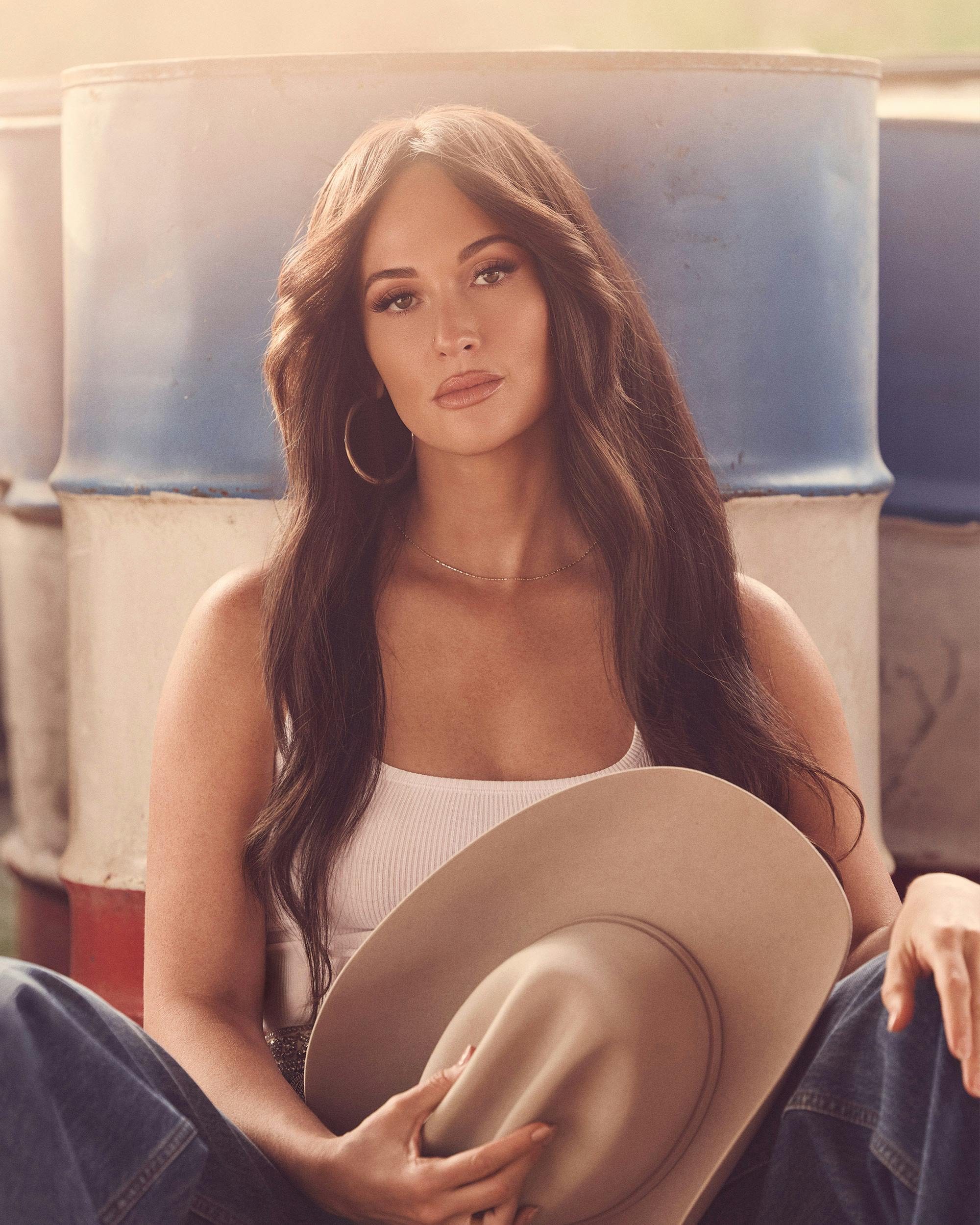 Musgraves at the Golden Sweet Potato Festival fairgrounds, where the town holds its annual celebration, on February 13, 2026. Photograph by Ramona Rosales
Thirty seconds into Middle of Nowhere’s title track, Musgraves forces her audience to pause with her. When the first verse ends, the time signature switches from 4/4 to 3/4. It is at first a little jarring, as if someone hit skip and dropped you into a different song. But when Musgraves starts crooning the line she saw painted on that sign in Golden—“somewhere in the middle of nooooowheeeeerrre”—you realize it wouldn’t sound as good in any rhythm other than a waltz. The second verse goes right back into 4/4, but by the time the next chorus rolls around, you find yourself looking forward to the switch.
“That was a gateway song for her,” said Daniel Tashian, who has coproduced Musgraves’s previous three albums. “I could see her eyes were lighting up, and her mind was on fire. Suddenly she could start to see a way to draw in all these influences that she’s had all her life and still make it fresh and make it her own.”
Musgraves is a collaborator, but she spends a lot of time in her own head. There’s the running list of phrases she keeps on her phone, and she’ll gather all kinds of little inspirations—musical, lyrical, visual—until whatever project she’s working on has an identifiable, if amorphous, form. “She builds a kind of world in her mind,” said Tashian. “She knows what things might belong in this world and what things wouldn’t.”
One product of that solitude—and also a celebration of it—is “Loneliest Girl,” a Middle of Nowhere track that feels like a follow-up to Golden Hour’s “Lonely Weekend.” If the latter was about convincing herself that it’s okay to be alone sometimes, even if she’d rather be with her man or her friends or her sister, “Loneliest Girl” is an unequivocal celebration of alone time. “I ain’t even mad at all the people in love,” Musgraves sings. “I can pour whatever I want in my cup.”
“I used to equate being alone with lacking. Now I see it as a strength. Solitude lets me hear my own instincts without interference. It lets me notice what I actually want versus what’s reactionarily hardwired,” Musgraves said. “Connection is beautiful. But solitude is where I recalibrate.”
One change born of Musgraves’s period of recalibration is her relationship with Miranda Lambert, a fellow country star from nearby Lindale, whom Musgraves has known since 2000. “There were some bumps along the way,” Musgraves said. One of the issues in their fraught relationship was “Mama’s Broken Heart,” a hit for Lambert that was penned by Musgraves and songwriting partners Shane McAnally and Brandy Clark. It was supposed to be the lead single on Musgraves’s first album, until someone pitched it to Lambert without Musgraves’s knowledge. Musgraves ended up writing and releasing “Merry Go ’Round” as her first single instead. In hindsight, she said, “that ended up making way more sense for me aesthetically than ‘Mama’s Broken Heart,’ so we both won in the end.”
Rumors of a feud persisted, aided by a grimace Musgraves seemed to make on camera when Lambert won Female Vocalist of the Year at the 2013 Country Music Awards and shouted out her fellow East Texan.
“I can’t hide my expressions when I feel like something’s fake or it rubs me the wrong way,” Musgraves said when I asked about the moment.
“Flash forward to last fall, I’m in Australia, and I saw a video of her riding one of her horses or something, and I thought, ‘Well, at least we have two things in common: horses and divorces,’ ” she told me on the porch. “Horses and divorces” sounded like the title of a good country song, so she added it to the ever-growing list in her phone. Then she realized that it would be even better as a duet with Lambert. Musgraves texted her, then explained the idea over the phone, a duet about old rivals finally getting along. Lambert was on board. “We wrote it in one afternoon,” Musgraves said. “At one point there really was tension there, so it’s not a contrived duet. It’s real. We’re older now and don’t have the energy for dumb s—t like that. But it was nice that we got to talk about it and kind of therapeutically bury the hatchet. We talked about it all, even my face at the CMAs.”
With lyrics about fightin’, whiskey, and Willie; another 3/4 time signature; an arrangement that features guitar and tejano accordion; and the implicit celebration of a feud finally laid to rest, “Horses and Divorces” may be the most Texas song Musgraves has ever recorded. Once again, she had taken a breath, looked inward, and listened to her gut. Once again, the next move had begun decades ago, back in her ancestral home.
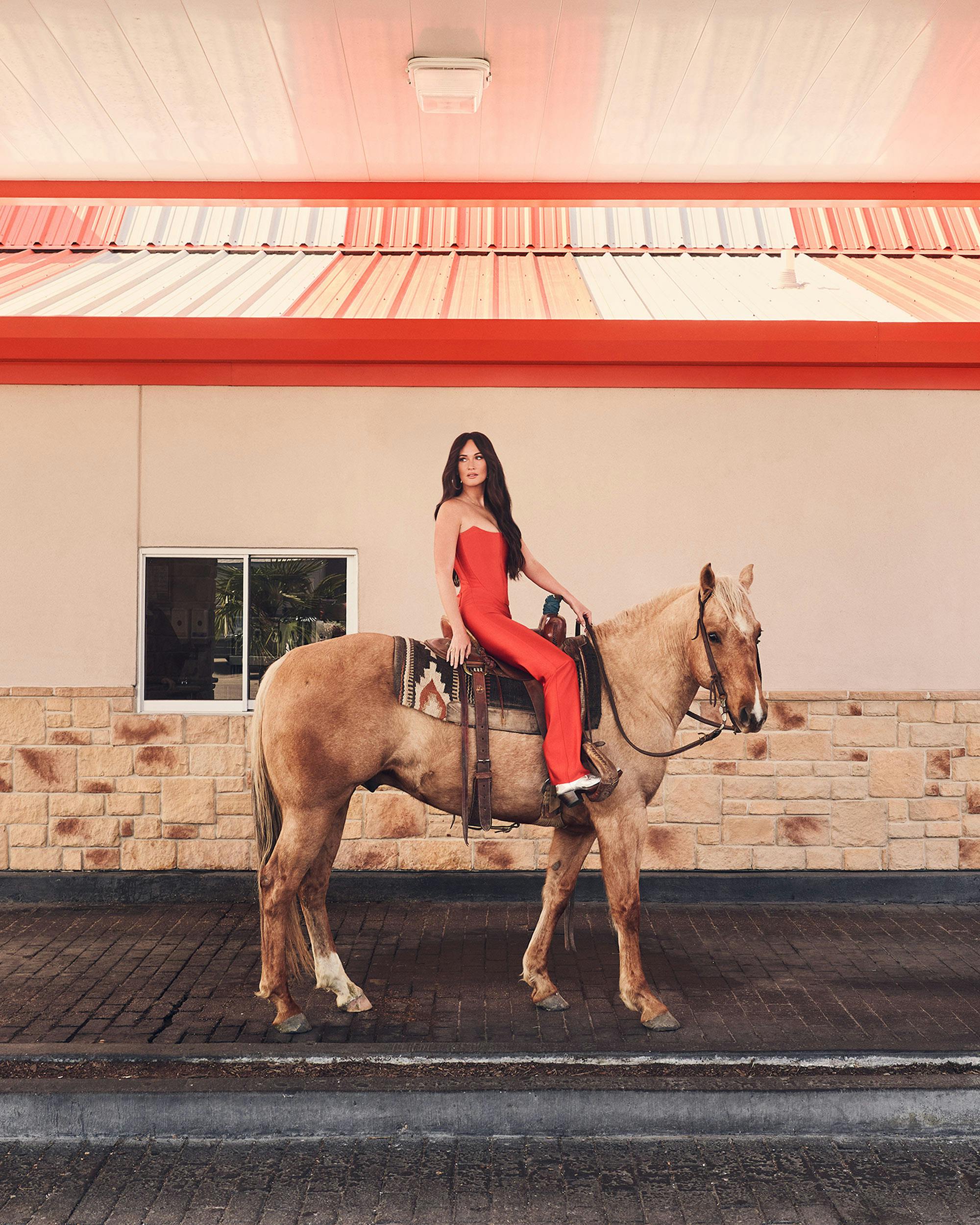 Musgraves and horse Chrysos in the drive-through at the Whataburger in Mineola.Photograph by Ramona Rosales
The scene was a bit chaotic at the Whataburger drive-through in Mineola, a town over from Golden. Musgraves was sitting on Chrysos, a palomino gelding that her friend Evan Tate had trailered from his ranch in Rockwall. It was lunchtime, and the restaurant was busy. Musgraves periodically had to move out of the way so patrons could pull up to the window and get their food. Visitors to the Whataburger or the Walmart across the parking lot slowed down to try and figure out what was going on. Some were peeved and honked, but many seemed unbothered by the spectacle. Perhaps they realized it was just Kacey, the eldest daughter of Karen and Craig Musgraves, who own the print shop and the art gallery downtown.
Kacey’s paternal grandparents, Darrell (Pop) and Barbara (Nana) Musgraves, also live in Mineola, and Nana visited with us for a bit during the photo shoot. Wearing the blue eyeshadow and pink lipstick of a tried-and-true East Texas granny, she sat under the shade of the Whataburger patio, an
orange-and-white-striped Styrofoam cup in hand. She watched her glammed-up, Grammy-winning granddaughter getting photographed on horseback as if it were no more noteworthy than, say, four-year-old Kacey trying out for the Little Miss Tater Tot pageant at the Golden Sweet Potato Festival in 1991. Nana left eventually—she had a hair appointment she wasn’t about to miss—after borrowing my phone to call her husband to come get her, since she’d left hers in her car back at Bunker Hill House. Five minutes later, I watched as Pop Musgraves pulled up in a white Pontiac hatchback that had to be at least a decade old. Nana hopped in without a word. Off they went.
By that time, Musgraves had moved on from the drive-through, posing for a few last-minute shots in front of the Whataburger. Tate was nearby on another horse, Bowie, in case Musgraves needed a second option. They both noticed a teen girl in a softball uniform awkwardly lingering nearby. Assuming she wanted an autograph, they were surprised when she instead criticized the way Musgraves was holding the reins. She told them Kacey would have more control using split reins, a technique that both Tate and Musgraves knew was often taught to children and amateur riders but otherwise was not ideal. Tate said as much, and the girl surprised them again by doubling down. The whole thing ended, apparently, with the girl’s mother shooting Tate the bird.
When Musgraves and Tate later told the story to her sister (“Kelly, you’ve got to hear this”), it was unclear what they’d found more audacious: the mom’s middle finger or the suggestion that Musgraves didn’t know how to handle her steed. “Kacey knows how to ride a horse, but also, in moments like that, a horse can get flustered,” Tate explained. “She’s thinking about what her hair looks like and what’s on her jeans, so my job is to make sure that she’s safe and looks right. With Kacey, I didn’t have to tell her to change what she was doing.”
Musgraves maintained control in a lot of ways that day, forging ahead on her own creative path no matter the outfit, animal, or location. The photo shoot lasted for two more hours than her packed schedule had allowed for, and the delay was partly because she paused so often to look at the shots, to see what was working, suggest changes, and identify her favorites, even though she knows Texas Monthly doesn’t let profile subjects pick the photos that accompany a story.
She also kept having ideas—such as leading a Longhorn through downtown Golden—all the way to 6:30, when she had to change in the Sprinter van and rush to Tyler to catch a flight. There will be trips to L.A. and back down to Mexico. Then Nashville at some point and an endless series of liminal spaces between Golden, Texas, the place she has always come from, and Golden, Texas, the place she has always returned to. Eventually, Middle of Nowhere would come out, and there would be press appearances and talk show segments and a world tour that would put her in front of thousands again. But no matter how many people surrounded Musgraves, no matter how bright the spotlights and how loud the hoots and hollers of the crowd, she’d know that if it all got to be too much, she could close her eyes and imagine she was somewhere else, somewhere in the middle of nowhere.
This article originally appeared in the May 2026 issue of Texas Monthly with the headline “Kacey Musgraves Is Going Nowhere.” Subscribe today.
Hair: Giovanni Delgado; Makeup: Moani Lee; Styling: Maddie Louviere
Wardrobe, Home: AGOLDE jeans, Citizens of Humanity shirt, Stetson boots, Buckleupp belt buckle; Skating rink: Stella McCartney jeans, Skims tank, Stetson hat, Tony Bianco heels, Jennifer Fisher earrings; Whataburger: Rezek Studio top and pants, Miron Crosby boots, Jennifer Fisher earrings
Read Next