
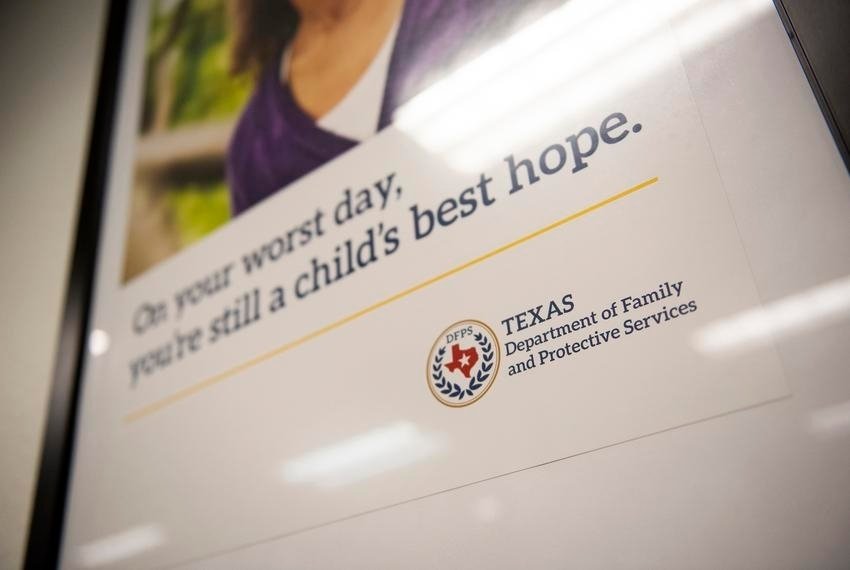
Texas’ move to privatize foster care has fallen short of its promises to revitalize a system meant to care for the most vulnerable children.
In 2017, Texas shifted to a community-based care model, handing over foster care services to private contractors. The goal was to keep children close to home — near their schools, neighborhoods and support systems — even after they were removed from their families.
But the results tell a different story.
An analysis by The Texas Tribune found that 1 in 3 foster children is placed outside his or her home region. That’s an increase from about 1 in 5 children in 2016, before the new model began. Of those out-of-region placements, 67% came from regions that are served by private contractors.
Instead of strengthening local care networks, the system is sending a higher percentage of children farther away, cutting them off from the familiar parts of their lives.
Vicki Spriggs, chief executive of Texas CASA, a program for volunteers who advocate for children in court, said that under community-based care contracts, children were supposed to remain within a 50-mile radius of their homes. For the most part, that isn’t happening.
Private contractors are struggling to find placements for children, especially those with complex needs, just as the legacy state-run program also struggled.
Even when children cannot remain with their parents, staying close to home keeps them within reach of extended family, other support systems and the rhythms of their daily lives. Placements farther away break that connection.
Kathleen LaValle, president of Dallas CASA, told us that when children are moved farther from home, they “are more likely to feel lost and forgotten, that they’re not on anyone’s radar screen.”
These are children who are already coping with trauma. And as the state has raised the threshold for removal — meaning those entering foster care often come from the most difficult and dangerous situations — providers may be unprepared for the high levels of care these children need.
Supporters of privatization argued that local contractors would be more nimble and better able to meet community needs. But these contractors are confronting the same shortages of placements, staffing and resources that plagued the state-run system.
Foster care children are being shuffled across regions, separated from siblings, forced to change schools multiple times and passed off from case worker to case worker. Stability, the very thing they need most, isn’t part of this system.
With all of Texas’ foster care expected to be run by private contractors by 2029, it’s time to seriously evaluate the transition to community-based care and what can be done to build stability for the children. How can the state better support these community organizations in finding placements for children? What can be done to keep children close to their home regions?
Foster care children deserve far better than a system that keeps moving them around, hoping something will stick.
Have thoughts about this? Send a letter to the editor using our letters form or email letters@dallasnews.com. Letters should be no more than 200 words and include the first and last name of the writer and city of residence.