
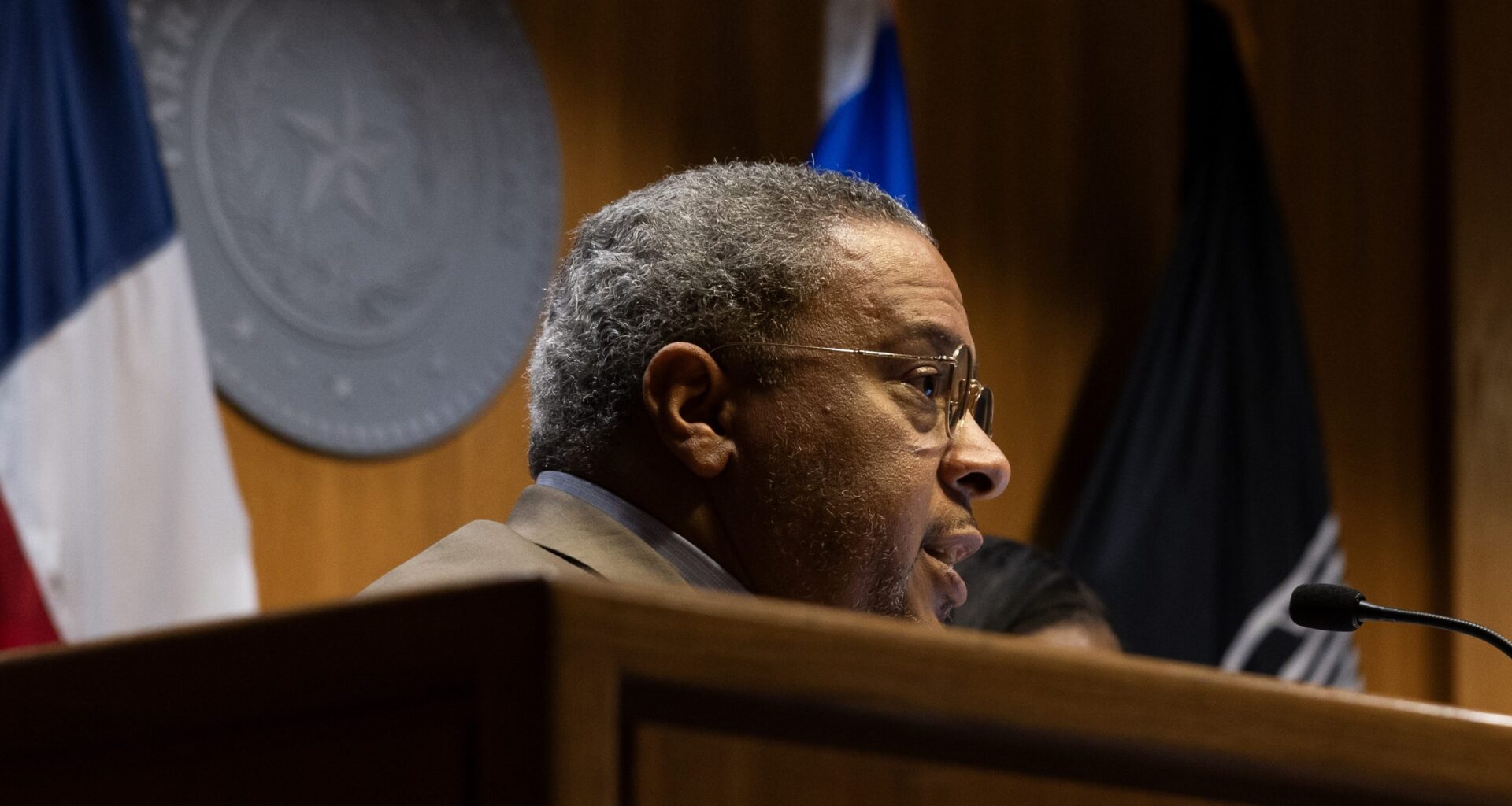
To help a community heal from trauma, Tarrant County Commissioner Roderick Miles believes you have to correctly understand what it is — and what it isn’t.
The problem is that many people don’t have that understanding, Miles said. He doesn’t blame them — he didn’t either, until he started asking the right questions.
“The question is not: ‘What’s wrong with you?’ The question is, however, ‘What happened to you to cause you to respond the way that you were responding?’” Miles said. “That question invites discussion, and it invites participation.”
Miles hopes to foster community discussions on how to understand and heal from trauma through a first-of-its-kind, three-year pilot program intended to connect those impacted by trauma with neighbors, resources, support and knowledge. The program kicks off with the inaugural Trauma & Resiliency Symposium on May 2 at the Tarrant County College Trinity River Campus in Fort Worth.
If you go
What: Trauma & Resiliency Symposium
When: 10 a.m.-2 p.m. May 2
Where: Tarrant County College Trinity River Campus, 300 Trinity Campus Circle, Fort Worth
Cost: Admission is free, but registration is required.
The event is sponsored and co-hosted alongside several partners, including My Health My Resources of Tarrant County, the Rainwater Charitable Foundation and VIP Fort Worth, a nonprofit aimed at tackling gun violence.
Inspiration for the program came after Miles and his county staff completed a 40-hour trauma training through the nonprofit Mental Health Connection of Tarrant County. After that, Miles launched Faces of Changemakers, an organization that began the work on educating residents on the science and nature of community trauma.
Over the past four years, Miles has worked with his county staff and community partners such as Fort Worth ISD to develop a learning curriculum to take into the community.
The science on how trauma affects the individual is clear, said Twanda Wadlington, chief development officer for MHMR of Tarrant County.
“When people are going through trauma situations, whether they are acute or chronic, it affects their daily lives,” Wadlington said. “It affects where they work, their day-to-day operations, and contributes to barriers for people in order for them to become or remain productive citizens.”
Through Faces of Changemakers, local leadership realized the value trauma recognition could have on an individual and the importance to lead and support the conversation, Miles said.
What is trauma?
Trauma is defined as any experience that leads to fear, helplessness, confusion or other disruptive feelings, according to the American Psychological Association. These feelings are generally intense enough to have long-lasting negative effects on a person, in attitude, behavior and physical function.
After Miles completed the training, a facilitator encouraged him to continue the work in his community.
“She said, ‘Don’t let this be the last time that you do this work,’” Miles said, recalling the conversation. “Don’t be the only ones that understand trauma. Take this to your community, use it to transform your community.”
Sessions included two main parts — a breakdown of the science of trauma responses, which often rewire the brain and affect blood pressure and hormonal balance, and a safe space led by mental health professionals for individuals to speak on personal experiences and heal.
Miles told the story of a formerly incarcerated man who went through the training. The man had shared with Miles that after learning of his children’s sexual abuse, he had initially intended to kill the perpetrator. But trauma training showed the man that past trauma influenced his response — and shifted his perspective to focus on healing and supporting his children while staying out of jail.
“That’s when I realized the power in the work that we were doing,” Miles said. “We have the ability to change lives and transform communities and reduce the amount of violence that we’re seeing in our communities.”
Another example Miles pointed to was a senior citizen who after attending the sessions realized the traumatic impact of a sexual assault over 40 years ago. She died two weeks after the breakthrough, he said.
“It’s not surface level. We’re digging deep because we really want to see change, and we want to be a part of that change,” he said.
On the Tarrant County Commissioners Court, Miles represents Precinct 1, which covers the southwest part of the county including southeast Fort Worth’s 76104 ZIP code, which has the lowest life expectancy in the state. The new symposium builds on the work of Miles’ predecessor, former Commissioner Roy Brooks, who spearheaded annual community events in the precinct focused on raising awareness about Alzheimer’s disease and prostate health.
After the symposium, Miles’ office will continue the program through community events called “healing circles” across the precinct, designed as safe spaces for residents to share and unpack trauma, and learn how to help their neighbors and friends. The goal, Miles said, is to empower residents to create resilient communities.
Community buy-in is essential, he said. Lots of well-intentioned philanthropic organizations look to help local communities respond to trauma in the short-term, but that philanthropy is rarely sustainable long-term, Miles said.
“Our approach is different or unique in that we are empowering community members. They are the stewards of this program,” Miles said.
The program is expected to run for three years, pending financial commitments from the county, Miles said. Through the symposium, event organizers hope to connect individuals interested in additional support to the appropriate organizations.
An example Wadlington pointed to would be referring trauma victims younger than 5 years old to Help Me Grow North Texas, a regional organization serving parents of infants and toddlers with support to promote healthy development in children.
“Even if it’s not us directly providing the counseling, we’re always able to help refer and mitigate people who are going through trauma situations,” Wadlington said.
If successful, Miles hopes the program can expand to include the rest of Tarrant County. After that, it could serve as a model for the rest of the country.
Cecilia Lenzen is a government accountability reporter for the Fort Worth Report. Contact her at cecilia.lenzen@fortworthreport.org.
Ismael M. Belkoura is the health reporter for the Fort Worth Report. His position is supported by a grant from Texas Health Resources. Contact him at ismael.belkoura@fortworthreport.org.
At the Fort Worth Report, news decisions are made independently of our board members and financial supporters. Read more about our editorial independence policy here.
This <a target=”_blank” href=”https://fortworthreport.org/2026/04/30/community-healing-resiliency-the-focus-of-tarrant-county-trauma-symposium/”>article</a> first appeared on <a target=”_blank” href=”https://fortworthreport.org”>Fort Worth Report</a> and is republished here under a <a target=”_blank” href=”https://creativecommons.org/licenses/by-nd/4.0/”>Creative Commons Attribution-NoDerivatives 4.0 International License</a>.<img src=”https://i0.wp.com/fortworthreport.org/wp-content/uploads/2021/04/cropped-favicon.png?resize=150%2C150&quality=80&ssl=1″ style=”width:1em;height:1em;margin-left:10px;”>
<img id=”republication-tracker-tool-source” src=”https://fortworthreport.org/?republication-pixel=true&post=519998&ga4=2820184429″ style=”width:1px;height:1px;”><script> PARSELY = { autotrack: false, onload: function() { PARSELY.beacon.trackPageView({ url: “https://fortworthreport.org/2026/04/30/community-healing-resiliency-the-focus-of-tarrant-county-trauma-symposium/”, urlref: window.location.href }); } } </script> <script id=”parsely-cfg” src=”//cdn.parsely.com/keys/fortworthreport.org/p.js”></script>