
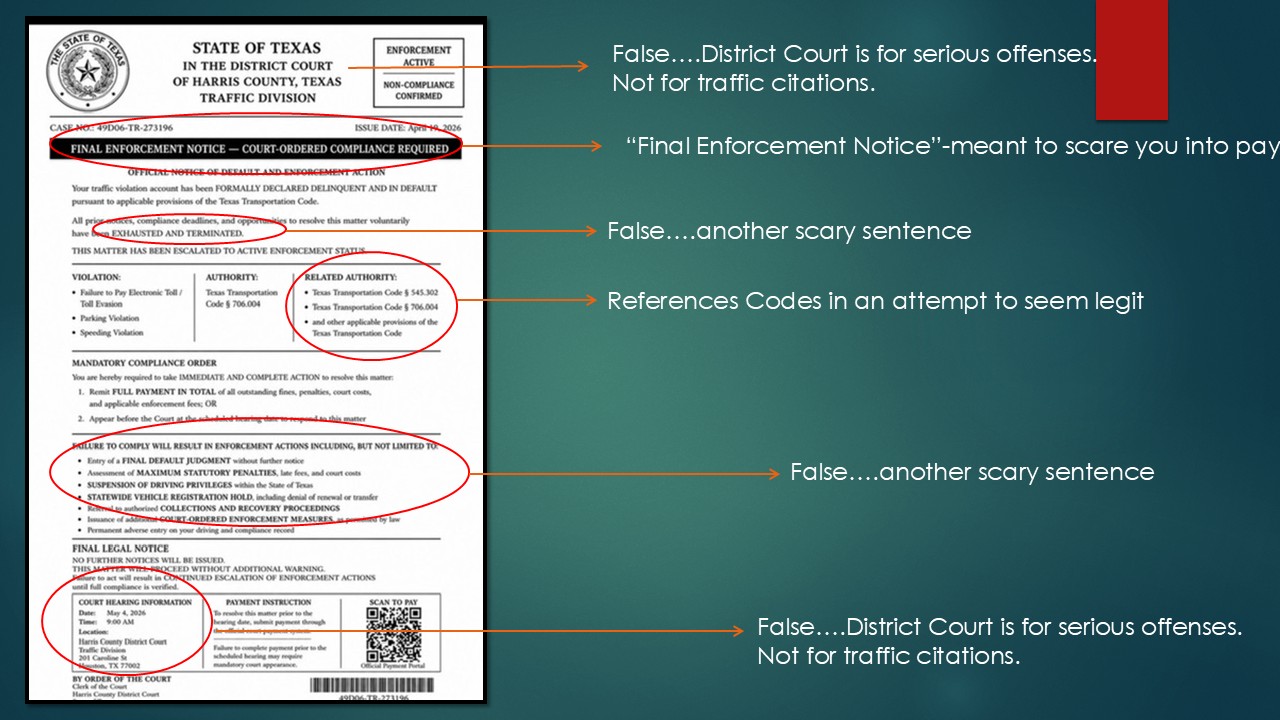
Hollywood Park police are warning residents about fake traffic tickets being sent by text and mail in an apparent scam aimed at stealing money or infecting phones with malware.
Police Chief Shad Prichard said Monday that residents have reported receiving official-looking letters claiming they owe traffic fines. Prichard said he received the same message on his work phone.
The messages may come from numbers with 512 or 585 area codes, Prichard said. The fake letters use fear and QR codes to make recipients believe they need to pay a fine.
“Most people getting these haven’t even been pulled over,” Prichard said.
The chief posted a breakdown of the ticket, including that it identified the wrong court as being in charge of traffic fines. A “District” court handles more serious crimes, such as felonies. The ticket may also say “final notice” even though it’s the first time a recipient has received the fake citation.
Police are urging people not to scan the QR code, call the number listed or pay the fine. Anyone unsure whether a ticket or notice is legitimate should call their local police department directly, Prichard said.
The Federal Trade Commission warns that scammers use warnings to pressure people into scanning the QR code. Once scanned, scammers may try to steal personal information, download malware onto the person’s phone or take their money.
The FTC reported a spike in complaints about a similar text scam in the last month. The scam typically begins with a text showing what appears to be an official notice for a traffic hearing, including a QR code, a state seal and a fake case number.
The message may claim the recipient must scan the code to pay for a traffic violation and avoid court. It may also list a fake hearing date and warn of default judgments, fines or enforcement action if the recipient does not respond quickly.
Anyone who receives such a text should not respond or scan the QR code. People who want to make sure it’s fake should check the court’s website or call the court directly using a verified phone number, not one listed in the text message.
People who already paid or shared information may report the scam to the FTC at ReportFraud.ftc.gov.