
El Paso, TX (KFOX14/CBS4) — For repeat drunken driving offenders in El Paso County, a specialized court program is working to break what officials describe as a cycle of re-offending by focusing on treatment, accountability and long-term change.
Judge Robert Anchondo, the presiding judge of the county’s DWI Prevention and Treatment Program, oversees a court process aimed at people considered “high risk, high need” who have not succeeded with traditional penalties such as fines or probation.
The DWI Court program has graduated over 800 people in a span of two decades and has an extremely high success rate in turning around the lives of alcoholics. (KFOX14/CBS4)
These are the individuals that, for a number of reasons, have not been able to succeed,” Anchondo said. “If they were arrested and received maybe a fine or probation, they didn’t succeed in probation and they keep re-offending. Our duty and obligation as a program is to get to the root causes of that. That’s what makes us unique.
Anchondo said the program’s structure is designed to reduce the likelihood of participants committing new offenses. “And I think if we put them in a structure of treatment, we put them in a structure of a program that’s going to help them be responsible and accountable. Then the likelihood of them re-offending is a lot less,” he said.
Graduates say the program’s strict structure and deeper focus on underlying issues helped them change their lives.
Mario Escobedo said he entered the program after his third DWI and graduated in 2018. “My name was Mario Escobedo. You know, I was a functioning alcoholic,” he said, describing how he was “losing things” and “losing myself.”
Escobedo said he initially resisted the program. “Well, I was very reluctant in the program. I saw it as they’re not they’re not here to help me. They don’t know anything about me,” he said. “And the truth is, they were getting to bring out things about me that I didn’t know about myself, were ahead and wanted to face. It was always easy to blame everybody else.”
Participants are closely monitored with strict rules and frequent check-ins, Escobedo said. “You know, they check up on you, they go ring the doorbell in the middle of the night and go see what you’re doing,” he said. “Did you really make it to work or you make an appointment? So it’s a strategy I believe that they’ve implemented that makes somebody responsible.”
He said the program also addresses deeper issues behind a participant’s behavior. “And they treat the whole issue of what’s taking you down the road that you’re going, because they see that you have potential and they want to bring that out in you years later,” Escobedo said.
Escobedo credited the program with helping him maintain sobriety. “I’ve now been sober over ten years and and I feel successful when I wake up and, you know, I’m going at it,” he said. “And the court gave me the tools to get to where I’m at right now. I definitely couldn’t have done it without it.”
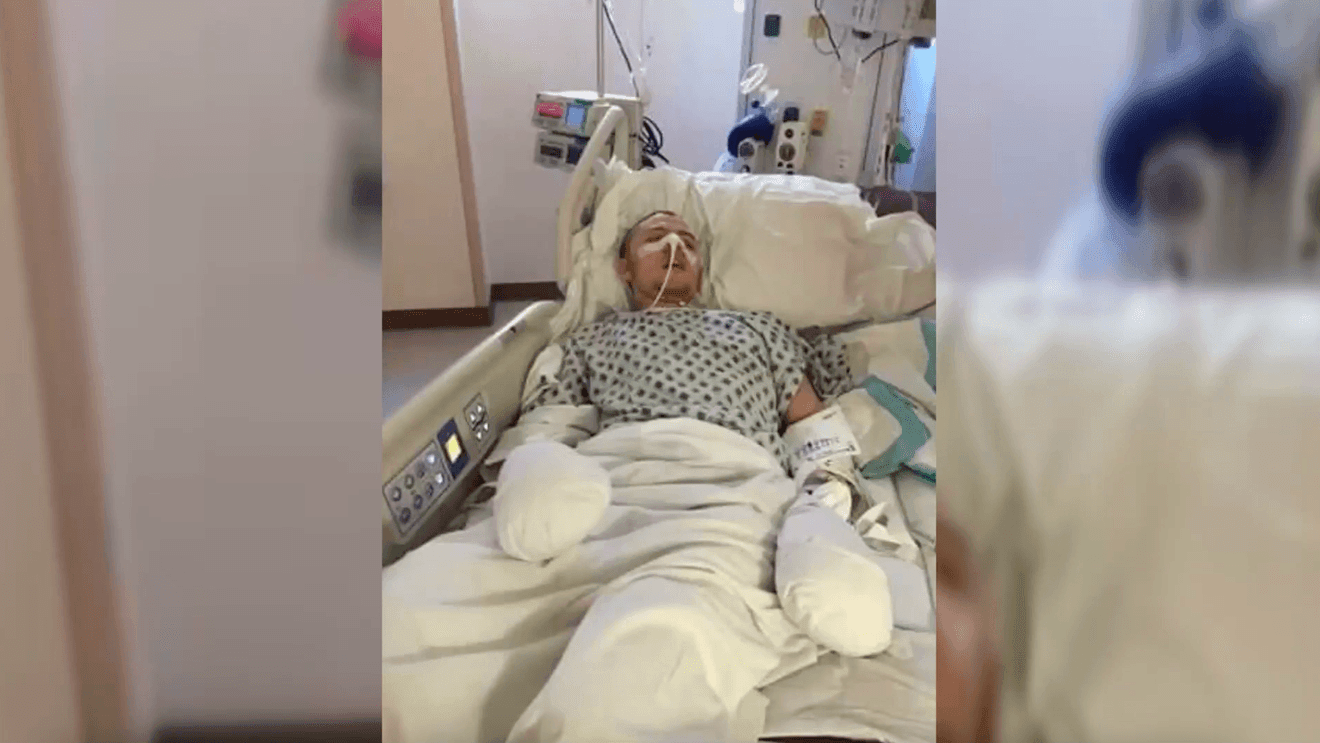
Another graduate, Mauricio Contreras, said he is an alcoholic and has been sober for 34 months. He described a crash tied to his second DWI in which he said he “did roll over and was ejected from the vehicle 100 feet,” suffered a craniotomy and remained in a coma. “I wasn’t going to make it,” he said.

Mauricio Contreras’ car after getting in a DWI wreck. (Mauricio Contreras)
Contreras said sobriety requires constant effort. “And believe me, it’s not easy. It’s not easy. The temptation is always there,” he said. “It’s a one day at a time, and you have to take it as little as 5 minutes at a time.”
He also warned about the dangers of impaired driving. “You’re a walking weapon. If you’re drinking and driving, you’re putting danger. You’re putting others in danger. You’re putting other families in danger,” Contreras said.
Anchondo said many DWI offenses can be avoided. “But I will tell the public this. A lot of this a lot of these offenses are preventable. They are, they truly are,” he said. “And I’m truly trying to send that message of, you know, just don’t drink and drive. Okay.”
The program has graduated more than 800 participants over more than two decades, according to the county.
Escobedo said support can grow when participants commit to change. “It’s amazing how many people are in your corner when you’re putting in the effort,” he said.

Mauricio Contreras says the DWI Intervention Program changed his life for the better. (Mauricio Contreras)
Contreras called the program a turning point. “One of the best things that’s ever happened to me landing in the in this program and doors keep opening up for me, you know,” he said.
READ MORE: El Paso County Sheriff’s Office launches online survey on DWI enforcement, response times
READ MORE: El Paso leaders meet with families, advocates to push tougher DWI enforcement, penalties
Sign up to receive the top interesting stories from in and around our community once daily in your inbox.