
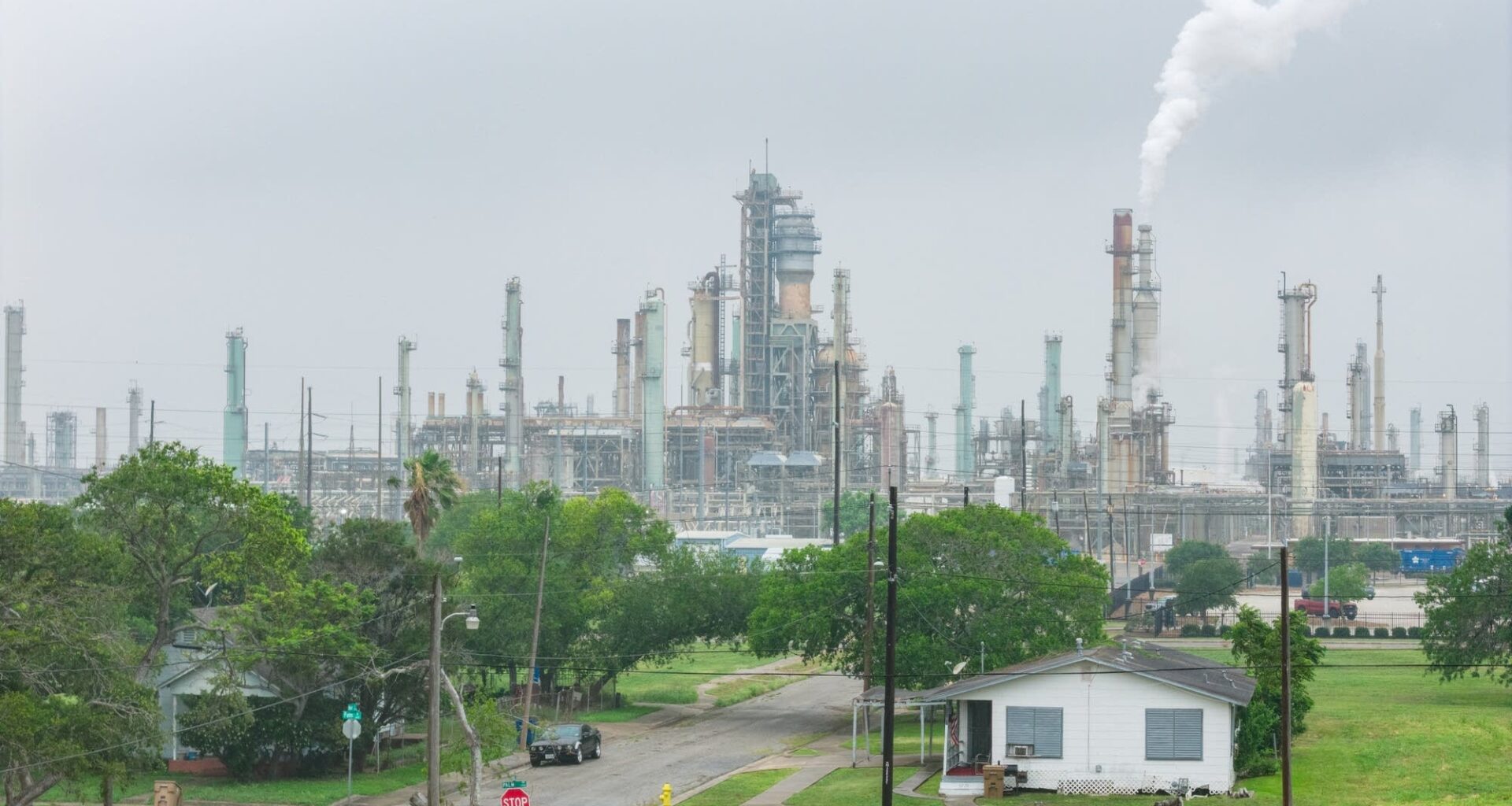
Hurricane season couldn’t come soon enough for Corpus Christi, Texas.
“That’s sort of a dark joke that you hear around town all the time. We’re praying to get, you know, hit by a head on direct hit by a hurricane,” said Bob Paulison, executive director of the Coastal Bend Industry Association.
The combined water storage level at the local lake and reservoir is just 8%.
Corpus Christi’s water supply is dwindling just as its energy sector is booming, bolstered in part by the global oil and gas supply crunch. The city’s shortage of water has already limited new industrial investment, and could eventually force cutbacks in one of the country’s busiest energy export hubs.
The city is facing 25% cuts to water usage if the region doesn’t receive enough rainfall by September.
“We don’t want anyone to have to shut down,” said Kent Britton, CEO of the Port of Corpus Christi. “We don’t want curtailment. We don’t want it for our industry. We don’t want it for our residents.”
The port is busier than ever.
“Every day through this ship channel moves about $340 million worth of goods,” Britton said. “The majority of it is export.”
Crude oil, liquified natural gas, diesel, jet fuel, gasoline — what the world is in short supply of right now — move through this energy hub. These energy companies are an engine of the local economy. Many are also big water users. That’s why Britton said the city needs to find more sources of water.
“It’s going to limit our ability to bring in large scale industry in the future,” he said. “We have had a couple (companies) that were very favorable to come in here in past years, who ended up making a decision not to because of the dwindling water supplies.”
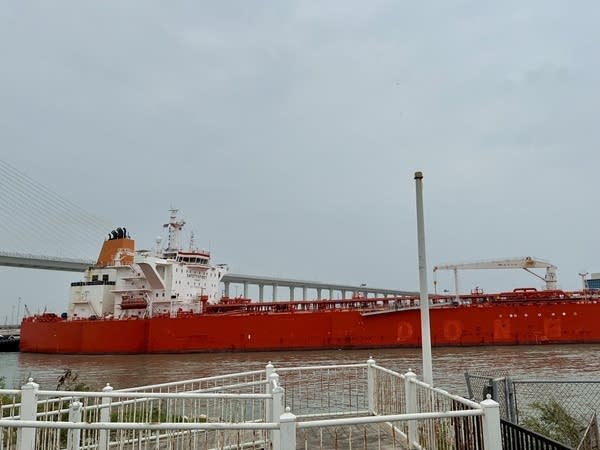
An oil tanker leaves the Corpus Christi Ship Channel, bringing U.S. crude to the global energy marketplace.
Elizabeth Trovall/Marketplace
While the energy industry is a major consumer of water, the city knew that when they approved plans to sell their water.
“Frequently things are portrayed as industry uses too much water,” said Bob Paulison, executive director of the Coastal Bend Industry Association, which represents the big energy and chemical companies in town. “I think that misses the larger point that it’s a combination of long-term drought, in this case, five years, and going along with 100% dependence on surface water.”
He said the industry has been updating their facilities to use less water ahead of large scale water curtailment. But if the water crisis forces industry to shut down operations at a plant, hundreds of people could lose their jobs.
“If they’re having to shut down a plant, unless I’m going to be coming back up online next week, if this is indefinite, then I’m going to probably be laying people off,” he said.
And it’s not just the energy sector grappling with Corpus Christi’s water shortage. Other businesses, like the Texas State Aquarium, are preparing.
“We are in the process now of calculating what we can do to get to a 30% reduction in our fresh water use,” said aquarium CEO Jesse Gilbert.
While most of the aquarium’s water used for sharks and sting rays comes directly from the Corpus Christi Bay, they still use fresh water to operate their bathrooms, eateries and splash park.
“We’ve developed some clever ways to completely take the splash park off of the potable water systems,” Gilbert said.
Every day, he thinks about how the brand of Corpus Christi has been damaged by the ongoing water issues. “It sounds like we don’t have water and you can’t come and enjoy a vacation in Corpus Christi. That’s not true,” he said.
And Gilbert has a longer-term concern — attracting aquarium staff who may not want to move to a city in a water crisis.
“If a professional is applying for a job at the aquarium … but then they determine we don’t have water and they really don’t want to buy a home here, that’s a long-lasting impact,” he said.
Related Topics