
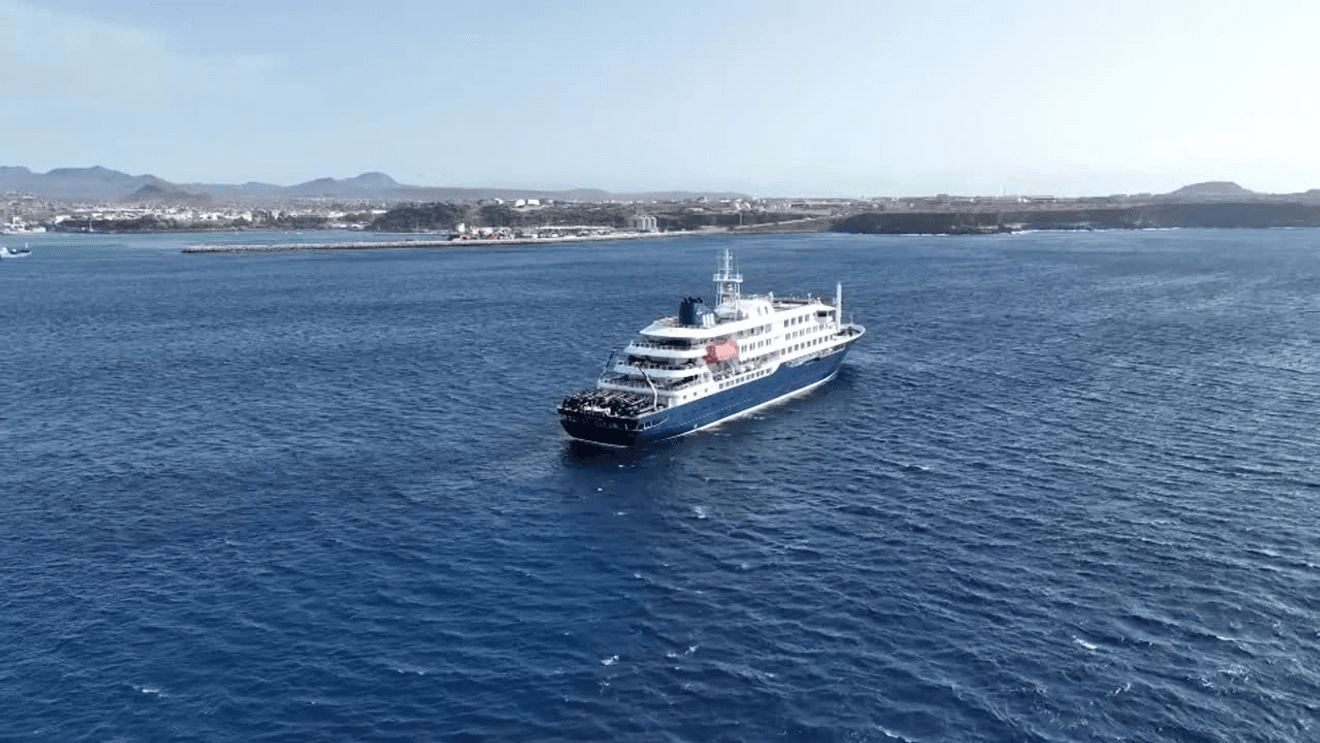
Two people from Texas are being monitored after a hantavirus outbreak occurred aboard the cruise ship MV Hondius.
According to Texas Health and Human Services (DSHS), the Texas passengers returned to the United States before the outbreak was identified. Both people currently have no symptoms and reported having no contact with sick people while aboard the ship.
DSHS says that the Texas residents have agreed to monitor themselves for symptoms. They’ve continued to follow daily temperature checks, and will notify public health officials if any signs of illness appear.
The CDC has elevated hantavirus to a Level 3 response priority, triggering 24/7 operations at its emergency command center. According to the CDC, a level 3 response signifies that the risk to the general public remains low.
Hantavirus is typically spread from wild rodent droppings or urine, says DSHS. The Andes virus strain involved can spread between humans through close, prolonged contact with a person with symptoms. It is not known to spread through casual contact, and there are no documented cases of transmission from individuals without symptoms.
“Hantavirus is not spread by people without symptoms,” says Jay Bhattacharya, National Institutes of Health Director. “Transmission requires close contact, and the risk to the American public is very low.”
Both Texas residents remain anonymous for privacy protection.
“Regular Americans don’t need to be worried,” Dr. S. Wesley Long said. “It really requires a lot of extensive close contact with an infected, symptomatic person to get any human-human transmission.”
So, what is a hantavirus?
Hantavirus is not a single virus, but a family of about 20 viruses worldwide.
In the U.S., it can cause hantavirus cardiopulmonary syndrome, which the WHO says is a severe respiratory illness with a case fatality rate up to 50%.
Sin Nombre virus is the predominant hantavirus in the U.S., which Long said is mainly found in the Southwest.
In Europe and Asia, hantaviruses cause haemorrhagic fever with renal syndrome, which affects the kidneys and blood vessels.
Everywhere, humans typically get hantavirus because they’ve come into contact with infected rodents, either directly or through their urine, droppings or saliva.
The only kind of hantavirus associated with limited human-to-human spread is the kind found in South America, called the Andes virus.
That’s the kind involved in the cruise ship infections.
“Typically, what we see in the U.S., it’s somebody who’s cleaning out a shed or in an environment, sleeping in an environment, that’s maybe a cabin where there’s been a lot of rodents, where there’s some sort of rodent infestation,” Long said. “It’s usually that sort of contact that acquires it.”
Long said hantavirus-infected people also aren’t particularly contagious until they’re symptomatic. And he said human-to-human transmission requires prolonged close contact.
RELATED STORY: CDC activates Level 3 hantavirus response
There are no vaccines or specific antiviral treatments for hantavirus, Long said.
He said the most important thing is to get infected people supportive care right away, which might require cardiopulmonary support in an intensive care setting.
The late actor Gene Hackman’s wife died last year from a hantavirus.
And three people aboard the MV Hondius, a Dutch-flagged cruise ship, have died since the first case developed in a passenger in early April.
In total, eight hantavirus cases have been confirmed or suspected in connection with the cruise ship.
Seventeen Americans remain on the ship, but no current passengers or crew members have reported symptoms.
NBC News reported that a handful of American passengers had already gotten off the ship and traveled home to Texas, Georgia, Arizona, Virginia and California. None of them has reportedly experienced symptoms, either.
There are still almost 150 people aboard the ship, which will dock this weekend at Spain’s Canary Islands. There, the remaining passengers will disembark in a controlled way to ensure any potential infection doesn’t spread.
The cause of the outbreak is still being investigated, but WHO Director-General Dr. Tedros Adhanom Ghebreyesus told reporters on Thursday that the couple who first presented with symptoms had traveled through Argentina, Chile and Uruguay on a bird-watching trip before boarding the cruise ship.
The Andes virus, the only documented hantavirus to spread from person to person, is found in South America.
That man developed symptoms in early April and died on the ship on April 11, according to the WHO.
His wife died about two weeks later, at which time samples were taken and confirmed as hantavirus.
The third death occurred with a woman who developed symptoms in late April and died on May 2.
The WHO was notified of the situation last Saturday.
The other passengers with known infections are off the ship.
One infected passenger was evacuated from the ship and remains in intensive care in South Africa.
Three infected passengers were evacuated to the Netherlands for treatment. Two are in a stable condition in a hospital, and one is asymptomatic and is now in Germany.
The eighth case was in a man who disembarked in St. Helena and later reported himself with symptoms in Switzerland.
Tedros told reporters that the incubation period of the Andes virus can be up to six weeks, so it’s possible that more cases may be reported.
“While this is a serious incident, WHO assesses the public health risk as low,” he said.