
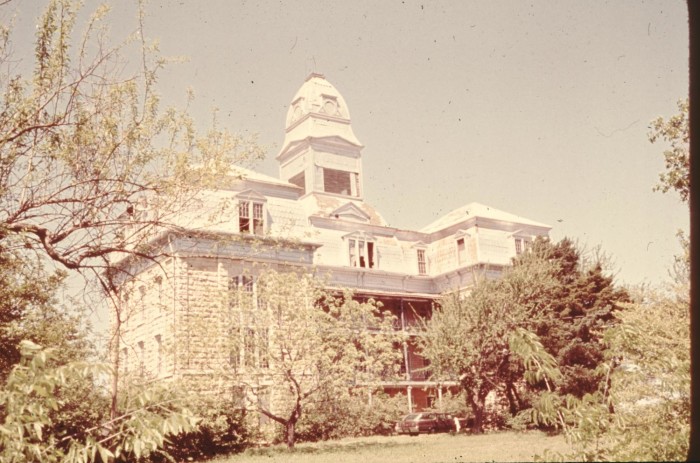
Nestled out in East Texas’ Limestone County lies Tehuacana, a tiny Texas town where just 228 residents called it home as of the 2020 Census. Now regarded as a Texas ghost town, it’s a far cry from its standing 177 years ago, when it was nominated to helm Texas’ state capital.
But what was its origin story — and how did it lose out on the chance to be the epicenter of the Lone Star State?
Approximately 141 miles and a little over two hours away from Austin is Tehuacana, a former competitor in the race for the state capital. The community’s name pays homage to the Tehuacana Native Americans, a tribe related to the Wichitas that first called the area home and relied on it as a farming resource, per archival records from the Tehuacana Heritage Society. Conflicts between the Tehuacana tribe and the Cherokee tribe ultimately led to their decimation in the 1830s.
Come 1835, John Boyd — a member of the First Congress of the Republic of Texas — received the region on July 13, 1835, as part of a land grant between the Mexican state of Coahuila and Texas, according to records from the Preservation Texas Institute.
Just over a decade after Boyd took the helm, he solidified his status as Tehuacana’s first postmaster in 1847 before formally nominating the town for consideration as the Texas state capital two years later.
Beginning in 1849 and continuing into 1850, Boyd began an aggressive campaign to make Tehuacana, then known as “Tawakanah Hill,” the state capital of Texas, per archival records from Preservation Texas Institute. The main draws, Boyd claimed? Tehuacana was located relatively centrally within Texas and had both a robust water supply and building materials on hand.
To try and sweeten the deal, Boyd also said he would donate land to the state to make its status as Texas’ capital a reality, joined by neighbors who also offered up thousands of acres themselves.
Texas’ constitution of 1845 outlined that a mandatory, statewide vote would take place in 1850 to determine which community would serve as its capital. The official results were publicized on June 3, 1850, with Tehuacana falling to second place behind Austin in first.
Nearly 20 years after the statewide election, Tehuacana became the original home of Trinity University in 1869. Founded by the Cumberland Presbyterian Church, the school remained within the community until 1902. It then relocated to Waxahachie to be more accessible to prospective students before Trinity ultimately settled in San Antonio in 1945.